

The intersection of artificial intelligence and national security is becoming one of the most sensitive battlegrounds in modern geopolitics. A recent decision involving the Pentagon and AI company Anthropic—where a proposed move or order was reportedly blocked over national security concerns—highlights just how high the stakes have become.
What might once have been a routine business or operational decision is now subject to intense scrutiny. Governments are increasingly wary of how advanced AI systems are developed, deployed and potentially accessed—especially when those systems could influence intelligence, defense or critical infrastructure.
This moment reflects a broader shift: artificial intelligence is no longer just a commercial technology—it is a strategic asset that governments are determined to control.
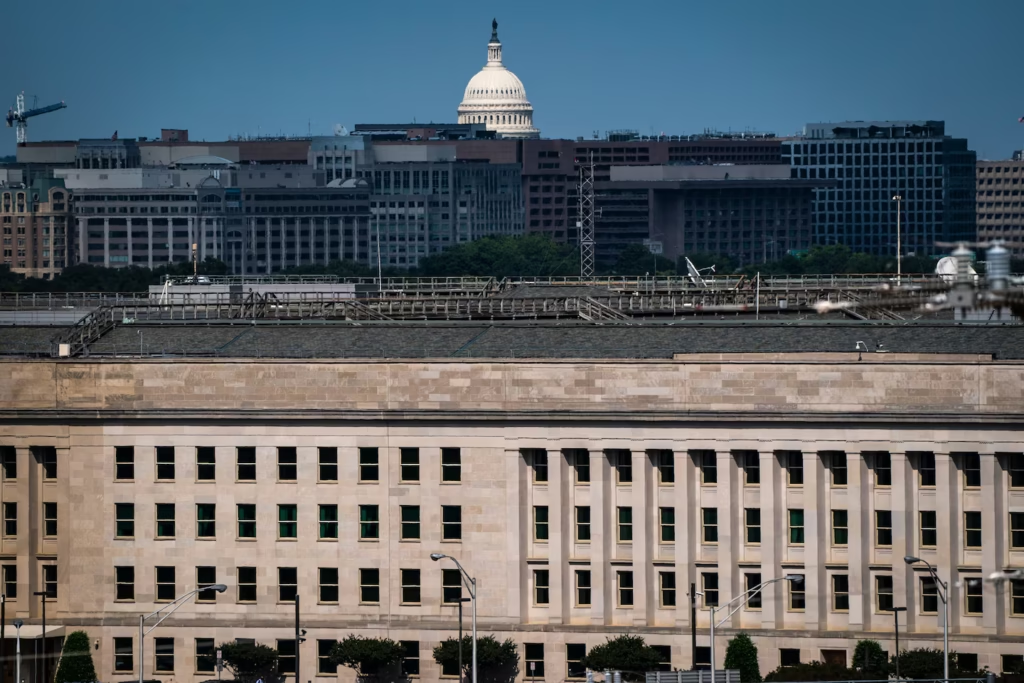
What Happened Between the Pentagon and Anthropic?
While specific operational details remain limited, the situation centers on a Pentagon-related decision involving Anthropic—one of the leading AI companies developing advanced language models.
The move was reportedly blocked or halted due to concerns that it could pose risks to national security. These concerns may involve:
- access to sensitive government data
- control over AI model capabilities
- potential exposure of defense-related systems
- risks tied to foreign influence or data transfer
The decision underscores how even indirect relationships between AI companies and government agencies are now being carefully evaluated.
Why AI Is a National Security Issue
Artificial intelligence is increasingly viewed as critical to national defense and intelligence operations.
AI systems can be used in:
- military planning and logistics
- cybersecurity defense and threat detection
- intelligence analysis and surveillance
- autonomous weapons systems
- information warfare and influence operations
Because of these applications, governments are treating AI infrastructure and expertise as strategic assets—similar to nuclear technology or advanced semiconductor manufacturing.
The Rise of AI Companies in Defense Ecosystems
Companies like Anthropic, OpenAI and others are not traditional defense contractors. However, their technologies are becoming essential tools for governments.
These companies provide:
- advanced language models for data analysis
- AI systems capable of processing intelligence reports
- tools for cybersecurity and anomaly detection
- platforms that can simulate complex scenarios
As a result, they are increasingly integrated into national security frameworks—even if indirectly.
The Core Concern: Control Over Powerful AI
One of the biggest concerns for governments is who controls advanced AI systems.
If a company develops highly capable models, questions arise such as:
- Who has access to the models?
- Where is the data stored?
- Can foreign entities influence or access the systems?
- How are the models monitored and secured?
In sensitive contexts, even small risks can lead to major consequences.
This is why governments are taking a more interventionist approach.
Data Security and Sovereignty
AI systems rely heavily on data—often large volumes of sensitive information.
For government applications, this may include:
- classified intelligence
- defense planning data
- operational communications
- infrastructure vulnerabilities
Ensuring that this data remains secure is critical.
Concerns about data sovereignty—where data is stored and who can access it—are central to decisions like the one involving Anthropic.
The Broader Trend: Governments Taking Control of AI
The Pentagon’s move is part of a larger global trend.
Governments worldwide are increasing oversight of AI development and deployment.
This includes:
- restricting access to advanced AI technologies
- regulating partnerships between tech companies and foreign entities
- imposing security reviews on AI-related deals
- investing in domestic AI capabilities
In the United States, this trend is particularly visible in areas such as:
- semiconductor export controls
- cloud computing security
- AI safety and governance initiatives
The Private Sector Dilemma
For AI companies, this creates a complex environment.
They must balance:
- innovation and global expansion
- compliance with government regulations
- maintaining partnerships with public sector clients
Decisions that could expand business opportunities may also trigger regulatory scrutiny.
This tension is likely to intensify as AI capabilities grow.
The Role of AI Safety and Alignment
Anthropic, in particular, has positioned itself as a leader in AI safety and alignment.
Its approach focuses on ensuring that AI systems:
- behave predictably
- follow human values
- avoid harmful outputs
While this emphasis may align with government priorities, it does not eliminate security concerns.
Even well-designed systems can pose risks if deployed in sensitive environments.
Geopolitical Implications
The situation also reflects the broader geopolitical competition around artificial intelligence.
The United States, China and other global powers are competing to:
- develop the most advanced AI systems
- control critical infrastructure
- set international standards for AI governance
In this context, decisions about individual companies can have global implications.
AI is becoming a central component of national power.
What This Means for the Future
The blocked move involving Anthropic may be a preview of how AI will be managed going forward.
Future developments could include:
- stricter government oversight of AI companies
- increased collaboration between tech firms and defense agencies
- tighter controls on data and infrastructure
- more frequent intervention in corporate decisions
The boundary between private technology companies and national security institutions is becoming increasingly blurred.
Frequently Asked Questions (FAQ)
Q: Why did the Pentagon block the Anthropic-related move?
The decision was likely driven by concerns about national security, data protection and control over advanced AI systems.
Q: Why is AI considered a national security issue?
AI can be used in military operations, intelligence analysis and cybersecurity, making it strategically important.
Q: Are AI companies becoming part of the defense industry?
Yes. Many AI companies are increasingly involved in defense-related applications.
Q: What is data sovereignty?
It refers to the idea that data should be stored and controlled within a country’s legal jurisdiction.
Q: Could governments regulate AI companies more strictly?
Yes. Increased oversight is already happening and is expected to continue.
Q: Does this affect other AI companies?
Yes. Similar scrutiny may apply to other companies working with sensitive technologies.
Q: What does this mean for the future of AI?
AI development will likely become more regulated and closely tied to national security interests.

Conclusion
The Pentagon’s decision to block a move involving Anthropic is more than a single regulatory action—it is a signal of a new reality.
Artificial intelligence is no longer just a tool for innovation or business growth. It is a strategic resource that governments are determined to protect and control.
As AI systems become more powerful, the relationship between technology companies and national security institutions will continue to evolve. The future of AI will not be shaped solely by engineers and entrepreneurs—but also by policymakers, regulators and global power dynamics.
In this new era, the most important question may not be what AI can do—but who gets to control it.
Sources The Washington Post


Pingback: hello world