
For decades, the equation looked simple:
China educated brilliant engineers.
America attracted them.
Silicon Valley kept them.
That pipeline helped build some of the most powerful technology companies in history.
Now the flow is beginning to reverse.
A growing number of elite Chinese researchers, AI engineers, startup founders, and semiconductor specialists are leaving the United States and returning to China — a phenomenon often called the rise of the “sea turtles,” a nickname for overseas Chinese professionals who come home after studying or working abroad.
And this is not just a talent migration story.
It is becoming one of the defining battlegrounds of the global AI era.

🧠 The “Sea Turtle” Generation Is Returning Home
In Chinese, returnees are often called haigui — literally “sea turtles.”
The term describes professionals who:
- studied overseas
- worked in foreign tech ecosystems
- gained global expertise
- then returned to China with elite experience
For years, many stayed permanently in the US.
Now conditions are changing.
China is increasingly attracting:
- AI scientists
- semiconductor engineers
- robotics specialists
- biotech researchers
- startup operators
- cloud infrastructure experts
Some previously worked at:
- OpenAI
- Google DeepMind
- Meta
- Nvidia-linked firms
- Silicon Valley startups
And they are now helping Chinese companies accelerate development in AI, robotics, chips, and automation.
⚡ Why Chinese Tech Talent Is Leaving Silicon Valley
The shift is not driven by a single factor.
It is a convergence of pressures.
1. US immigration uncertainty
Many foreign workers increasingly worry about:
- visa instability
- geopolitical scrutiny
- green card delays
- anti-China political rhetoric
Even highly skilled engineers can spend years navigating uncertain immigration systems.
That creates long-term insecurity.
2. China’s AI ecosystem is no longer “catching up”
Ten years ago, returning to China often meant sacrificing prestige.
Not anymore.
Chinese AI companies now operate at frontier scale in:
- generative AI
- robotics
- fintech
- autonomous vehicles
- manufacturing AI
- industrial automation
Researchers increasingly see China as a place where:
they can build faster, deploy faster, and scale faster.
3. China is offering aggressive incentives
Cities like Shenzhen and Shanghai now provide:
- housing subsidies
- tax incentives
- startup grants
- research funding
- subsidized office space
- family relocation assistance
Some returnee packages reportedly exceed hundreds of thousands of dollars in incentives alone.
This is no longer passive recruitment.
It is strategic talent acquisition.
🏗️ China’s AI Advantage Is Becoming Structural
Western conversations about AI often focus on models.
But China’s deeper advantage may be integration.
China combines:
- manufacturing infrastructure
- hardware supply chains
- large-scale deployment environments
- massive consumer ecosystems
- government-backed industrial policy
That combination allows AI to move rapidly from:
research → testing → deployment → commercialization.
And increasingly, returnee talent is accelerating that cycle.
🤖 The AI Cold War Is Becoming a Talent War
The US-China AI competition is often framed around:
- chips
- GPUs
- export controls
- compute power
But talent may matter more than all of them.
Because advanced AI development still depends heavily on:
- elite researchers
- systems engineers
- optimization specialists
- distributed computing experts
And many of those people were originally trained through global academic systems centered in the US.
Now China is trying to bring them home.
This changes the strategic landscape entirely.
💼 Silicon Valley’s Problem: The Old Assumptions Are Breaking
For years, Silicon Valley operated under a quiet assumption:
The world’s best technical talent would eventually come to America.
That assumption powered:
- startups
- venture capital
- university research
- Big Tech expansion
But several trends weakened that dominance:
- mass layoffs across tech
- rising living costs
- immigration friction
- remote global work
- geopolitical distrust
- intensified competition from Asia
At the same time, Chinese companies became far more sophisticated recruiters.
Some now offer compensation packages rivaling or exceeding Western firms for elite specialists.
And unlike previous decades, candidates increasingly see China as a legitimate frontier — not merely an alternative.
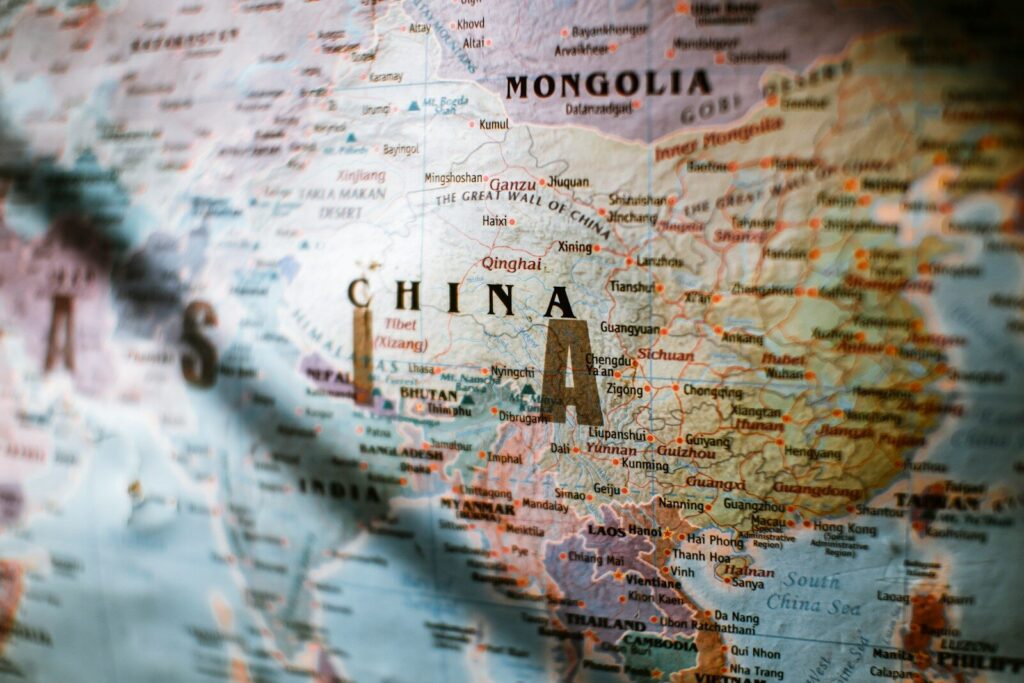
🌏 China Is Playing a Different AI Game Than the US
One of the most important differences is strategic philosophy.
The US AI ecosystem often focuses on:
- frontier AGI research
- foundation models
- long-term superintelligence bets
- venture-funded disruption
China increasingly emphasizes:
- industrial deployment
- applied AI
- manufacturing integration
- cost efficiency
- national infrastructure
This creates two parallel models of AI competition.
The American approach:
“Build the smartest AI first.”
The Chinese approach:
“Deploy AI everywhere fastest.”
And honestly?
Both strategies could work.
📉 The Hidden Driver: Tech Layoffs Changed Everything
Another underappreciated factor is the psychological effect of layoffs.
Mass layoffs across Silicon Valley shook trust among engineers and researchers.
Many workers realized:
- loyalty no longer guaranteed stability
- even elite talent was disposable
- immigration status could become fragile overnight
That changed career calculations dramatically.
Chinese firms recognized the opening quickly.
And they moved aggressively.
🧪 Universities Are Becoming Geopolitical Battlegrounds
American universities remain one of the largest training grounds for advanced technical talent.
But tensions are growing around:
- Chinese student visas
- research security
- intellectual property concerns
- collaboration restrictions
Some researchers warn that excessive suspicion could backfire by pushing top talent away permanently.
And China is using that narrative strategically:
“Come home where your work is trusted and valued.”
That message resonates with some scientists who increasingly feel caught between politics and research.
🚀 Why This Matters Beyond China and America
This is not just bilateral competition anymore.
Countries worldwide are now competing for:
- AI researchers
- semiconductor experts
- robotics talent
- computational scientists
Because governments increasingly believe:
talent concentration determines technological power.
And unlike factories, talent is mobile.
⚠️ The Big Question: Can the US Still Retain Global Tech Dominance?
America still holds enormous advantages:
- elite universities
- frontier research labs
- venture capital networks
- open innovation culture
- advanced semiconductor leadership
But dominance is no longer automatic.
The rise of China’s returnee ecosystem signals something bigger:
The era of one-way global talent migration may be ending.
And once talent flows become multipolar, innovation becomes multipolar too.
🔮 What Happens Next?
Three major trends are likely:
1. Intensified AI talent competition
Countries will increasingly compete directly for elite researchers.
2. Higher compensation wars
AI talent packages may become even more extreme globally.
3. National AI ecosystems become more self-sufficient
China, the US, and other regions may build more independent research pipelines.
That could fragment the global tech ecosystem into competing blocs.
❓ Frequently Asked Questions (FAQ)
What are “sea turtles” in China?
“Sea turtles” refers to Chinese professionals who study or work overseas and later return to China.
Why are Chinese AI researchers returning home?
Main reasons include:
- strong AI opportunities in China
- government incentives
- immigration uncertainty in the US
- growing geopolitical tensions
- competitive compensation
Is Silicon Valley losing talent?
Not entirely, but the talent flow is becoming more balanced than in previous decades.
Why is AI talent so important?
Because elite researchers and engineers are critical for developing advanced AI systems and maintaining technological leadership.
Does China now compete directly with Silicon Valley?
Yes. Especially in areas like:
- generative AI
- robotics
- industrial AI
- autonomous systems
- large-scale deployment
Are Chinese salaries competitive with US tech firms?
For top-tier talent, increasingly yes — especially when incentives and subsidies are included.
Could this weaken America’s AI leadership?
Potentially. Talent migration affects innovation capacity, startup formation, and research momentum.
Is this only about politics?
No. Economic opportunity, infrastructure scale, career growth, and family considerations also matter heavily.
🧠 Final Thought
The global AI race is no longer just about chips, algorithms, or funding.
It is about people.
For decades, Silicon Valley acted like gravity — pulling the world’s best engineers into one concentrated ecosystem.
Now that gravity is weakening.
And China is building its own center of technological mass fast enough that many of its brightest minds no longer feel they must leave to shape the future.
That shift may become one of the most important geopolitical changes of the AI era.
Sources The Wall Street Journal