
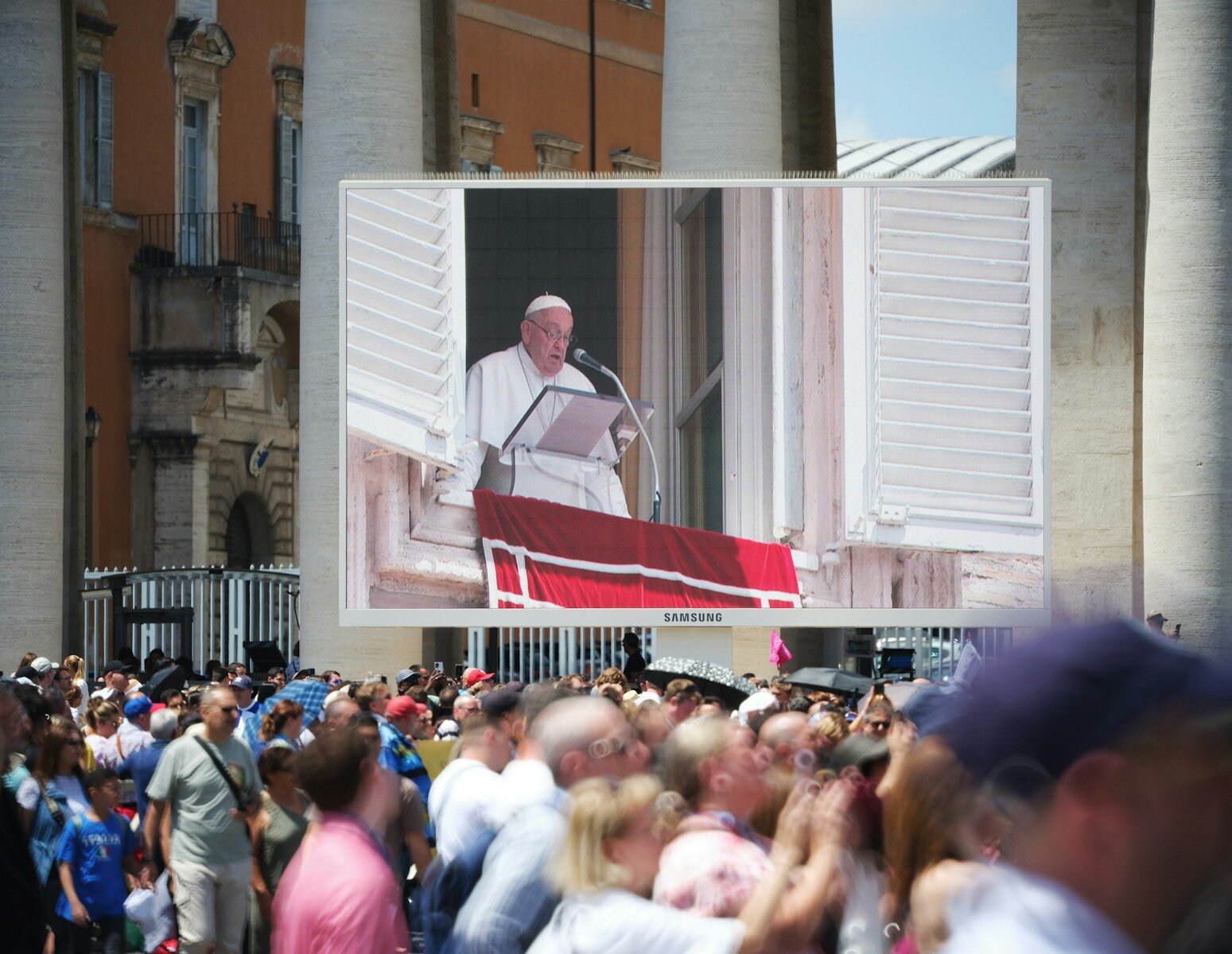
As artificial intelligence races forward at breakneck speed, warnings are now coming from an unexpected place:
The Vatican.
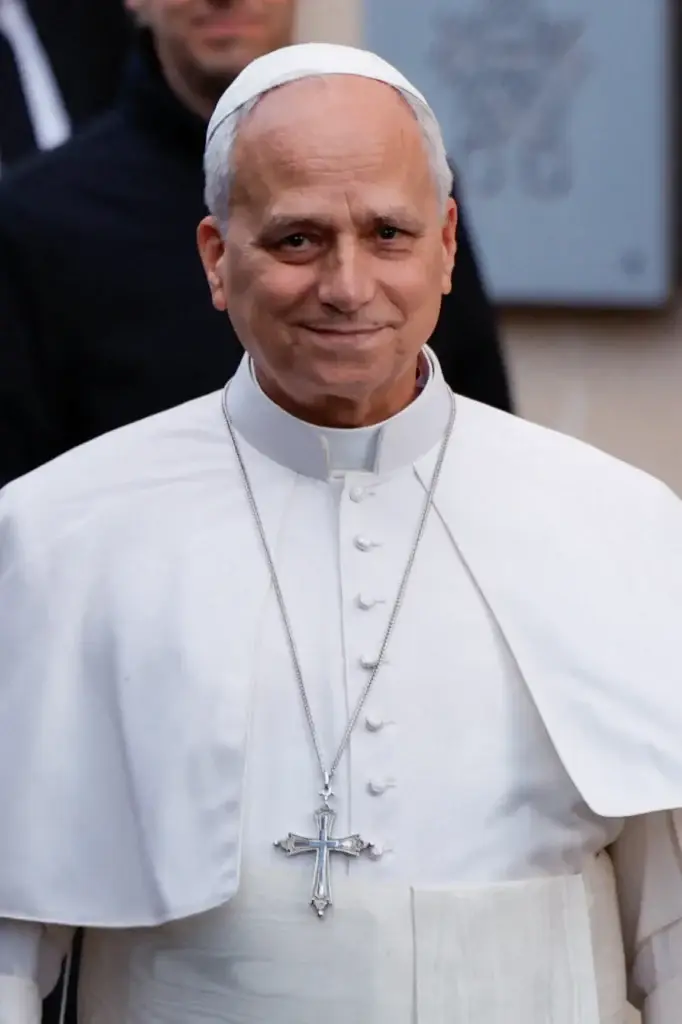
While executives in Silicon Valley compete to build increasingly powerful AI systems, Pope Leo XIV has reportedly begun addressing the moral and spiritual consequences of artificial intelligence with unusual urgency.
That alone says something profound.
Because when religious institutions that survived empires, world wars, industrial revolutions, and the rise of the internet start publicly focusing on AI, it signals that artificial intelligence is no longer just a technology story.
It has become a civilization story.
The debate around AI is expanding far beyond:
- Engineering
- Venture capital
- Productivity
- Startups
It is increasingly entering discussions about:
- Human dignity
- Meaning
- Ethics
- Labor
- Truth
- Consciousness
- Power
- The future of humanity itself
And the Vatican appears to believe society is moving far faster than its moral frameworks can comfortably handle.
Honestly?
A growing number of technologists quietly agree.
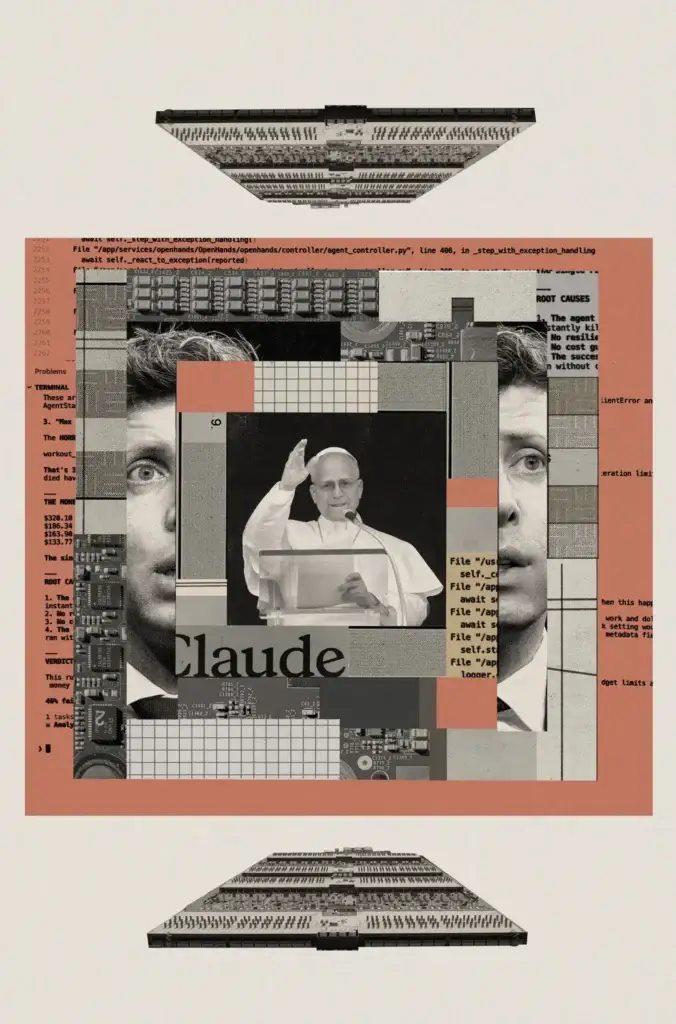
Why the Vatican Is Paying Attention to AI
The Catholic Church has historically engaged with major technological transformations:
- Industrialization
- Nuclear weapons
- Biotechnology
- Global capitalism
- Environmental issues
Artificial intelligence now joins that list.
Why?
Because AI is not merely another tool.
It increasingly influences:
- Human communication
- Knowledge systems
- Labor markets
- Creativity
- Education
- Political information
- Social trust
- Decision-making
Few technologies in history have spread across so many aspects of civilization simultaneously.
That scale naturally raises moral questions.
And religious institutions specialize in asking long-term moral questions society often ignores during technological excitement.
Silicon Valley Often Speaks Like AI Is Destiny
One reason religious leaders are becoming concerned is the increasingly ideological tone surrounding AI development.
Some AI advocates describe artificial intelligence almost like:
- An inevitable evolutionary leap
- A new form of intelligence
- A civilization-transforming force
- A path toward digital transcendence
In some corners of Silicon Valley, AI rhetoric has become surprisingly quasi-religious.
You hear phrases about:
- “Superintelligence”
- “Post-human futures”
- “Digital immortality”
- “Godlike AI”
- “Machine consciousness”
To critics, this sometimes sounds less like engineering…
…and more like techno-spiritual mythology.
That concerns institutions grounded in older philosophical traditions about human meaning and moral responsibility.
The Core Fear: Technology Advancing Faster Than Wisdom
At the center of many religious concerns sits one fundamental issue:
Humanity’s technical power is growing faster than its ethical maturity.
That concern is not unique to religion.
Many scientists, ethicists, and even AI researchers express similar fears.
AI systems are becoming:
- More persuasive
- More autonomous
- More integrated into society
- More capable of influencing behavior
But governance systems remain fragmented and slow.
The Vatican appears particularly concerned about a world where:
- Efficiency replaces morality
- Automation weakens human dignity
- Truth becomes harder to verify
- Human judgment becomes secondary to machine systems
These are philosophical concerns as much as technical ones.
AI Raises Questions Religion Has Asked for Centuries
Interestingly, artificial intelligence overlaps with some of humanity’s oldest philosophical questions:
- What is consciousness?
- What makes humans unique?
- What is free will?
- Can intelligence exist without morality?
- What gives life meaning?
- What responsibilities come with creation?
Religious traditions have debated these themes for thousands of years.
Now AI is forcing secular society to confront them again through technology.
That creates an unusual convergence between:
- Ancient philosophy
and - Frontier engineering
A combination few people expected a decade ago.
Automation and Human Dignity Are Becoming Major Concerns
One major Vatican concern reportedly involves labor and human worth.
AI threatens to automate increasing amounts of:
- Cognitive work
- Administrative tasks
- Creative production
- Customer interaction
- Professional services
Historically, work has been more than economics.
For many people, work provides:
- Identity
- Purpose
- Community
- Structure
- Meaning
If AI destabilizes labor markets dramatically, the social consequences could extend beyond income.
The deeper fear is societal dislocation.
And religious institutions tend to focus heavily on human dignity during periods of economic transformation.
Deepfakes and AI Misinformation Worry Religious Leaders Too
Modern AI systems can already:
- Generate fake videos
- Mimic voices
- Produce persuasive misinformation
- Simulate authority figures
- Manipulate emotional reactions
That creates profound risks for:
- Democracy
- Trust
- Journalism
- Religious communication
- Public truth itself
The Vatican understands something many technologists underestimate:
Civilization depends heavily on shared trust systems.
If AI floods society with synthetic reality indistinguishable from authentic reality, institutions across society may struggle.
Not just governments.
Not just media.
Religious institutions too.
The Catholic Church Has Seen Technological Upheaval Before
One reason Vatican commentary carries historical weight is because the Church has survived enormous technological transitions:
- The printing press
- Industrialization
- Radio
- Television
- The internet
Each transformed:
- Authority
- Communication
- Culture
- Social organization
AI may ultimately prove even more disruptive because it affects cognition itself.
Not just information distribution.
That distinction matters enormously.
Some Tech Leaders Are Quietly Seeking Moral Guidance
Interestingly, some people inside the technology industry increasingly engage with:
- Philosophers
- Ethicists
- Historians
- Religious thinkers
Why?
Because building increasingly powerful AI systems forces uncomfortable questions that engineering alone cannot answer.
Questions like:
- Should every capability be deployed?
- What safeguards matter most?
- Who controls advanced AI?
- What values should AI reflect?
- How much automation is healthy for society?
Technology can answer:
“Can we build it?”
But philosophy asks:
“Should we?”
That second question is becoming harder to avoid.
AI Is Also Reshaping the Concept of Human Creativity
Generative AI systems can now:
- Write essays
- Compose music
- Generate images
- Produce films
- Mimic artistic styles
This creates existential tension for many creators.
Religious traditions often place deep importance on:
- Human creativity
- Individual expression
- Spiritual meaning in art
If machines increasingly simulate creativity, society may need to redefine what authentic human expression means.
That debate is only beginning.
The AI Debate Is Quietly Becoming Spiritual
Even outside organized religion, AI increasingly triggers spiritual anxieties:
- Fear of losing human uniqueness
- Anxiety about machine consciousness
- Questions about meaning in automated societies
- Concerns about technological control
People often frame AI debates in technical language.
Underneath, many arguments are actually philosophical or spiritual.
The conversation increasingly revolves around:
- What humans are
- What humans should become
- What role machines should play in civilization
Those are ancient questions wearing futuristic clothing.
Why Silicon Valley and Religious Institutions See the Future Differently
Technology culture often prioritizes:
- Speed
- Innovation
- Disruption
- Optimization
- Scalability
Religious institutions tend to prioritize:
- Stability
- Human dignity
- Moral responsibility
- Community
- Long-term consequences
That creates natural tension.
Especially when AI companies race competitively to deploy increasingly powerful systems.
The Vatican’s concerns partly reflect skepticism toward a culture that sometimes assumes:
“If technology is possible, progress demands building it.”
History suggests that assumption occasionally produces disasters.
The Fear of “Playing God” Is Returning
Throughout history, transformative technologies often triggered warnings about humans overreaching:
- Genetic engineering
- Nuclear weapons
- Cloning
- Biotechnology
AI increasingly joins that category.
Not because machines are literally divine.
But because humans are building systems capable of:
- Autonomous reasoning
- Persuasion
- Creativity simulation
- Scientific acceleration
- Large-scale societal influence
The more capable AI becomes, the more humanity confronts uncomfortable questions about:
- Control
- Responsibility
- Limits
- Hubris
Those concerns appear repeatedly across religious traditions.
Why This Conversation Matters Beyond Religion
It would be a mistake to dismiss Vatican concerns as merely theological.
Many secular experts increasingly worry about:
- AI concentration of power
- Economic disruption
- Information collapse
- Surveillance
- Human dependency on machines
- Loss of social cohesion
Religious institutions simply frame these fears through moral language instead of technical language.
But the underlying anxieties often overlap surprisingly closely.
The Bigger Picture
The growing conversation between Silicon Valley and institutions like the Vatican reveals something profound about the AI era:
Artificial intelligence is no longer just changing industries.
It is forcing humanity to reconsider what it means to be human.
For centuries, intelligence, creativity, communication, and reasoning were viewed as uniquely human capacities.
Now machines increasingly imitate all of them.
That creates not only economic disruption…
…but existential disruption.
The rise of AI is pushing civilization into philosophical territory usually reserved for religion, ethics, and metaphysics.
And perhaps that explains why religious voices are entering the conversation more forcefully now.
Because when society begins building systems that may reshape:
- Labor
- Truth
- Creativity
- Human identity
- Power itself
…the debate inevitably becomes larger than technology.
It becomes a question about the future direction of civilization itself.
And that may ultimately be the real issue keeping both priests and programmers awake at night.
Frequently Asked Questions (FAQ)
Why is the Vatican concerned about AI?
The Vatican worries about AI’s effects on:
- Human dignity
- Labor
- Truth
- Ethics
- Social trust
- Human identity
- Moral responsibility
What is Pope Leo XIV saying about AI?
Pope Leo XIV has reportedly emphasized the need for ethical reflection and moral responsibility as AI technology advances rapidly.
Why are religious institutions discussing artificial intelligence?
AI increasingly affects major aspects of human life including work, communication, creativity, and social organization, making it both a technological and moral issue.
What ethical concerns exist around AI?
Major concerns include:
- Misinformation
- Deepfakes
- Job displacement
- Surveillance
- Concentration of power
- Loss of human autonomy
- Bias
- Accountability
Why do some people compare AI discussions to religion?
Some AI rhetoric involves ideas about superintelligence, transcendence, digital immortality, and civilization transformation that resemble quasi-religious narratives.
How does AI affect human creativity?
Generative AI can now create art, music, writing, and videos, raising questions about originality, authenticity, and the meaning of human creativity.
Why is misinformation such a major concern?
AI systems can generate highly realistic fake media capable of undermining public trust, journalism, elections, and institutional credibility.
Is the concern about AI only religious?
No.
Scientists, ethicists, policymakers, and technologists also express concerns about AI safety, governance, economic disruption, and social consequences.
Why does AI raise philosophical questions?
AI challenges assumptions about:
- Consciousness
- Intelligence
- Human uniqueness
- Creativity
- Moral responsibility
- Free will
Could AI reshape civilization itself?
Potentially yes.
AI may transform:
- Economies
- Labor systems
- Education
- Communication
- Governance
- Creativity
- Human relationships with technology
Many experts believe its long-term impact could rival or exceed previous industrial revolutions.
Sources The New York Times

