Not long ago, food delivery meant:
- A bicycle courier
- A scooter rider
- A stressed-out driver circling apartment blocks at midnight
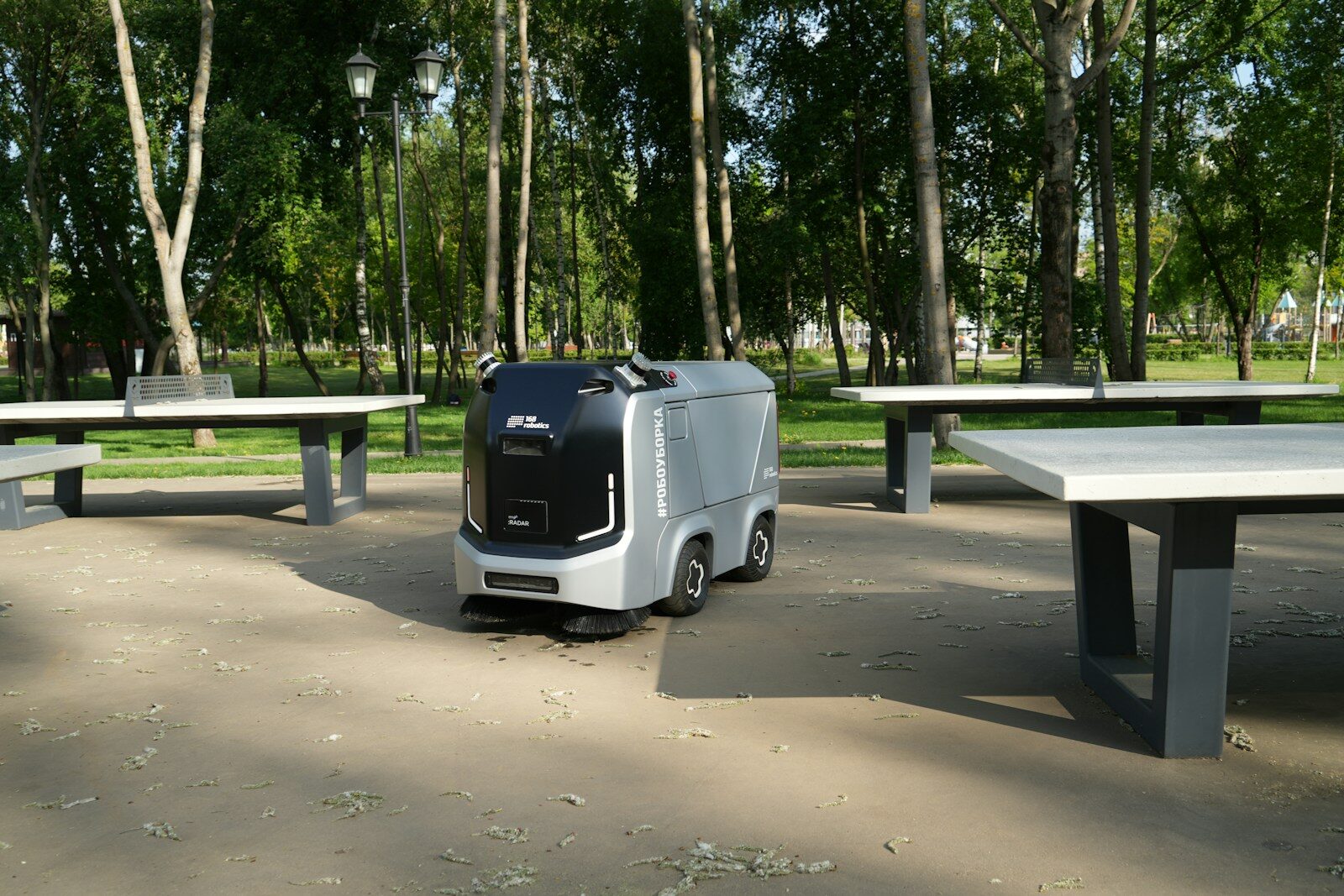
Now in parts of Los Angeles, the future rolls quietly down the sidewalk on six tiny wheels.
Small autonomous delivery robots are rapidly appearing across urban neighborhoods, carrying:
- Groceries
- Takeout meals
- Convenience store orders
- Pharmacy items
- Retail products
At first glance, they look oddly harmless.
Cute, even.
But behind these rolling machines sits a much larger transformation involving:
- Artificial intelligence
- Automation
- Urban infrastructure
- Labor disruption
- Surveillance
- Corporate logistics
- The future of cities themselves
Because these robots are not really about food delivery.
They are about redesigning how modern cities move goods.
And companies believe this is only the beginning.

Why Delivery Robots Are Suddenly Everywhere
Several trends collided at once:
- Rising labor costs
- AI improvements
- Better sensors
- E-commerce growth
- Demand for rapid delivery
- Urban congestion
- Venture capital investment
Together, they created ideal conditions for autonomous delivery systems.
Companies now see sidewalk robots as a potentially massive business opportunity because short-distance delivery — often called “last-mile logistics” — is notoriously expensive.
Ironically, the final mile of delivery is often the most difficult and costly part of the entire supply chain.
Human drivers require:
- Wages
- Insurance
- Scheduling
- Benefits
- Fuel
- Breaks
Robots, at least in theory, operate far more cheaply once deployed at scale.
That economic incentive is driving aggressive experimentation.
The Real Goal Is Not Convenience — It Is Logistics Automation
Most companies market delivery robots as:
- Cute
- Sustainable
- Efficient
- Futuristic
But the real objective is much bigger:
Reducing human labor costs inside massive logistics networks.
The global delivery economy is enormous.
Food delivery alone became a multibillion-dollar industry, accelerated heavily by the pandemic years.
Now companies want to automate increasing portions of that ecosystem.
Autonomous robots could eventually handle:
- Restaurant orders
- Grocery runs
- Retail delivery
- Warehouse transfers
- Campus logistics
- Hospital transportation
The long-term vision is an urban infrastructure layer where goods move semi-autonomously through cities continuously.
That could fundamentally reshape urban commerce.
Why Los Angeles Became a Testing Ground
Los Angeles is uniquely attractive for delivery robot companies because it combines:
- Dense urban activity
- Tech investment
- Large consumer demand
- Sprawling neighborhoods
- Heavy traffic congestion
- Strong delivery culture
Traffic itself becomes part of the argument for robots.
Small sidewalk bots avoid many road-related problems entirely.
They do not sit in traffic jams.
They do not need parking.
They can operate on short routes efficiently.
For tech companies, LA offers a giant real-world laboratory.
And increasingly, cities themselves are becoming experimental AI environments.
The Robots Are Smarter Than They Look
Most delivery robots rely on combinations of:
- Cameras
- GPS
- Sensors
- AI navigation systems
- Mapping software
- Obstacle detection
- Remote monitoring
Many systems are only partially autonomous.
Human operators sometimes monitor fleets remotely and intervene when robots encounter:
- Construction zones
- Pedestrians
- Blocked sidewalks
- Complex intersections
- Unexpected obstacles
This hybrid model matters because fully autonomous navigation in messy urban environments remains extremely difficult.
Real cities are chaotic.
Humans improvise constantly.
Machines struggle more.
Sidewalks Are Becoming Contested Spaces
One major controversy involves public space.
Sidewalks were historically designed for:
- Pedestrians
- Wheelchairs
- Community movement
- Public interaction
Now commercial robots increasingly compete for that same space.
Critics argue delivery bots can:
- Block pathways
- Interfere with accessibility
- Create hazards for disabled pedestrians
- Congest crowded sidewalks
- Reduce public comfort
This raises deeper questions:
Who owns urban space?
And should corporations be allowed to commercialize sidewalks for automated logistics networks?
Cities are still struggling to answer that.
Labor Concerns Are Growing Fast
Whenever automation expands, labor anxiety follows closely behind.
Delivery workers already operate in highly pressured gig-economy systems involving:
- Tight margins
- Algorithmic management
- Low wages
- Unstable schedules
Many workers fear autonomous delivery systems could eventually replace portions of:
- Courier work
- Food delivery jobs
- Retail logistics roles
Companies often argue robots will supplement humans rather than replace them.
History suggests automation usually changes labor markets more dramatically over time than initially promised.
Especially when businesses identify long-term cost savings.
Delivery Robots Also Collect Data Everywhere They Go
Most people focus on the robots themselves.
Less attention goes to the data infrastructure behind them.
Autonomous delivery systems often collect:
- Street imagery
- Movement patterns
- Traffic data
- Environmental mapping
- Pedestrian behavior information
That creates privacy questions.
Because modern AI systems increasingly rely on constant environmental data collection.
The future city may not simply contain more robots.
It may contain vastly more machine surveillance embedded into everyday infrastructure.
Often quietly.

The Economics Still Have Major Problems
Despite the hype, delivery robots still face serious limitations:
- Battery constraints
- Weather issues
- Vandalism
- Theft
- Navigation complexity
- Maintenance costs
- Regulatory barriers
Dense urban environments are difficult even for advanced AI systems.
Humans remain surprisingly adaptable compared with robots.
A child running across a sidewalk, a fallen sign, road construction, or an aggressive dog can create problems machines struggle to interpret reliably.
This is one reason many autonomous systems still require remote human oversight.
The “fully autonomous” future remains farther away than marketing sometimes implies.
People Are Already Reacting Emotionally to Robots
One fascinating trend:
Humans often anthropomorphize delivery robots.
People:
- Name them
- Film them
- Help them cross streets
- Decorate them online
- Sometimes harass or vandalize them
Tiny robots unexpectedly trigger emotional reactions because humans instinctively respond socially to moving autonomous objects.
This may sound trivial.
It is not.
As robots become more common in daily life, human psychology around machine interaction becomes increasingly important.
Especially for companies designing public-facing AI systems.
Universities and Campuses Became Early Robot Zones
Many autonomous delivery systems first expanded on:
- College campuses
- Corporate campuses
- Controlled environments
Why?
Because campuses offer:
- Predictable layouts
- Limited traffic complexity
- Dense customer populations
- Easier regulation
These environments function as stepping stones toward broader urban deployment.
The strategy mirrors earlier self-driving vehicle testing:
Start controlled.
Expand gradually.
Collect data continuously.
Environmental Claims Are More Complicated Than Advertised
Robot companies often market delivery bots as environmentally friendly alternatives.
Sometimes that is true.
Small electric robots may reduce:
- Car trips
- Fuel usage
- Emissions from short deliveries
But the broader environmental equation is more complicated.
Factors include:
- Battery manufacturing
- Data center energy use
- Infrastructure production
- Electronic waste
- Fleet maintenance
- Increased delivery consumption behavior
Technology rarely produces purely simple environmental outcomes.
The details matter.
Cities Worldwide Are Watching Closely
What happens in Los Angeles may influence policies globally.
Cities across:
- North America
- Europe
- Asia
…are experimenting with autonomous delivery systems.
Urban planners increasingly realize AI-driven logistics may eventually reshape:
- Sidewalk design
- Traffic systems
- Zoning rules
- Commercial districts
- Infrastructure priorities
Future cities may be built not only for humans…
…but also for autonomous machines constantly moving through urban space.
That possibility changes architecture itself.
The Bigger Vision Is Fully Automated Urban Commerce
Delivery robots are just one piece of a much larger automation ecosystem involving:
- Self-driving vehicles
- AI warehouses
- Drone delivery
- Robotic fulfillment systems
- Autonomous inventory management
The ultimate goal is frictionless logistics:
Goods moving from warehouse to consumer with minimal human involvement.
That could dramatically reshape:
- Retail
- Labor markets
- Transportation
- City infrastructure
- Consumer behavior
The robots on sidewalks today may represent the earliest visible layer of a much larger transformation already underway.
Why This Debate Matters More Than It Seems
It is easy to laugh at tiny food-delivery robots.
But these machines represent something bigger:
The gradual automation of everyday urban life.
Cities increasingly function as software environments optimized by algorithms, sensors, AI systems, and logistics networks.
That changes:
- Public space
- Human interaction
- Labor
- Privacy
- Commerce
- Urban identity itself
The debate is therefore not really about robots carrying burritos.
It is about deciding what kind of cities humans want to live in as automation expands into physical space.
The Bigger Picture
The rise of delivery robots in Los Angeles reveals how artificial intelligence is moving beyond screens and into the physical world.
For years, AI mainly lived inside:
- Search engines
- Social media
- Chatbots
- Recommendation systems
Now it increasingly navigates sidewalks, streets, warehouses, and public infrastructure.
That transition matters enormously.
Because once automation enters physical environments, it starts reshaping daily life in visible ways.
The delivery robot boom may seem small today.
But historically, massive technological transformations often begin quietly:
One machine.
One neighborhood.
One convenience feature people barely notice at first.
Then suddenly the infrastructure of ordinary life changes around everyone.
And the tiny robots rolling through Los Angeles sidewalks may be early messengers of a much larger automated future already approaching.
Frequently Asked Questions (FAQ)
What are delivery robots?
Delivery robots are small autonomous or semi-autonomous machines designed to transport food, groceries, and other goods over short distances.
Why are companies investing in delivery robots?
Businesses hope robots can reduce labor costs and improve efficiency in expensive last-mile delivery operations.
Why is Los Angeles important for robot testing?
Los Angeles offers dense urban activity, heavy delivery demand, traffic congestion, and strong tech investment, making it an ideal testing environment.
Are delivery robots fully autonomous?
Usually not completely.
Many systems still rely on remote human operators for assistance during difficult navigation situations.
Could delivery robots replace human workers?
Potentially in some roles.
Critics worry automation could reduce demand for certain delivery and courier jobs over time.
What privacy concerns exist with delivery robots?
Robots often collect environmental and navigation data through cameras and sensors while moving through public spaces.
Are delivery robots environmentally friendly?
They may reduce short car trips and emissions, but environmental impact also depends on manufacturing, batteries, maintenance, and infrastructure energy usage.
Why are sidewalks becoming controversial?
Some residents worry robots:
- Block pedestrian movement
- Interfere with accessibility
- Commercialize public spaces
- Create congestion
What technologies power delivery robots?
Common technologies include:
- AI navigation
- Cameras
- GPS
- Sensors
- Mapping systems
- Remote monitoring software

Could delivery robots become common worldwide?
Very likely.
Many cities globally are already experimenting with autonomous delivery systems as part of broader AI-driven urban infrastructure development.
Sources The Guardian