
For years, schools were told technology would revolutionize learning.
First came laptops.
Then tablets.
Then digital classrooms.
Then remote learning.
Now artificial intelligence chatbots are arriving as the next “educational breakthrough.”
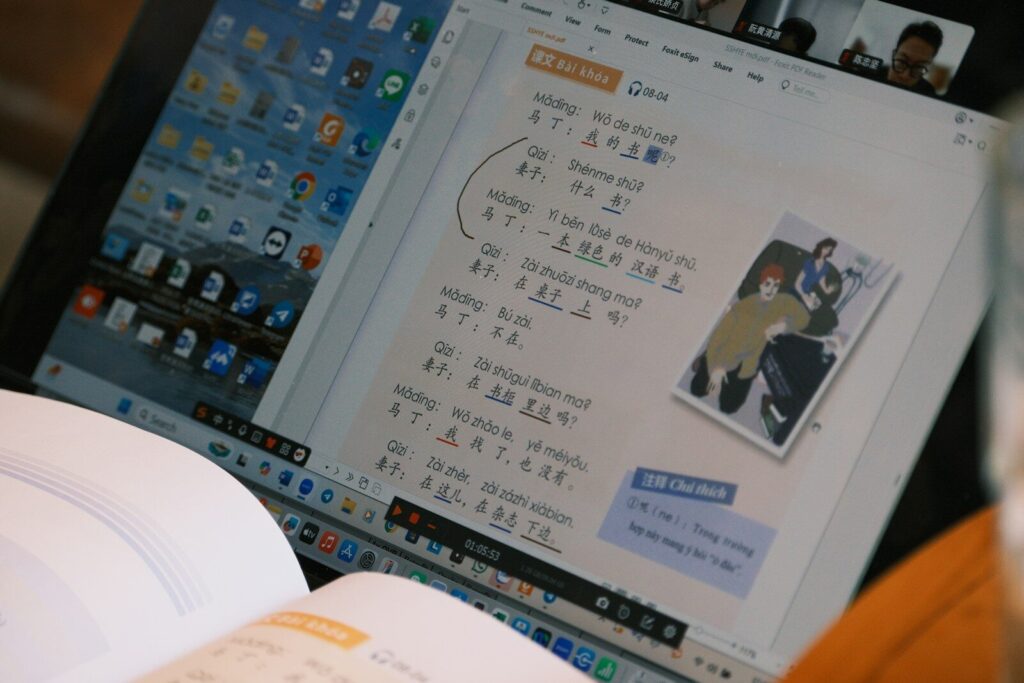
But a growing number of teachers are no longer convinced more screens automatically mean better education.
In fact, some educators believe the opposite is happening.
Concerns are rising across American schools after major teachers’ unions and education advocates began urging schools to slow the rapid expansion of AI chatbots and reduce excessive screen exposure inside classrooms.
The debate is no longer just about cheating or homework shortcuts.
It is becoming something much larger:
A fight over childhood attention, human interaction, cognitive development, and the future purpose of education itself.
Because many teachers increasingly fear schools are drifting toward a model where:
- Students stare at screens longer
- AI mediates learning
- Human interaction shrinks
- Critical thinking weakens
- Attention spans deteriorate
- Social development suffers
And after years of digital overload, many educators are asking a blunt question:
What if schools already became too technological long before AI arrived?

Why Teachers Are Growing Increasingly Alarmed
The rapid rise of generative AI tools created a shockwave inside education.
Students can now use chatbots to:
- Write essays
- Summarize books
- Solve math problems
- Generate code
- Translate languages
- Create presentations
- Answer homework questions instantly
Schools initially focused heavily on academic dishonesty concerns.
But many teachers now believe the deeper issue is broader:
AI may fundamentally alter how children think and learn.
Educators increasingly worry students could become:
- Passive consumers of generated answers
- Less capable of deep focus
- More dependent on automation
- Less willing to struggle through difficult thinking
That matters because learning itself often requires friction.
Struggle is not always a flaw in education.
Sometimes it is the mechanism that builds understanding.
Screen Fatigue Is Already a Massive Problem
Long before AI chatbots entered classrooms, many teachers noticed rising problems involving:
- Shortened attention spans
- Classroom distraction
- Reduced reading stamina
- Digital dependency
- Social disengagement
The pandemic accelerated these trends dramatically.
Students spent years learning through:
- Zoom classes
- Tablets
- Laptops
- Educational apps
- Constant digital interaction
Many educators now say children returned to classrooms:
- More distracted
- More anxious
- Less socially engaged
- Less capable of sustained concentration
Adding AI chatbots on top of existing screen-heavy learning environments worries many teachers deeply.
The Debate Is Not Really “Pro-Technology vs Anti-Technology”
One major misunderstanding:
Most educators are not rejecting technology entirely.
Teachers already use digital tools successfully for:
- Accessibility support
- Research
- Communication
- Language learning
- Organization
- Interactive learning
The concern is about balance.
Many educators fear schools increasingly adopt technology simply because:
- It is fashionable
- Companies market it aggressively
- Administrators fear falling behind
- Investors promote “AI transformation”
Not necessarily because evidence proves it improves learning outcomes consistently.
Teachers increasingly want schools to ask:
“What educational problem are we actually solving?”
before adding more AI systems.
AI Could Change the Teacher-Student Relationship
One major fear involves human connection.
Education is not merely information transfer.
Good teaching also involves:
- Mentorship
- Emotional support
- Encouragement
- Social development
- Classroom culture
- Human trust
AI chatbots simulate conversation but cannot fully replace:
- Human empathy
- Real-world judgment
- Emotional understanding
- Community building
Critics worry overreliance on AI could gradually weaken the relational side of education.
And that side may matter more than many policymakers realize.
Students May Lose Critical Thinking Skills
One major concern is cognitive outsourcing.
If students increasingly rely on AI for:
- Writing
- Problem-solving
- Research
- Analysis
…they may practice those skills less themselves.
Historically, education required students to:
- Wrestle with ideas
- Organize arguments
- Interpret information
- Build reasoning ability
AI makes bypassing portions of that process extremely easy.
Some educators fear students could become highly efficient at generating polished outputs…
without developing deep understanding underneath.
That distinction matters enormously.
Silicon Valley’s Incentives Do Not Always Match Educational Goals
Technology companies see education as a huge market opportunity.
AI companies increasingly market educational tools promising:
- Personalized tutoring
- Faster grading
- Automated lesson support
- Student engagement optimization
Some of these tools may genuinely help.
But critics argue corporate incentives often prioritize:
- User growth
- Data collection
- Platform dependency
- Market expansion
Schools may therefore become testing grounds for technologies whose long-term developmental effects remain poorly understood.
Teachers’ unions increasingly want slower adoption and stronger evidence before widespread deployment.
Research on Excessive Screen Time Keeps Raising Concerns
Scientists continue debating screen-time effects, but many studies suggest excessive digital exposure may correlate with:
- Sleep disruption
- Reduced concentration
- Anxiety
- Depression
- Social difficulties
- Lower reading endurance
The exact causal relationships remain debated.
But many educators increasingly feel classrooms already became too digitally saturated.
AI tools risk intensifying that trend further.
Especially among younger students whose brains are still developing.

Teachers Fear Human Skills Are Being Devalued
Another underlying tension:
AI systems increasingly automate tasks once associated with intellectual growth.
Teachers worry schools may unintentionally signal that:
- Fast answers matter more than understanding
- Efficiency matters more than curiosity
- Output matters more than thoughtfulness
That could reshape how students relate to knowledge itself.
Education historically aimed not only to produce workers…
but also thoughtful citizens capable of:
- Reasoning
- Reflection
- Debate
- Moral judgment
Many educators fear excessive AI dependence could weaken those capacities over time.
Wealthier Families Are Already Pulling Back From Screens
An interesting trend has emerged:
Some wealthy parents increasingly seek:
- Low-tech schools
- Minimal screen environments
- Outdoor education
- Human-centered learning
Ironically, elite education circles sometimes move away from technologies heavily promoted elsewhere.
Critics argue this creates a troubling possibility:
Less privileged students may receive more automated education…
while wealthier children retain more human interaction and individualized teaching.
That could deepen educational inequality.
AI Tutors Could Still Offer Real Benefits
Not all AI use in education is harmful.
Supporters argue AI systems may help:
- Students with disabilities
- Language learners
- Under-resourced schools
- Personalized pacing
- Homework support
- Accessibility challenges
AI tutoring could potentially expand educational access dramatically.
The key debate is therefore not:
“Should AI exist in schools?”
But rather:
“How much AI is healthy, and where should limits exist?”
That question remains unresolved.
Schools Are Struggling to Create Rules Fast Enough
AI technology evolves far faster than education policy.
Many school districts still lack clear rules around:
- AI-assisted assignments
- Chatbot use
- Data privacy
- Student monitoring
- Academic integrity
- Age restrictions
Teachers often feel they are improvising in real time while technology changes monthly.
This uncertainty fuels calls for caution.
Especially when children are involved.
Attention May Become the Most Valuable Educational Resource
One reason educators worry so deeply:
Modern technology increasingly competes aggressively for human attention.
Students already navigate:
- Social media
- Notifications
- Short-form video
- Gaming platforms
- Algorithmic entertainment
AI systems could intensify personalized engagement even further.
Some teachers fear schools risk training students into fragmented attention habits incompatible with:
- Deep reading
- Sustained focus
- Complex reasoning
- Intellectual patience
Those skills remain foundational for serious learning.
The Bigger Fear: Education Becoming Fully Automated
For some educators, the long-term concern is existential.
If AI increasingly handles:
- Tutoring
- Lesson generation
- Grading
- Administrative tasks
- Student guidance
What role remains for teachers?
Most experts believe human educators remain essential.
But fears about:
- Cost-cutting
- Automation pressure
- Reduced staffing
- Scaled digital instruction
…continue growing.
Especially as governments and institutions seek budget efficiency.
The Bigger Picture
The pushback against AI chatbots and excessive screen time reflects something larger than a classroom policy dispute.
It reveals a growing societal exhaustion with constant digital immersion.
For years, technology companies promised more connectivity, more automation, and more personalized digital experiences would improve life.
Now many educators increasingly wonder:
What if children need less algorithmic mediation, not more?
The AI debate inside schools is therefore becoming a deeper philosophical argument about:
- Attention
- Childhood
- Human development
- Learning
- Social interaction
- Cognitive independence
Artificial intelligence may eventually become a permanent part of education.
But teachers increasingly insist one principle should not be forgotten during the rush toward automation:
Children are not simply productivity systems to optimize.
They are human beings still learning how to think, relate, struggle, focus, and grow.
And many educators believe no chatbot — no matter how advanced — can fully replace the deeply human process required to develop those abilities.
Frequently Asked Questions (FAQ)
Why are teachers concerned about AI chatbots in schools?
Educators worry AI may increase screen dependency, weaken critical thinking, encourage shortcut learning, and reduce meaningful human interaction.
Are teachers completely against technology in education?
No.
Most educators support balanced technology use for accessibility, communication, and learning support while opposing excessive or poorly tested deployment.
Why is screen time becoming controversial again?
Many teachers report students already struggle with:
- Attention spans
- Distraction
- Social engagement
- Reading endurance
- Digital dependency
AI tools may intensify these issues.
How can AI affect student learning?
AI can help with tutoring and accessibility but may also encourage students to outsource thinking and rely too heavily on automated answers.
What benefits could AI offer schools?
Potential benefits include:
- Personalized tutoring
- Accessibility support
- Language assistance
- Faster feedback
- Learning support for under-resourced students
Why are teachers worried about critical thinking?
If students rely on AI for writing and analysis too frequently, they may practice reasoning and problem-solving skills less themselves.
Could AI eventually replace teachers?
Most experts believe human teachers remain essential for mentorship, emotional support, and classroom culture, though automation concerns still exist.
What role does screen time play in this debate?
Many educators believe children already spend excessive time interacting with digital devices both inside and outside school.
Are wealthier families reducing technology use in education?
Some are increasingly choosing low-tech or human-centered educational models with reduced screen exposure.
What larger issue does this debate reveal?
The controversy reflects broader concerns about how constant digital technology affects:
- Attention
- Childhood development
- Human interaction
- Learning quality
- Cognitive independence
Sources The New York Times