

The modern AI gold rush does not just run on code.
It runs on cinematic trailers, emotional storytelling, dramatic product demos, futuristic visuals, carefully engineered hype — and increasingly, Hollywood-style marketing campaigns designed to convince the world that the future has already arrived.
Across Silicon Valley and beyond, AI startups are pouring enormous amounts of money into highly polished promotional videos that often resemble:
- Science-fiction movie trailers
- Apple launch events
- Luxury brand advertisements
- Inspirational documentaries
Rather than traditional software demos.
And in many cases, these videos appear long before products are fully functional.
The trend reveals something important about the AI economy:
Attention itself has become one of the industry’s most valuable currencies.
Because in the current artificial intelligence boom, perception can attract:
- Investors
- Media coverage
- Talent
- Partnerships
- Customers
- Billion-dollar valuations
Sometimes before a business even proves it can sustainably work.
The AI industry increasingly operates not only as a technology race…
but also as a storytelling war.
Why AI Startups Are Obsessed With Hype Videos
Modern AI products are often difficult for average audiences to understand technically.
Large language models, neural networks, multimodal systems, inference optimization, and synthetic agents are not exactly emotionally gripping marketing language.
So startups translate technical complexity into cinematic narratives.
These videos often emphasize:
- Future lifestyles
- Emotional transformation
- Human empowerment
- Revolutionary change
- World-changing ambition
Instead of raw engineering details.
The strategy is intentional.
People rarely invest emotionally in technical architecture.
They invest in visions of the future.
AI Marketing Is Becoming More Like Entertainment
One major shift:
Tech marketing increasingly resembles entertainment media.
Startup launch videos now commonly include:
- Dramatic music
- Professional actors
- Narrative arcs
- Cinematic editing
- Emotional voiceovers
- Sci-fi aesthetics
- Highly stylized product demonstrations
This reflects broader changes in internet culture.
Social media platforms reward:
- Emotion
- Spectacle
- Virality
- Shareability
- Visual intensity
Not technical nuance.
AI companies understand that a compelling video can spread globally within hours and shape public perception instantly.
In many cases, the launch video itself becomes part of the product.
Investors Are Funding Narratives as Much as Technology
Venture capital has always involved storytelling.
Founders pitch visions of the future, not merely current products.
But AI intensified this dynamic dramatically.
Why?
Because the AI market is moving so quickly that investors fear missing the next transformational platform.
That creates powerful incentives to:
- Generate excitement
- Signal momentum
- Appear visionary
- Dominate media attention
- Create urgency
A startup that controls the narrative can attract:
- Funding
- Talent
- Strategic partnerships
Even before achieving profitability.
In some cases, hype becomes a growth strategy itself.
“Demo Culture” Is Taking Over Silicon Valley
AI companies increasingly operate in what critics call:
“Demo culture.”
This means startups focus heavily on:
- Impressive demonstrations
- Viral moments
- Investor presentations
- Public perception
Sometimes more than stable real-world deployment.
A flashy demo can:
- Raise valuations
- Trigger press coverage
- Drive user signups
- Create social buzz
Even if the underlying product still has major limitations.
This phenomenon is not entirely new.
Silicon Valley historically celebrated ambitious vision-first companies.
But generative AI accelerated the cycle dramatically.
AI Videos Often Blur the Line Between Reality and Aspiration
One major criticism of AI marketing:
Promotional videos sometimes imply capabilities beyond what products currently deliver consistently.
This creates tension between:
- Marketing aspiration
and - Technical reality
Some demos are carefully staged.
Others rely on selective editing.
Some represent future goals more than current performance.
Critics argue this can mislead:
- Investors
- Consumers
- Media outlets
Especially in an industry already filled with confusion around what AI can and cannot actually do reliably.
The Psychology Behind AI Hype Is Extremely Powerful
AI marketing works partly because it taps into deep human emotions:
- Curiosity
- Fear
- Hope
- Ambition
- Anxiety about the future
- Desire for relevance
- Fear of being left behind
Many AI campaigns subtly frame the technology as:
Inevitable.
That framing creates psychological pressure.
Companies want audiences to feel:
- Adoption is necessary
- The future is arriving rapidly
- Competitors are already moving
- Resistance equals obsolescence
This urgency helps drive both investment and adoption.

Startups Are Competing for Attention in an Overcrowded AI Market
The AI startup landscape exploded rapidly.
Thousands of companies now compete across:
- Generative AI
- Video creation
- AI agents
- Coding tools
- Search
- Robotics
- Healthcare
- Enterprise automation
Most will fail.
That reality intensifies pressure to stand out visually and emotionally.
A powerful launch video may generate more visibility than months of traditional marketing.
Especially when amplified through:
- Social media
- Podcasts
- Influencer commentary
- Tech journalism
- Venture capital networks
In the AI economy, visibility itself can become strategic infrastructure.
Hollywood Talent Is Quietly Entering Tech Marketing
As budgets grow, many startups increasingly hire:
- Film directors
- Creative agencies
- Motion graphics studios
- Brand strategists
- Cinematographers
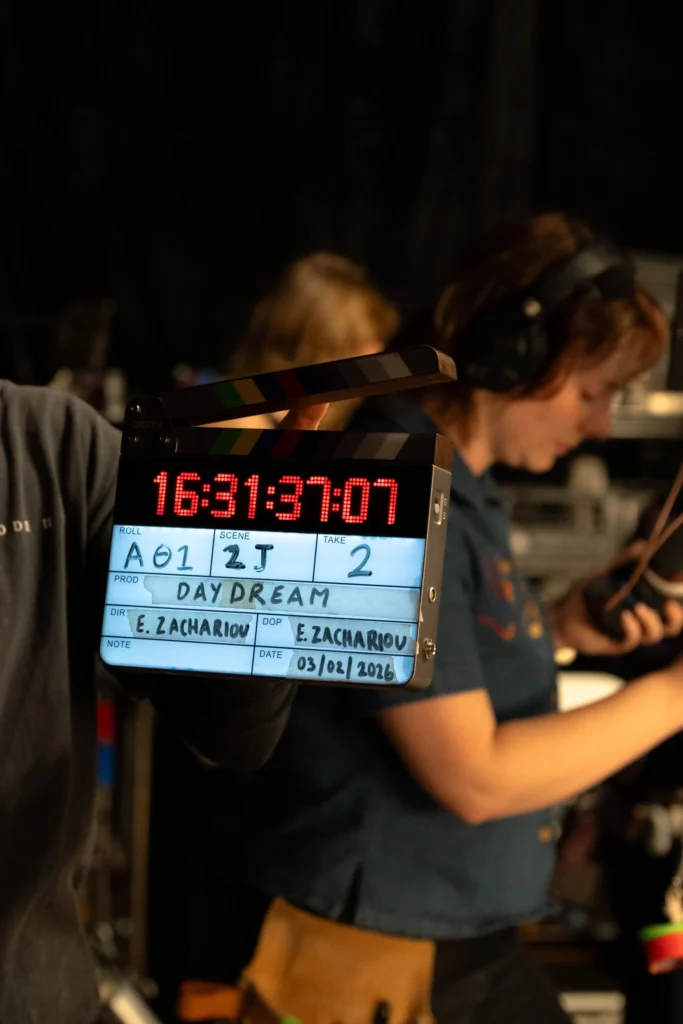
Some AI launch campaigns now resemble major entertainment productions.
This convergence between:
- Technology
and - Media storytelling
…is accelerating quickly.
Ironically, AI companies are borrowing heavily from the entertainment industry even while generative AI simultaneously threatens parts of Hollywood’s creative labor market.
AI Companies Are Selling Emotion, Not Just Software
One reason these videos work:
People do not buy technology purely rationally.
They buy:
- Identity
- Aspiration
- Status
- Security
- Hope
- Competitive advantage
AI marketing often frames products as gateways to:
- Smarter work
- Greater creativity
- Faster productivity
- Personal transformation
- Economic survival
The emotional message is often:
“Use this AI tool or risk becoming irrelevant.”
That is an extremely powerful motivator.
Some Critics Compare the AI Boom to Earlier Tech Bubbles
Skeptics increasingly warn that parts of the AI industry resemble previous speculative cycles:
- Dot-com bubble
- Crypto hype era
- Metaverse investment frenzy
Common warning signs include:
- Huge valuations
- Narrative-driven investing
- Aggressive branding
- Revenue uncertainty
- Fear-of-missing-out psychology
This does not mean AI lacks real value.
AI clearly has transformative potential.
But critics argue excessive hype can distort:
- Public expectations
- Investment decisions
- Market stability
Especially when marketing races ahead of technical reliability.
Social Media Algorithms Reward AI Spectacle
Platforms like:
- TikTok
- X
- YouTube
…reward content that generates emotional engagement rapidly.
AI companies increasingly optimize launches for algorithmic visibility.
That encourages:
- Short dramatic clips
- Bold claims
- Futuristic visuals
- Viral product moments
Nuanced technical explanations rarely perform as well online.
This pushes the entire industry toward spectacle.
Even Serious AI Companies Feel Forced Into the Hype Cycle
Interestingly, not every company enjoys the marketing arms race.
Some executives privately worry:
- Expectations are becoming unrealistic
- Public understanding is shallow
- Overpromising could trigger backlash later
But companies also fear:
If competitors dominate attention, investors and customers may assume they are falling behind.
This creates a self-reinforcing cycle:
Everyone feels pressure to market aggressively because everyone else is doing it too.
The Bigger Question: Are We Watching Innovation or Performance Art?
One reason the hype-video phenomenon matters:
It reflects how modern technology increasingly operates through narrative construction.
In many cases, startups are selling:
- Future possibilities
- Emotional imagination
- Cultural momentum
As much as current functionality.
The line between:
- Product demonstration
and - Visionary storytelling
…is becoming increasingly blurry.
That does not necessarily mean companies are fraudulent.
But it does mean audiences must learn to separate:
- Genuine capability
from - Marketing theater
A skill becoming increasingly important in the AI era.
The Bigger Picture
The explosion of AI hype videos reveals something deeper about modern technology culture.
Artificial intelligence is not just competing in laboratories anymore.
It is competing for cultural dominance.
The companies that shape public imagination may gain enormous advantages in:
- Investment
- Recruitment
- Media influence
- Market power
- Consumer trust
This makes storytelling strategically critical.
And in a world saturated with information, cinematic AI marketing becomes a way to manufacture belief itself.
That may sound dramatic.
But belief drives markets.
Belief attracts capital.
Belief shapes adoption.
And right now, the AI industry is spending millions trying to convince the world not only that its products matter…
but that the future itself belongs to those building them.
The real question is whether the technology can ultimately live up to the stories being sold around it.
Because history shows hype can accelerate revolutions…
but it can also inflate bubbles large enough to shake entire industries when reality finally catches up.
Frequently Asked Questions (FAQ)
Why are AI startups spending so much on promotional videos?
Companies use cinematic marketing to attract investors, customers, talent, and media attention in an extremely competitive AI market.
Why do AI launch videos look like movie trailers?
Modern tech marketing increasingly borrows techniques from entertainment media because emotional storytelling performs well online and creates stronger audience engagement.
Are AI startup demos always fully accurate?
Not necessarily.
Some demos represent ideal scenarios, future goals, or carefully staged examples rather than everyday real-world performance.
Why is hype so important in the AI industry?
Attention helps companies raise funding, recruit talent, gain customers, and establish market relevance quickly.
What is “demo culture”?
It refers to an environment where impressive product demonstrations and viral presentations become central to startup success and investor excitement.
Are investors funding technology or marketing narratives?
Usually both.
Venture capital often depends heavily on belief in future potential, especially in rapidly growing sectors like AI.
Why do critics compare AI hype to past tech bubbles?
Some observers see similarities to earlier speculative cycles involving aggressive marketing, inflated expectations, and fear-of-missing-out investing behavior.
How does social media influence AI marketing?
Platforms reward visually dramatic, emotionally engaging content, encouraging companies to create highly cinematic promotional campaigns.
Are all AI companies comfortable with the hype cycle?
No.
Some executives worry excessive marketing may create unrealistic public expectations and eventual backlash if products underperform.
What larger trend does this reveal?
The AI industry increasingly operates through both:
- Technological innovation
and - Narrative control
Companies are competing not only to build AI systems…
but also to shape how society imagines the future itself.
Sources The New York Times

