The artificial intelligence boom has transformed the technology industry, sparked massive investment, and fueled one of the largest infrastructure expansions in modern history.
But as AI companies race to build larger models and more powerful data centers, a new challenge has emerged that few consumers ever think about: electricity.
Across the United States, lawmakers, utility companies, regulators, and technology firms are increasingly debating who should pay for the enormous energy demands created by AI infrastructure. The discussion has become so significant that members of Congress are now examining whether ordinary consumers could ultimately bear part of the cost of powering America’s rapidly growing AI industry.
What initially appeared to be a technology story is quickly becoming an energy, economic, and public-policy story.
The central question is simple:
Should households and small businesses help subsidize the power infrastructure required for AI data centers, or should technology companies pay the full cost themselves?
The answer could shape the future of both artificial intelligence and America’s energy system.
Why AI Requires So Much Electricity
Artificial intelligence models consume extraordinary amounts of computing power.
Every AI interaction requires data centers to perform millions—or sometimes billions—of calculations.
The largest AI systems depend on:
- Thousands of advanced GPUs
- Massive server clusters
- High-speed networking equipment
- Continuous cooling systems
- Round-the-clock operation
Unlike traditional software services, AI workloads are computationally intensive and energy hungry.
Training a large AI model can consume as much electricity as thousands of homes use in a year.
Even after training is complete, running AI services for millions of users requires substantial ongoing energy consumption.
As AI adoption expands, electricity demand is rising much faster than many utility planners expected.
The AI Data Center Construction Boom
Technology companies are investing hundreds of billions of dollars into AI infrastructure.
Major players are building or expanding:
- Hyperscale data centers
- AI supercomputing facilities
- Cloud-computing campuses
- Dedicated AI clusters
The scale is unprecedented.
Many modern AI campuses consume as much electricity as small cities.
Some proposed facilities are expected to require:
- Hundreds of megawatts of power
- New transmission lines
- Additional substations
- Expanded grid capacity
Utility providers across several states are reporting a surge in requests from technology companies seeking large-scale power connections.
The challenge is that building electrical infrastructure takes years, while AI demand is growing almost immediately.
Why Congress Is Paying Attention
Members of Congress have become increasingly concerned about how utilities are financing infrastructure upgrades needed to serve AI data centers.
When utilities invest in:
- New power plants
- Transmission systems
- Grid modernization
- Distribution upgrades
those costs are often recovered through customer electricity bills.
Critics argue that if AI companies are the primary beneficiaries of new infrastructure, they should shoulder most or all of the associated costs.
Supporters of the technology industry counter that AI investment creates:
- Jobs
- Tax revenue
- Economic growth
- Innovation leadership
and therefore benefits society more broadly.
The debate is becoming increasingly important as utility regulators determine how future infrastructure expenses will be allocated.
Could Household Electricity Bills Rise?
One of the biggest concerns is the possibility that residential customers could face higher electricity prices.
Several factors contribute to this concern:
Infrastructure Expansion Costs
Utilities may need billions of dollars in new investments to support AI-driven demand growth.
Grid Congestion
Rapid increases in electricity consumption can place additional stress on existing infrastructure.
Peak Demand Challenges
AI facilities often operate continuously, increasing baseline electricity demand.
Financing Costs
New energy projects require significant capital investments that are typically recovered over many years.
Consumer advocates argue that households should not be forced to subsidize highly profitable technology companies.
Technology firms, meanwhile, often point out that they already pay substantial connection fees, utility charges, and local taxes.
AI Is Reshaping America’s Power Grid
The electric grid was not originally designed for the AI era.
Historically, electricity demand grew gradually and predictably.
AI is changing that pattern.
Instead of steady growth, utilities are seeing enormous concentrated demand from large data-center projects.
This creates several challenges:
Localized Power Demand
A single AI data center may require more electricity than entire communities.
Transmission Bottlenecks
Power generation may exist, but transmission capacity can be limited.
Reliability Concerns
Grid operators must ensure reliable service even during periods of extreme demand.
Long Planning Cycles
Infrastructure projects often require years of regulatory approval and construction.
Many utilities are now revising long-term forecasts because AI demand was not fully anticipated in earlier planning models.
The Environmental Debate
AI’s energy appetite is also raising environmental concerns.
Critics argue that rapidly expanding data centers could:
- Increase carbon emissions
- Delay climate goals
- Accelerate resource consumption
- Strain water supplies used for cooling
Some facilities consume millions of gallons of water annually for cooling operations.
Environmental groups worry that AI growth could undermine clean-energy progress if new electricity demand is met primarily through fossil-fuel generation.
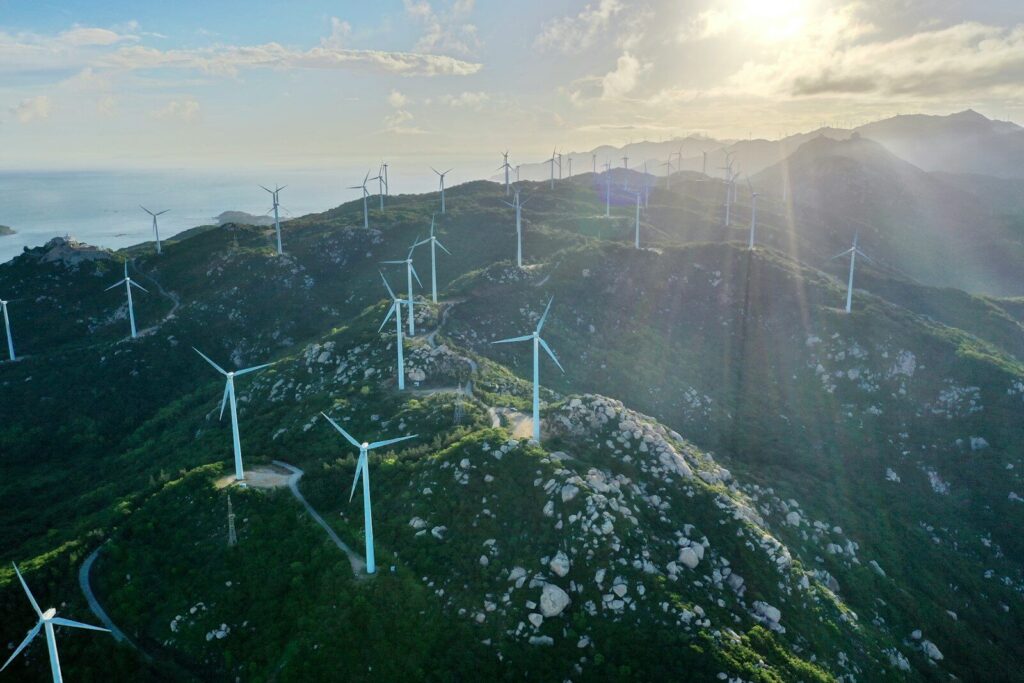
Supporters counter that technology companies are among the largest purchasers of renewable energy globally and are investing heavily in:
- Solar power
- Wind power
- Battery storage
- Geothermal energy
- Advanced nuclear technologies
The environmental impact ultimately depends on how future electricity demand is supplied.
Why Nuclear Energy Is Returning to the Conversation
One of the most surprising consequences of the AI boom is renewed interest in nuclear power.
Technology companies increasingly view nuclear energy as attractive because it provides:
- Reliable baseload power
- Carbon-free electricity
- Continuous operation
- Large-scale generation capacity
Several major technology firms have signed agreements related to:
- Small modular reactors (SMRs)
- Existing nuclear plants
- Advanced nuclear research
Many energy experts believe AI demand could accelerate investment in next-generation nuclear technologies.
Renewable Energy Alone May Not Be Enough
While renewable energy remains an important part of the solution, AI presents unique challenges.
Solar and wind power are variable by nature.
AI data centers often require:
- Continuous availability
- High reliability
- Predictable power supply
As a result, many experts expect future energy systems to combine:
- Renewable generation
- Battery storage
- Natural gas backup
- Nuclear energy
- Grid modernization
Rather than relying on a single solution, utilities will likely need a diversified energy mix.
The Economics of AI Electricity Consumption
The relationship between AI and energy is creating a new economic reality.
Historically, technology companies focused heavily on:
- Computing costs
- Hardware costs
- Software development
Today, electricity is becoming a strategic business factor.
Energy availability increasingly influences:
- Data-center location decisions
- Infrastructure investments
- Expansion strategies
- Competitive advantages
In some cases, access to affordable electricity may become as important as access to advanced semiconductors.
Will AI Make Energy More Expensive?
The answer depends on several factors.
Potential upward pressure includes:
- Infrastructure investment
- Increased demand
- Grid expansion costs
Potential downward pressure includes:
- Technological efficiency improvements
- New power generation projects
- Increased competition among utilities
- Renewable-energy expansion
Many economists believe energy prices will vary significantly by region depending on local infrastructure and regulatory policies.
How Technology Companies Are Responding
Major AI firms are not simply waiting for utilities to solve the problem.
Many are pursuing strategies such as:
Direct Energy Investments
Funding renewable-energy projects and long-term power agreements.
Energy-Efficient AI Models
Developing software that requires fewer computational resources.
Custom Hardware
Designing more energy-efficient AI chips.
Geographic Diversification
Building facilities in regions with abundant electricity supplies.
The industry increasingly recognizes that future AI growth depends on solving energy challenges.
The Future of AI and Energy
The relationship between artificial intelligence and energy may become one of the defining economic stories of the next decade.
AI promises enormous benefits:
- Medical discoveries
- Scientific breakthroughs
- Productivity gains
- Economic growth
However, those benefits require infrastructure.
And infrastructure requires power.
The future success of AI may depend not only on better algorithms and faster chips but also on whether societies can generate, transmit, and distribute enough electricity to support unprecedented levels of computing demand.
The race for AI leadership is increasingly becoming a race for energy capacity.
Conclusion
Artificial intelligence is creating one of the largest electricity-demand surges in decades.
As data centers multiply across the country, policymakers, utilities, regulators, and technology companies are confronting difficult questions about who should pay for new infrastructure and how power systems should evolve.
The debate extends far beyond technology.
It touches energy policy, environmental sustainability, consumer protection, economic competitiveness, and national security.
While AI may represent the future of computing, its success will ultimately depend on something much older and more fundamental:
Reliable, affordable electricity.
Frequently Asked Questions (FAQ)
1. Why do AI data centers use so much electricity?
AI systems require massive computing resources, including thousands of processors, servers, networking devices, and cooling systems that operate continuously. Training and running advanced AI models consume far more power than many traditional software applications.
2. Could AI increase residential electricity bills?
Potentially. If utilities build expensive infrastructure to support data centers and recover those costs through general rate increases, some costs could affect residential customers. However, regulators are actively debating how those expenses should be allocated.
3. Why are lawmakers concerned about AI energy consumption?
Lawmakers are examining whether utility customers could end up subsidizing infrastructure built primarily to serve large technology companies. They are also concerned about grid reliability, energy affordability, and long-term planning.
4. Is AI slowing climate progress?
Not necessarily, but it creates challenges. AI increases electricity demand, which could raise emissions if powered by fossil fuels. At the same time, many technology companies are investing heavily in renewable energy and low-carbon power sources.

5. Will nuclear power play a bigger role in supporting AI?
Many experts believe so. Nuclear energy offers reliable, carbon-free electricity that can operate around the clock, making it attractive for energy-intensive AI data centers and future computing infrastructure.
Sources CNBC