
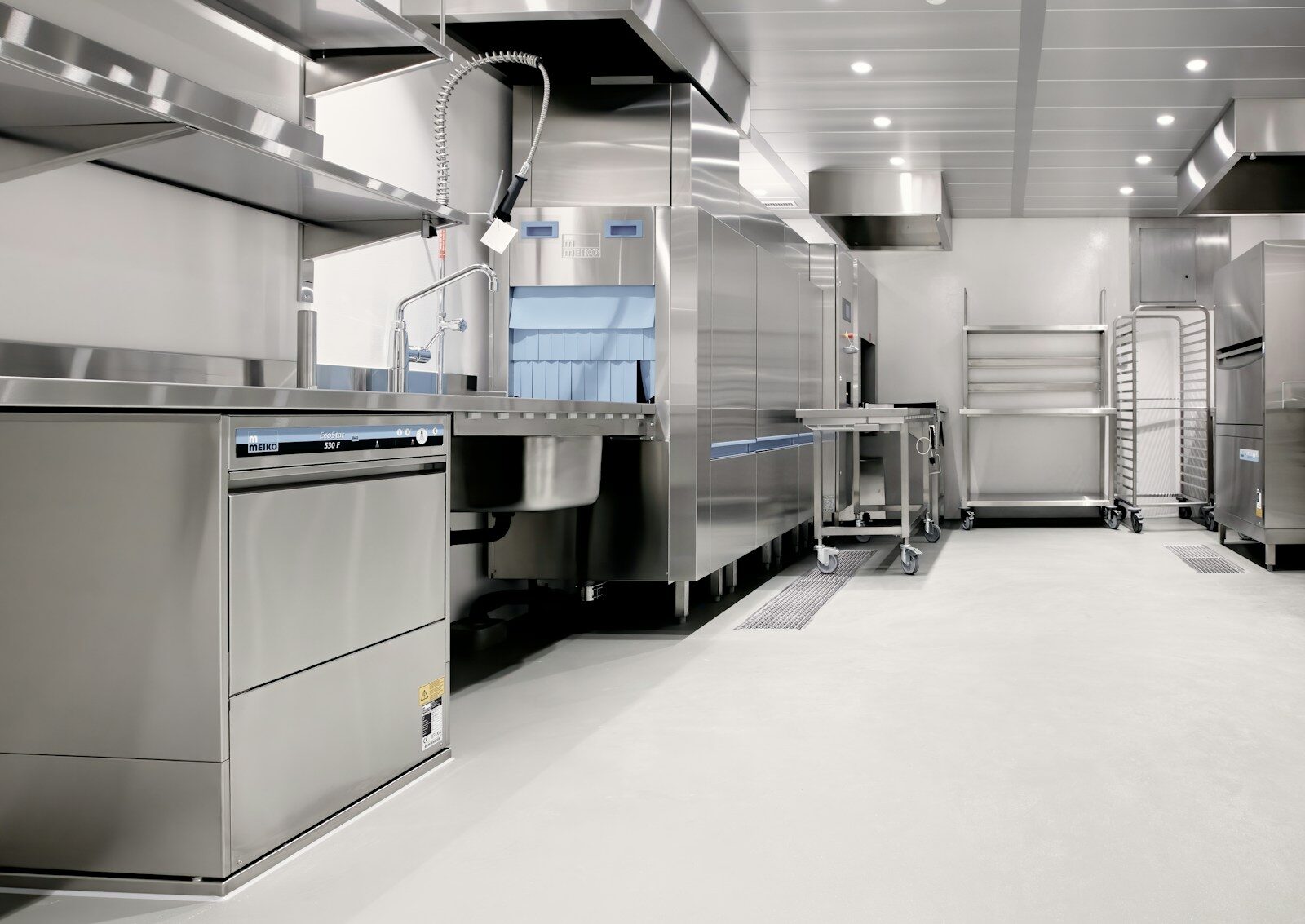
Artificial intelligence is no longer confined to office software or customer service chatbots. It is increasingly finding its way into one of the world’s most complex and labor-intensive environments: the commercial kitchen.
Global foodservice giant Sodexo is embracing AI, robotics, and data analytics to modernize food preparation, menu planning, staffing, facility management, and customer service. Rather than replacing chefs, the company’s strategy focuses on reducing repetitive administrative work, improving operational efficiency, and allowing employees to spend more time serving customers and creating high-quality meals.
The initiative reflects a broader transformation taking place across the hospitality industry, where AI is becoming an essential business tool for improving productivity, reducing waste, enhancing food safety, and addressing ongoing labor shortages.

Why the Foodservice Industry Is Turning to AI
Commercial foodservice operations face constant operational challenges.
Every day they must balance:
- fluctuating customer demand
- changing ingredient prices
- seasonal food availability
- staffing shortages
- strict food safety regulations
- tight profit margins
These challenges become even greater for companies operating thousands of dining locations across schools, hospitals, universities, corporate campuses, military facilities, stadiums, airports, and senior living communities.
AI allows companies to process enormous amounts of operational data much faster than traditional planning methods.
How Sodexo Is Applying Artificial Intelligence
Sodexo is not using AI for a single purpose.
Instead, the company is integrating AI into multiple parts of its business.
Current applications include:
- menu planning
- recipe development
- staffing optimization
- purchasing decisions
- demand forecasting
- facilities management
- inventory analysis
- operational recommendations
The company’s goal is to embed AI across daily operations rather than treating it as a standalone technology project.
AI-Powered Menu Planning
One of Sodexo’s most notable innovations is its internal Menu AI platform.
Traditionally, designing seasonal menus required chefs to spend weeks analyzing:
- ingredient availability
- nutritional guidelines
- food costs
- customer preferences
- seasonal recipes
Menu AI automates much of this process.
The system considers variables such as:
- ingredient price fluctuations
- seasonal produce
- expected customer demand
- available recipes
- operational constraints
According to Sodexo, tasks that previously required two to four weeks can now be completed within a single day using AI-assisted planning.
Giving Chefs More Time to Cook
An important aspect of Sodexo’s strategy is that AI is intended to support—not replace—culinary professionals.
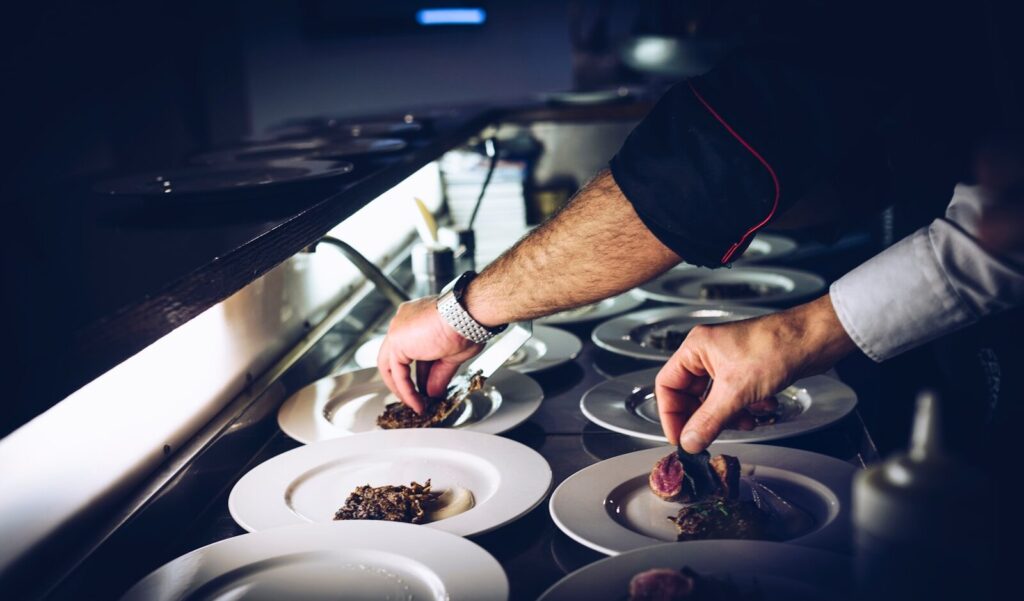
Instead of spending hours behind spreadsheets or administrative software, chefs can focus on:
- developing new recipes
- improving presentation
- ensuring food quality
- interacting with customers
- supervising kitchen operations
This illustrates an increasingly common use of AI across industries: removing administrative burdens while preserving human creativity.
Smarter Purchasing and Inventory Management
Food waste is one of the biggest financial challenges in commercial kitchens.
Ordering too much inventory increases spoilage.
Ordering too little results in shortages.
AI can improve purchasing by analyzing:
- historical sales
- weather forecasts
- local events
- seasonal demand
- ingredient price trends
These insights help managers make more accurate purchasing decisions while reducing unnecessary waste.
Workforce Scheduling Becomes More Intelligent
Demand in foodservice changes constantly.
Schools close for holidays.
Office attendance fluctuates with hybrid work.
Hospitals experience varying patient volumes.
Sports venues operate around event schedules.
AI-powered workforce planning helps managers forecast staffing needs based on expected demand rather than relying solely on historical averages.
This improves labor utilization while helping avoid both understaffing and unnecessary overtime.
AI Beyond the Kitchen
Sodexo also applies AI to facilities management, which represents a substantial portion of its business.
Examples include:
- predicting cleaning requirements
- optimizing maintenance schedules
- monitoring room utilization
- recommending inventory replenishment
- improving energy efficiency
Instead of cleaning every room on a fixed schedule, AI can identify which spaces actually require attention, improving efficiency and reducing costs.
AI Is Beginning to Shape Future Recipes
Another area under development involves using AI to identify emerging food trends.
By analyzing information from:
- social media
- consumer preferences
- seasonal eating habits
- regional demand
AI may eventually help chefs develop recipes that better reflect changing customer tastes.
Rather than replacing culinary creativity, AI becomes a research assistant capable of identifying patterns across millions of data points.
Frictionless Stores Are Changing Food Retail
Sodexo is also experimenting with cashier-free retail environments.
Using computer vision, AI, and automated payment technologies, customers can:
- enter a store
- select products
- leave without traditional checkout
Purchases are identified automatically through sensors and cameras.
Early pilot programs have shown encouraging increases in both revenue and average purchase size, suggesting that reducing checkout friction can improve the customer experience.
Robots Are Expanding Beyond Cleaning
Artificial intelligence is only part of Sodexo’s modernization strategy.
The company has already deployed approximately 200 robots worldwide, including floor-cleaning robots and autonomous delivery robots, and is evaluating kitchen robots for repetitive or higher-risk tasks.
Future kitchen robots could potentially assist with:
- ingredient preparation
- repetitive chopping
- frying
- transporting food
- dish handling
- heavy lifting
- cleaning equipment
These tasks are physically demanding and sometimes hazardous, making them well suited for automation.
Why Robotics Makes Sense in Commercial Kitchens
Commercial kitchens present several automation opportunities.
Many activities involve:
- repetitive movements
- predictable workflows
- strict timing
- standardized recipes
- heavy lifting
Robots excel in these structured environments.
Unlike fully autonomous restaurants portrayed in science fiction, today’s robotic systems are designed to work alongside kitchen staff rather than replace them entirely.
Food Safety Could Improve
AI and robotics may also strengthen food safety.
Intelligent systems can help monitor:
- cooking temperatures
- refrigeration conditions
- ingredient expiration dates
- sanitation schedules
- cross-contamination risks
Continuous monitoring reduces the likelihood of human error while supporting regulatory compliance.
Sustainability Benefits
AI can contribute to sustainability by helping kitchens:
- reduce food waste
- optimize ingredient usage
- lower energy consumption
- improve purchasing accuracy
- reduce unnecessary deliveries
For organizations serving millions of meals each day, even small efficiency improvements can significantly reduce environmental impact.
Challenges Still Remain
Despite rapid progress, several obstacles remain before AI-powered kitchens become widespread.
High Initial Costs
Robotics systems require substantial investment in equipment, installation, and maintenance.
Integration Complexity
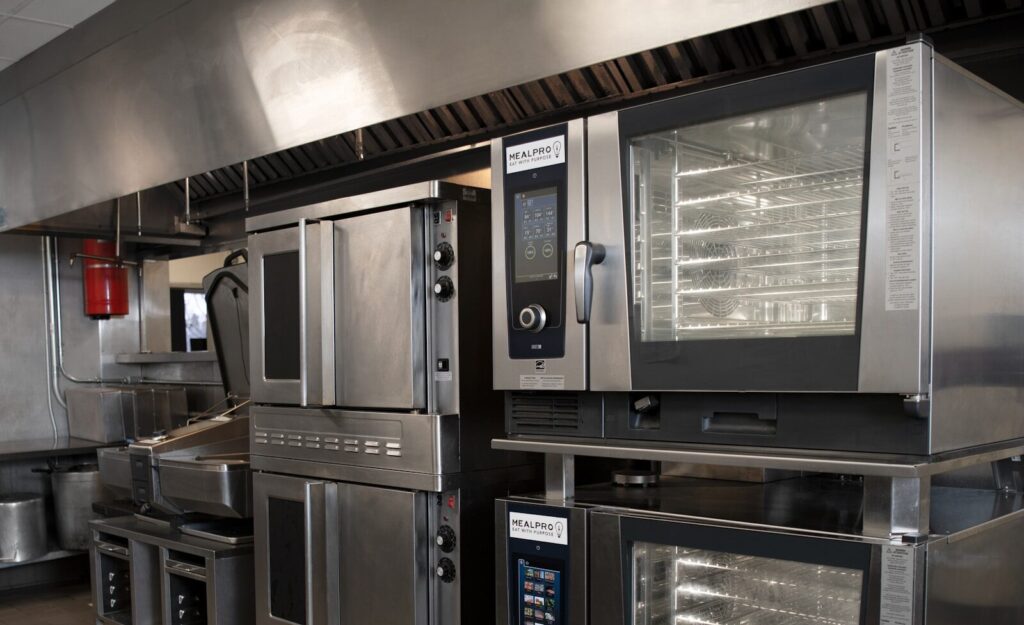
Commercial kitchens contain equipment from many different manufacturers.
Integrating AI across existing systems can be technically challenging.
Workforce Training
Employees must learn how to work effectively with AI systems and robotic equipment.
Successful adoption depends on training as much as technology.
Human Judgment Still Matters
Chefs continue making decisions involving:
- taste
- creativity
- presentation
- customer preferences
- cultural traditions
These uniquely human skills remain difficult to automate.
The Future of Intelligent Kitchens
Industry experts expect future commercial kitchens to combine:
- AI menu planning
- predictive purchasing
- robotic food preparation
- autonomous delivery
- computer vision
- smart inventory systems
- real-time analytics
Rather than operating independently, these technologies will increasingly function as connected systems that continuously optimize kitchen performance.
The emphasis is shifting from isolated automation toward intelligent, data-driven operations.
The Bottom Line
Sodexo’s investment in artificial intelligence and robotics demonstrates how the future of foodservice is being shaped by digital transformation rather than simple automation.
By using AI to streamline menu planning, forecast demand, optimize staffing, reduce waste, and support chefs, the company is showing that technology can enhance human expertise instead of replacing it.
Robotics will likely assume more repetitive, physically demanding, and potentially hazardous tasks, while chefs and hospitality professionals continue providing the creativity, judgment, and customer interaction that define exceptional dining experiences.
As AI capabilities mature and robotic systems become more affordable, intelligent kitchens are expected to become increasingly common—not only in large institutional foodservice operations but eventually across much of the global hospitality industry.
Frequently Asked Questions (FAQ)
1. How is Sodexo using artificial intelligence?
Sodexo uses AI for menu planning, staffing optimization, purchasing decisions, demand forecasting, facilities management, inventory recommendations, and operational analytics. The objective is to improve efficiency while allowing employees to focus on higher-value work.
2. Will AI replace chefs in commercial kitchens?
No. Current AI systems are designed to assist chefs by automating administrative tasks and repetitive processes. Creativity, flavor development, presentation, and customer interaction continue to rely heavily on human expertise.
3. What types of robots are used in foodservice operations?
Today’s commercial foodservice robots commonly perform floor cleaning, autonomous deliveries, and selected repetitive tasks. Future robots may also assist with food preparation, ingredient handling, frying, and kitchen sanitation.
4. What are the biggest benefits of AI in commercial kitchens?
Key advantages include faster menu development, reduced food waste, more accurate purchasing, improved staffing decisions, enhanced food safety monitoring, lower operating costs, and better use of employee time.
5. What challenges remain before AI-powered kitchens become mainstream?
Major challenges include high implementation costs, integrating new technology with existing kitchen equipment, employee training, cybersecurity, and ensuring AI systems remain reliable while preserving the creativity and judgment that professional chefs bring to food preparation.
Sources Fortune

