

Artificial intelligence has quickly become one of the most widely used productivity tools in history. Millions of people now turn to AI assistants like ChatGPT for help with writing, coding, studying, brainstorming, researching, planning, and solving everyday problems.
The benefits are undeniable. AI can save time, explain difficult concepts, organize information, and generate ideas in seconds. However, psychologists, educators, and technology experts are increasingly asking a different question: What happens when people rely on AI to think for them instead of thinking with it?
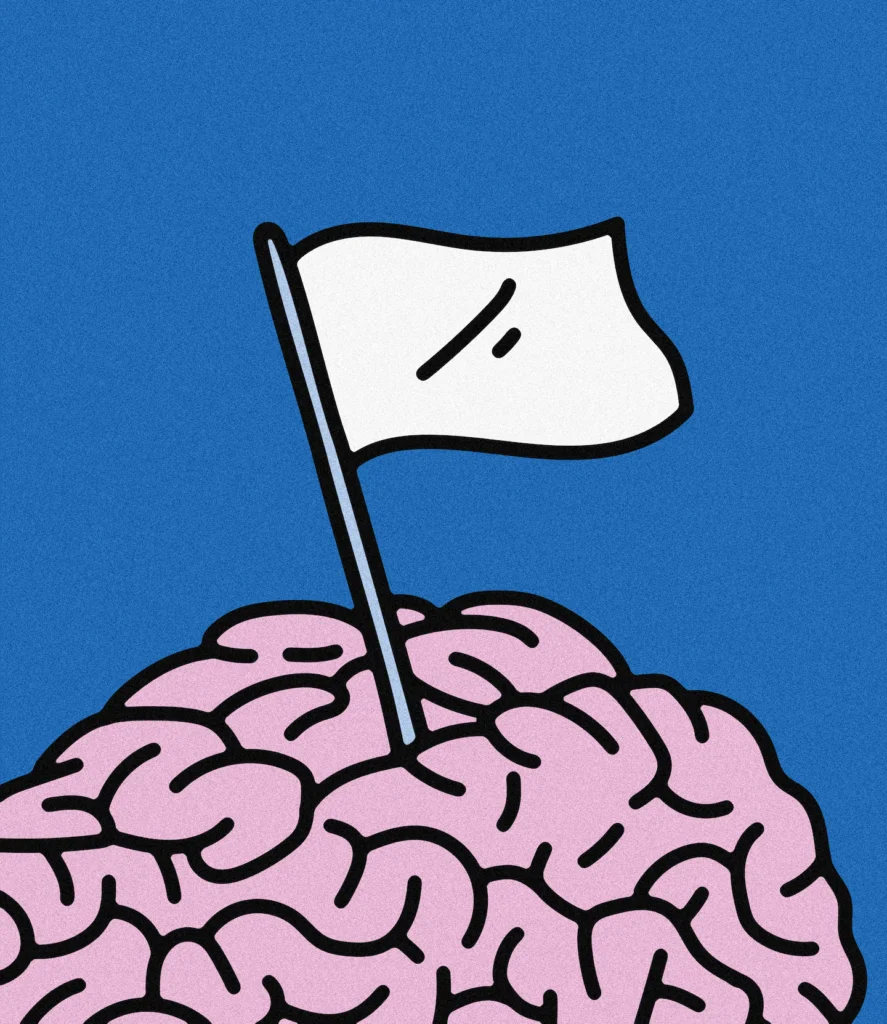
The concern is not that AI makes people less intelligent overnight. Rather, it is that excessive dependence on AI could gradually weaken habits such as critical thinking, creativity, independent reasoning, and deep problem-solving if people begin accepting AI-generated answers without questioning or understanding them.
The challenge for the AI age is not avoiding these tools altogether. It is learning how to use them in ways that enhance human intelligence rather than replace it.
How ChatGPT Changes the Way We Work
AI assistants can perform many cognitive tasks that previously required significant mental effort.
They can help users:
- summarize lengthy documents
- draft emails
- explain technical topics
- write computer code
- solve mathematical problems
- generate business ideas
- translate languages
- organize research
These capabilities reduce the time needed to complete many tasks.
However, they also reduce the amount of mental effort people invest in certain activities.
Why Thinking Requires Effort
The human brain strengthens through active use.
When people solve problems independently, they develop skills such as:
- logical reasoning
- memory formation
- pattern recognition
- analytical thinking
- decision-making
- creativity
Psychologists often describe this as “desirable difficulty”—the idea that struggling with challenging problems helps build stronger understanding and longer-lasting knowledge.
If AI consistently removes that productive struggle, learning opportunities may also decrease.
The Difference Between Assistance and Dependence
Using AI effectively means maintaining an active role in the thinking process.
Healthy AI use looks like:
- asking questions
- comparing perspectives
- refining ideas
- checking facts
- improving drafts
- exploring alternatives
Overdependence looks different.
Warning signs include:
- accepting answers without verification
- skipping independent research
- relying on AI for every decision
- avoiding difficult thinking
- losing confidence in personal judgment
The difference lies not in the technology but in how people choose to use it.
The Risk of Cognitive Offloading
Humans naturally delegate tasks.
We use calculators for arithmetic, GPS for navigation, and search engines for finding information.
AI extends this process further by handling increasingly complex cognitive tasks.
This phenomenon is known as cognitive offloading—transferring mental work to external tools.
While cognitive offloading can improve efficiency, relying on it too heavily may reduce opportunities to practice essential thinking skills.
The goal is to offload routine work while continuing to engage deeply with important decisions and complex ideas.
Why Critical Thinking Matters More Than Ever
AI systems generate responses by recognizing patterns in enormous amounts of data.
Although they are remarkably capable, they can still:
- make factual mistakes
- misunderstand context
- provide outdated information
- generate biased responses
- produce convincing but incorrect explanations
Critical thinking enables users to ask:
- Is this accurate?
- What evidence supports this?
- Are there alternative viewpoints?
- What assumptions are being made?
- Does this answer fit my specific situation?
These questions remain essential regardless of how advanced AI becomes.

Creativity Still Begins With Humans
Many people now use AI for brainstorming.
This can accelerate idea generation.
However, originality often emerges through experiences AI cannot fully replicate, including:
- personal reflection
- emotional experiences
- curiosity
- experimentation
- failure
- observation
- collaboration
AI can expand creative possibilities, but it cannot replace the unique perspective each individual brings to a problem.
The Importance of Productive Struggle
Learning researchers have long recognized that effort improves understanding.
Students who solve problems independently often retain knowledge longer than those who simply read the answers.
Similarly, professionals who analyze situations before consulting AI develop stronger judgment than those who immediately request complete solutions.
Allowing yourself time to wrestle with a difficult question often leads to deeper insight.
How AI Can Strengthen Thinking Instead of Replacing It
AI becomes far more valuable when used as a thinking partner rather than an answer machine.
For example, instead of asking:
“Write my report.”
Try asking:
- “Can you critique my argument?”
- “What assumptions am I overlooking?”
- “Can you explain the opposing viewpoint?”
- “What questions should I investigate further?”
- “Can you identify weaknesses in my reasoning?”
These prompts encourage deeper engagement rather than passive acceptance.
The Role of Curiosity
Curiosity drives learning.
AI should inspire additional questions rather than end the conversation.
After receiving an answer, ask:
- Why?
- How?
- What evidence supports this?
- Are experts in agreement?
- What are the limitations?
Maintaining curiosity prevents AI from becoming a substitute for exploration.
AI and Decision-Making
Important decisions involving health, finances, legal matters, education, or careers require careful human judgment.
AI can:
- organize information
- explain options
- summarize research
- identify trade-offs
But people remain responsible for evaluating risks, values, emotions, and long-term consequences.
Technology should inform decisions, not make them automatically.
Developing AI Literacy
Understanding AI’s strengths and limitations is becoming an essential skill.
AI literacy includes knowing:
- how language models work
- why hallucinations occur
- how bias can emerge
- when to verify information
- how prompts influence responses
- how to protect privacy
Users who understand these concepts are less likely to overestimate AI’s reliability.
Practical Habits for Healthy AI Use
Experts recommend several strategies to preserve independent thinking.
Think Before Asking
Attempt solving the problem yourself first.
Verify Important Information
Cross-check facts using reliable sources.
Edit AI Outputs
Treat AI drafts as starting points rather than finished products.
Explain the Answer Yourself
After reading an AI explanation, summarize it in your own words.
Ask AI to Challenge You
Instead of requesting answers, ask AI to question your assumptions or test your reasoning.
Limit AI for Learning Tasks
Occasionally complete assignments or practice problems without AI assistance to strengthen long-term understanding.
The Future of Human-AI Collaboration
As AI becomes more capable, success will depend less on avoiding technology and more on developing complementary human abilities.
Future workplaces will increasingly reward:
- critical thinking
- ethical judgment
- creativity
- adaptability
- communication
- emotional intelligence
- interdisciplinary reasoning
These capabilities enable people to use AI effectively without becoming dependent on it.
The most successful professionals are likely to be those who combine technological fluency with strong independent judgment.
The Bottom Line
ChatGPT and other AI assistants are powerful tools that can dramatically improve productivity, learning, and creativity. However, like any technology, their long-term impact depends on how they are used. Relying on AI to eliminate repetitive tasks can free time for deeper work, but relying on it to replace thinking altogether may gradually weaken habits of analysis, curiosity, and independent reasoning.
The goal is not to reject AI but to build a healthier partnership with it. Use AI to explore ideas, test assumptions, refine your work, and expand your understanding—not to outsource every difficult thought.
In the AI era, the greatest competitive advantage will not belong to those who ask AI the most questions. It will belong to those who ask the best questions, challenge the answers they receive, and continue developing the uniquely human ability to think critically, creatively, and independently.
Frequently Asked Questions (FAQ)
1. Can using ChatGPT make people less intelligent?
There is no evidence that ChatGPT directly reduces intelligence. However, excessive reliance on AI without active engagement may weaken habits such as critical thinking, problem-solving, and independent reasoning over time.
2. What is cognitive offloading?
Cognitive offloading is the practice of using external tools—such as calculators, GPS, or AI—to perform mental tasks. It can improve efficiency, but overusing it may reduce opportunities to practice important cognitive skills.
3. How can I use ChatGPT without becoming dependent on it?
Try solving problems on your own first, verify important information, edit AI-generated content, ask AI to critique your ideas instead of replacing them, and continue practicing independent learning and decision-making.
4. Should students use AI for studying?
AI can be an excellent study aid when used to explain concepts, generate practice questions, or provide feedback. Students should avoid relying on AI to complete assignments without understanding the material, as active learning remains essential.

5. What skills will remain most valuable in the age of AI?
Critical thinking, creativity, ethical judgment, communication, emotional intelligence, adaptability, curiosity, and the ability to evaluate information will continue to distinguish human expertise as AI becomes more capable.
Sources The Washington Post

