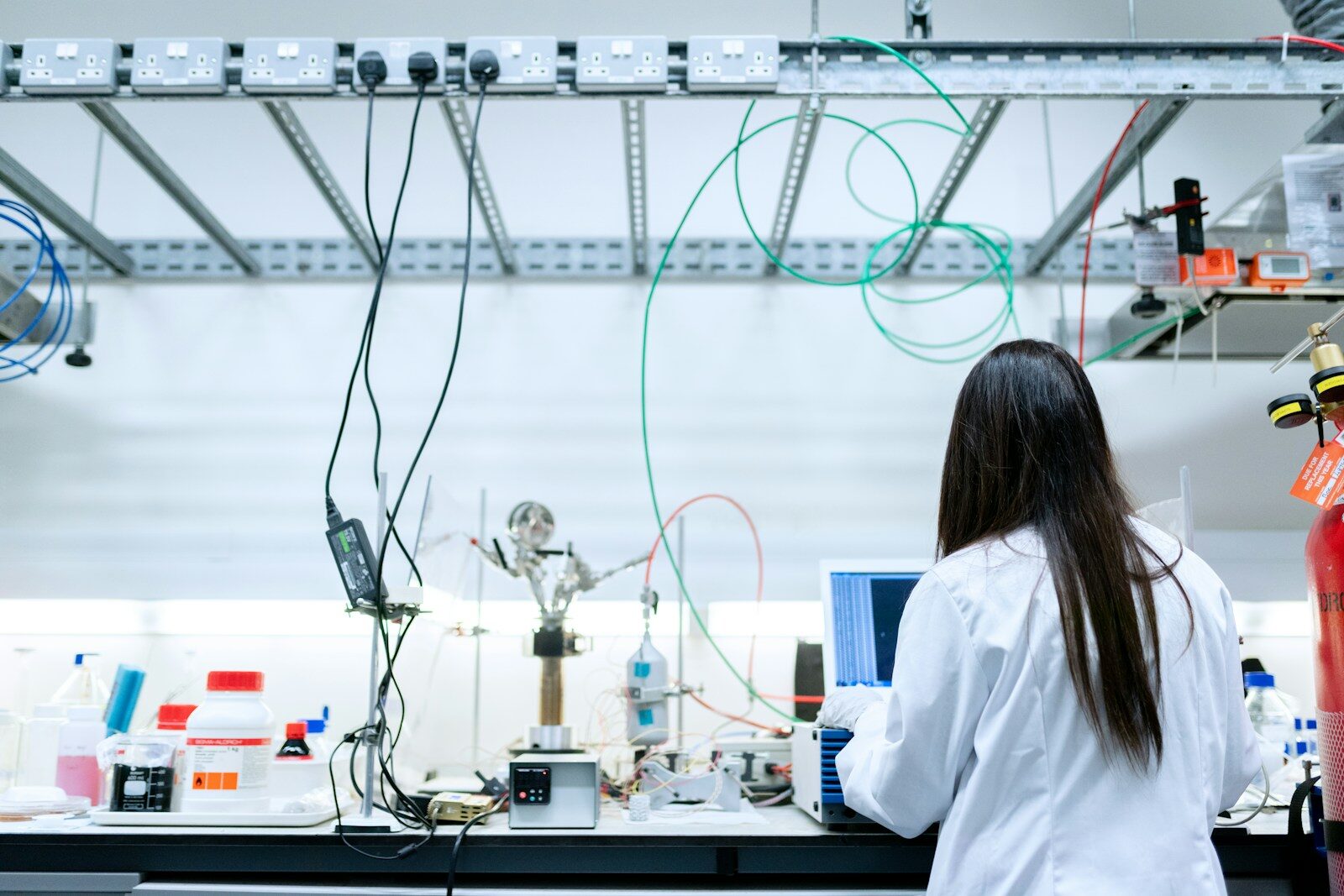
Artificial intelligence is no longer confined to the technology industry. It is rapidly becoming one of the most important tools in scientific research, transforming fields ranging from chemistry and biology to medicine, materials science, climate modeling, and physics. As AI becomes increasingly central to scientific discovery, countries around the world are competing not only for advanced computing infrastructure but also for the world’s leading researchers.
The appointment of a Nobel Prize-winning American chemist to lead a new artificial intelligence research institute in China highlights this growing competition for scientific expertise. The move reflects a broader global trend in which governments, universities, and research organizations are investing billions of dollars to attract internationally recognized scientists capable of accelerating innovation through AI-powered research.
While the decision has generated discussion about international collaboration, geopolitical competition, and research priorities, it also underscores a larger reality: the future of scientific leadership will increasingly depend on how effectively countries combine world-class talent with cutting-edge artificial intelligence.

Why AI Is Transforming Scientific Research
Scientific research has traditionally relied on years of experimentation, observation, and analysis. While this process has produced remarkable discoveries, it is often slow, resource-intensive, and expensive.
Artificial intelligence is changing that by enabling researchers to:
- analyze enormous datasets
- identify hidden patterns
- simulate complex systems
- generate research hypotheses
- automate repetitive analysis
- accelerate experimental design
- predict molecular behavior
- optimize laboratory workflows
Rather than replacing scientists, AI allows researchers to focus more on interpreting results, designing experiments, and solving complex scientific questions.
AI and Chemistry: A Powerful Combination
Chemistry is one of the scientific disciplines benefiting most from artificial intelligence.
Machine learning models can help predict:
- chemical reactions
- molecular structures
- material properties
- catalyst performance
- drug interactions
- protein behavior
Instead of testing thousands of compounds experimentally, researchers can use AI to identify the most promising candidates before laboratory work begins.
This significantly reduces research costs while accelerating discovery.
Why Countries Are Investing in AI Research Institutes
Governments increasingly recognize that artificial intelligence is becoming a strategic national capability.
Dedicated AI research institutes bring together experts from multiple disciplines, including:
- computer science
- chemistry
- biology
- engineering
- mathematics
- medicine
- materials science
- environmental science
These interdisciplinary environments encourage collaboration while providing access to advanced computing resources and specialized laboratories.
National investments in AI research are also viewed as drivers of long-term economic growth and technological competitiveness.
Global Competition for Scientific Talent
Leading scientists have always played an important role in advancing knowledge, but demand for internationally recognized researchers has intensified during the AI era.
Countries compete for top talent by offering:
- advanced research facilities
- generous funding
- interdisciplinary collaboration
- high-performance computing
- access to large datasets
- opportunities to build new research centers
The movement of prominent researchers between institutions and countries reflects the increasingly international nature of modern science.
Scientific excellence often depends on access to resources rather than geography alone.
The Growing Role of AI in Drug Discovery
One of AI’s most promising applications is pharmaceutical research.
AI helps scientists:
- identify drug candidates
- predict molecular interactions
- model disease pathways
- optimize clinical trial design
- analyze biological data
- reduce development timelines
Traditional drug development may take more than a decade.
AI cannot eliminate this process, but it can significantly accelerate its earliest stages by narrowing the number of compounds requiring laboratory testing.
Materials Science Is Entering an AI Era
Artificial intelligence is also revolutionizing the discovery of advanced materials.
Researchers use AI to develop:
- stronger alloys
- lighter composites
- improved batteries
- semiconductor materials
- sustainable plastics
- carbon capture materials
Machine learning can predict material properties before physical prototypes are manufactured.
This accelerates innovation across industries including aerospace, automotive manufacturing, renewable energy, and electronics.
AI Is Changing the Scientific Method
Historically, scientific discovery followed a sequence of observation, hypothesis, experimentation, and analysis.
AI introduces new capabilities into this process.
Researchers can now:
- analyze billions of data points
- identify unexpected relationships
- simulate experiments virtually
- optimize laboratory parameters
- generate predictive models
These tools complement traditional scientific reasoning rather than replacing it.
Human expertise remains essential for evaluating evidence, interpreting results, and ensuring scientific rigor.
International Collaboration Remains Essential
Despite increasing geopolitical competition, many scientific breakthroughs result from international cooperation.
Researchers frequently collaborate across borders through:
- academic partnerships
- shared datasets
- joint publications
- multinational laboratories
- scientific conferences
Complex challenges such as climate change, infectious diseases, clean energy, and food security often require expertise from multiple countries.
AI may strengthen these collaborations by enabling researchers to analyze shared information more efficiently.
Challenges Facing AI in Scientific Research
Although AI offers enormous potential, several challenges remain.
Data Quality
AI models require accurate, comprehensive, and well-structured datasets.
Poor-quality data can produce misleading conclusions.
Explainability
Many AI systems generate predictions without fully explaining their reasoning.
Scientific research often requires transparent, reproducible methods.
Improving explainable AI remains an active research area.
Computing Costs
Training sophisticated scientific AI models demands significant computing power.
High-performance computing infrastructure remains expensive and limited.
Human Oversight
AI predictions must be validated through laboratory experiments and peer review.
Scientific discoveries require evidence beyond algorithmic outputs.
AI Is Creating New Research Careers
The integration of AI into science has created demand for professionals combining expertise across multiple disciplines.
Growing career opportunities include:
- computational chemistry
- AI-assisted biology
- scientific machine learning
- bioinformatics
- materials informatics
- computational physics
- AI engineering for research
Future scientists increasingly require both domain expertise and computational skills.
Universities are responding by developing interdisciplinary education programs.
Why Research Infrastructure Matters
Scientific talent alone cannot produce breakthroughs without supporting infrastructure.
Modern AI research requires:
- GPU clusters
- cloud computing
- advanced laboratories
- robotics
- automated experimentation
- high-speed networking
- secure data storage
Countries investing in AI increasingly recognize that world-class researchers need access to equally advanced research environments.
Infrastructure and talent have become mutually reinforcing advantages.
Ethics and Responsible AI in Science
As AI assumes a larger role in research, ethical considerations become increasingly important.
Researchers must ensure:
- transparency
- reproducibility
- data privacy
- fairness
- responsible publication
- proper human oversight
Maintaining public trust requires balancing rapid innovation with scientific integrity.
International standards may become increasingly important as AI-assisted research expands.
The Future of AI-Driven Scientific Discovery
Several emerging trends are expected to shape the next decade.
Scientists anticipate continued growth in:
- autonomous laboratories
- AI-designed materials
- precision medicine
- digital twins for scientific simulation
- quantum computing integration
- robotic experimentation
- multimodal scientific AI
Rather than replacing researchers, these technologies will likely expand the scale and speed of scientific discovery.
The Bottom Line
The appointment of a Nobel Prize-winning chemist to lead an AI-focused research institute reflects a much larger transformation taking place across global science. Artificial intelligence is becoming an essential research tool, enabling scientists to analyze complex data, accelerate experimentation, and explore questions that were previously beyond reach.
At the same time, countries are investing heavily in research infrastructure, advanced computing, and internationally recognized scientific talent as they compete for leadership in the AI era. This competition is reshaping not only where research takes place but also how discoveries are made.
Ultimately, the future of scientific innovation will depend on a combination of exceptional human expertise, responsible international collaboration, and increasingly powerful AI technologies. The greatest breakthroughs are likely to emerge where these elements work together to address humanity’s most challenging scientific problems.
Frequently Asked Questions (FAQ)
1. Why is artificial intelligence important in scientific research?
AI enables researchers to analyze massive datasets, simulate experiments, predict molecular behavior, identify hidden patterns, and accelerate discoveries across disciplines such as chemistry, biology, medicine, and materials science.
2. How does AI help chemists?
AI predicts chemical reactions, identifies promising molecules, models material properties, optimizes catalysts, and reduces the number of costly laboratory experiments required during research.
3. Why are countries investing in AI research institutes?
Governments view AI as a strategic technology that supports scientific innovation, economic growth, healthcare advances, industrial competitiveness, and national technological leadership.
4. Can AI replace scientists?
No. AI assists scientists by processing information more efficiently and generating predictions, but human researchers remain essential for designing experiments, validating results, interpreting evidence, and making scientific judgments.
5. What fields will benefit most from AI-assisted scientific research?
Chemistry, medicine, biology, pharmaceutical development, materials science, environmental research, climate modeling, agriculture, engineering, and physics are among the disciplines expected to experience significant advances through AI-driven research.
Sources The New York Times