

Ever since artificial intelligence entered the mainstream, one question has dominated conversations in boardrooms, classrooms, and households around the world:
Will AI take our jobs?
From chatbots writing reports to AI systems generating code, images, videos, and marketing campaigns, many workers fear that automation could trigger widespread unemployment. Headlines often focus on professions at risk, creating the impression that machines are preparing to replace humans on a massive scale.
Yet a growing number of economists, technology leaders, labor experts, and policymakers believe the reality will be far more complicated.
Rather than eliminating work altogether, artificial intelligence is likely to transform the labor market, creating new industries, new professions, and new opportunities—just as previous technological revolutions have done.
The key question may not be whether AI will create jobs.
It is whether workers, businesses, and governments can adapt quickly enough to the changes it brings.

The Historical Lesson: Technology Has Always Changed Work
Fears of technological unemployment are not new.
Throughout history, major innovations have sparked concerns that machines would permanently replace human labor.
Examples include:
- The mechanization of agriculture
- The Industrial Revolution
- The rise of factory automation
- Personal computers
- The internet
- Robotics
In nearly every case, technology eliminated certain jobs while creating entirely new categories of employment.
When tractors replaced farm laborers, millions of agricultural jobs disappeared. Yet new industries emerged in manufacturing, transportation, engineering, education, healthcare, and technology.
Similarly, the internet eliminated some traditional occupations while creating roles that would have been unimaginable decades earlier:
- Web developers
- Social media managers
- Cloud architects
- Cybersecurity analysts
- App developers
- Digital marketers
Artificial intelligence may follow a similar pattern.
Why AI Is Different From Previous Technologies
At the same time, AI differs from earlier waves of automation in an important way.
Most previous technologies primarily automated physical labor.
AI can automate cognitive tasks.
It can:
- Write documents
- Analyze data
- Generate code
- Translate languages
- Produce visual content
- Answer customer questions
- Conduct research
This broader capability means AI could affect a much larger portion of the workforce.
However, automating tasks is not the same as eliminating entire jobs.
Most professions involve dozens or even hundreds of individual activities, many of which still require human judgment, creativity, empathy, accountability, and decision-making.
Jobs Are Collections of Tasks
One of the most important concepts in modern labor economics is that jobs are bundles of tasks.
For example, a lawyer does more than review documents.
A lawyer also:
- Advises clients
- Negotiates settlements
- Builds trust
- Exercises judgment
- Interprets context
Similarly, a doctor does more than analyze symptoms.
Doctors must:
- Communicate with patients
- Manage uncertainty
- Make ethical decisions
- Coordinate care teams
- Provide emotional support
AI may automate portions of these jobs without eliminating the profession itself.
In many cases, workers may become more productive rather than obsolete.
The New Jobs AI Is Already Creating
Contrary to popular perception, AI is already generating new forms of employment.
Emerging roles include:
AI Trainers
Professionals who help improve model performance through feedback and evaluation.
AI Safety Specialists
Experts focused on reducing risks, biases, and harmful outputs.
Prompt Engineers
Workers who design effective interactions with AI systems.
AI Auditors
Professionals responsible for testing, monitoring, and validating AI behavior.
AI Product Managers
Specialists who oversee AI-powered products and services.
Data Curators
Experts who organize, clean, and maintain training datasets.
Human-AI Workflow Designers
Professionals who determine how humans and AI collaborate efficiently.
Many of these roles barely existed a few years ago.
Entirely New Industries May Emerge
History suggests that the largest employment gains from technology often come from industries that do not yet exist.
The smartphone revolution created:
- Mobile app development
- Ride-sharing platforms
- Influencer marketing
- Mobile commerce
Similarly, AI may enable entirely new sectors involving:
- Personalized education
- Digital healthcare assistants
- Synthetic media production
- AI-powered scientific research
- Autonomous logistics
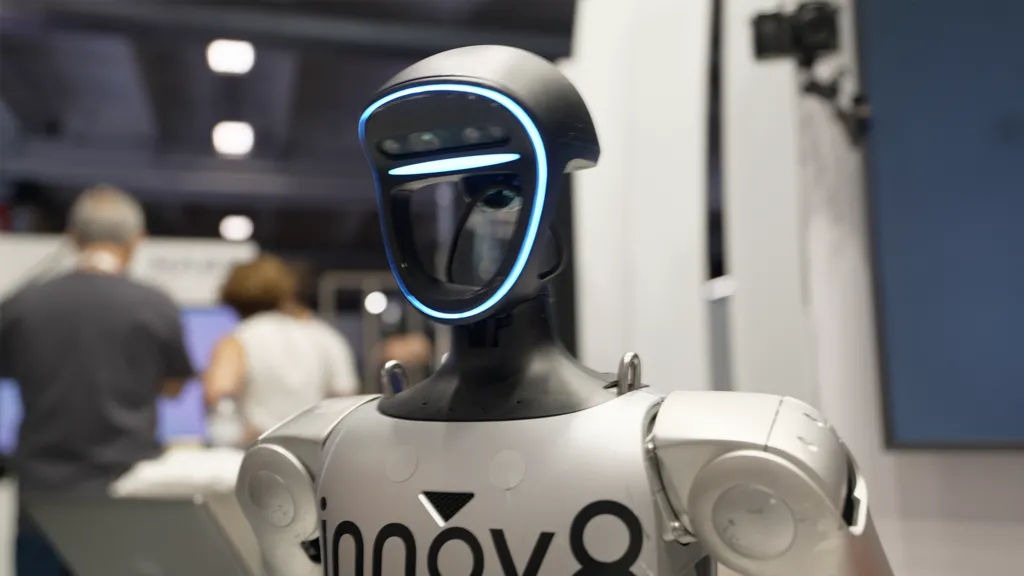
- Advanced robotics
- Human augmentation technologies
Many future jobs have not yet been invented.
Healthcare Could Become a Major Beneficiary
Healthcare is one of the industries most likely to experience job growth rather than job loss.
AI can assist with:
- Medical imaging
- Administrative paperwork
- Patient triage
- Drug discovery
- Clinical documentation
By reducing routine workloads, healthcare professionals may spend more time on direct patient care.
As populations age worldwide, demand for healthcare workers is expected to remain strong regardless of automation.
Human interaction remains central to medicine.
Education Will Change, Not Disappear
Teachers are another example of a profession frequently discussed in AI debates.
While AI can provide tutoring, lesson generation, and personalized learning assistance, education involves much more than delivering information.
Teachers serve as:
- Mentors
- Motivators
- Role models
- Classroom managers
- Social development guides
AI may enhance educational outcomes, but human educators are likely to remain essential.
The profession may evolve rather than vanish.
Skilled Trades May Become More Valuable
Ironically, some occupations that require physical presence may become relatively more secure.
Examples include:
- Electricians
- Plumbers
- HVAC technicians
- Construction workers
- Mechanics
These roles require real-world interaction with complex physical environments that remain difficult for AI systems and robots to navigate economically.
Demand for such skills may actually increase as AI-driven economic growth fuels infrastructure investment.
The Productivity Revolution
Many economists believe AI’s greatest impact may come through productivity gains.
When workers become more productive:
- Businesses can grow faster
- Costs may decrease
- New products become viable
- Economic output increases
Historically, productivity growth has been one of the strongest drivers of rising living standards.
If AI significantly boosts productivity across industries, it could create economic expansion that generates additional employment opportunities.
The Challenges Will Be Real
The optimistic scenario does not mean the transition will be painless.
Several challenges remain.
Job Displacement
Some workers will lose jobs as certain tasks become automated.
Skill Gaps
Workers may need retraining to remain competitive.
Unequal Benefits
Some industries and regions may benefit more than others.
Wage Pressure
Certain occupations could experience downward wage pressure due to increased automation.
Managing these challenges will require proactive planning.
The Importance of Reskilling
One recurring lesson from previous technological transitions is the importance of education and retraining.
Future workers may need stronger skills in:
- Digital literacy
- AI tools
- Data analysis
- Critical thinking
- Creativity
- Communication
- Problem-solving
The ability to learn continuously may become one of the most valuable career assets.
Human Skills May Become More Valuable
As AI handles routine cognitive work, uniquely human abilities may become increasingly important.
These include:
- Empathy
- Leadership
- Ethics
- Creativity
- Collaboration
- Strategic thinking
- Relationship building
The future workplace may reward people who combine technical fluency with strong interpersonal skills.
Why Predictions About Mass Unemployment May Be Wrong
Many forecasts assume that technological capability automatically translates into immediate labor replacement.
In reality, adoption is often slower and more complicated.
Businesses must consider:
- Cost
- Reliability
- Regulation
- Customer preferences
- Legal liability
- Organizational change
Even when automation is technically possible, it may not be economically or socially desirable.
This is one reason previous predictions of widespread technological unemployment often failed to materialize.
The Human-AI Partnership Model
Increasingly, experts envision a future based on collaboration rather than competition.
In this model:
- AI handles repetitive tasks
- Humans provide judgment
- Machines process information
- People make decisions
- Automation increases efficiency
- Human creativity drives innovation
Instead of replacing workers, AI becomes a powerful tool that enhances human capabilities.
What the Next Decade May Look Like
The coming years will likely involve both disruption and opportunity.
Some occupations will shrink.
Others will expand.
Entirely new professions will emerge.
The most successful workers may not be those who compete directly against AI but those who learn how to work effectively alongside it.
History suggests that technological revolutions rarely eliminate the need for human labor.
They redefine it.
Artificial intelligence appears poised to do the same—potentially creating one of the largest transformations in the history of work.
The challenge for society is ensuring that workers are prepared for the journey.
Frequently Asked Questions (FAQ)
1. Will AI replace most jobs?
Most experts do not believe AI will replace most jobs entirely. Instead, AI is expected to automate specific tasks within jobs while creating new opportunities and professions across multiple industries.
2. What jobs are most likely to grow because of AI?
AI-related fields such as AI safety, machine learning operations, data management, AI auditing, healthcare technology, robotics, and human-AI collaboration roles are expected to experience significant growth.
3. Which jobs are least likely to be replaced by AI?
Jobs requiring physical presence, emotional intelligence, creativity, leadership, and complex interpersonal interactions—such as healthcare professionals, teachers, skilled tradespeople, and managers—are generally considered more resilient.
4. What skills will be most valuable in an AI-driven economy?
Critical thinking, adaptability, communication, creativity, emotional intelligence, leadership, digital literacy, and the ability to effectively use AI tools are expected to become increasingly important.

5. How can workers prepare for the AI era?
Workers can prepare by embracing lifelong learning, developing AI literacy, improving problem-solving abilities, strengthening interpersonal skills, and staying informed about how AI is changing their industries.
Sources BBC

