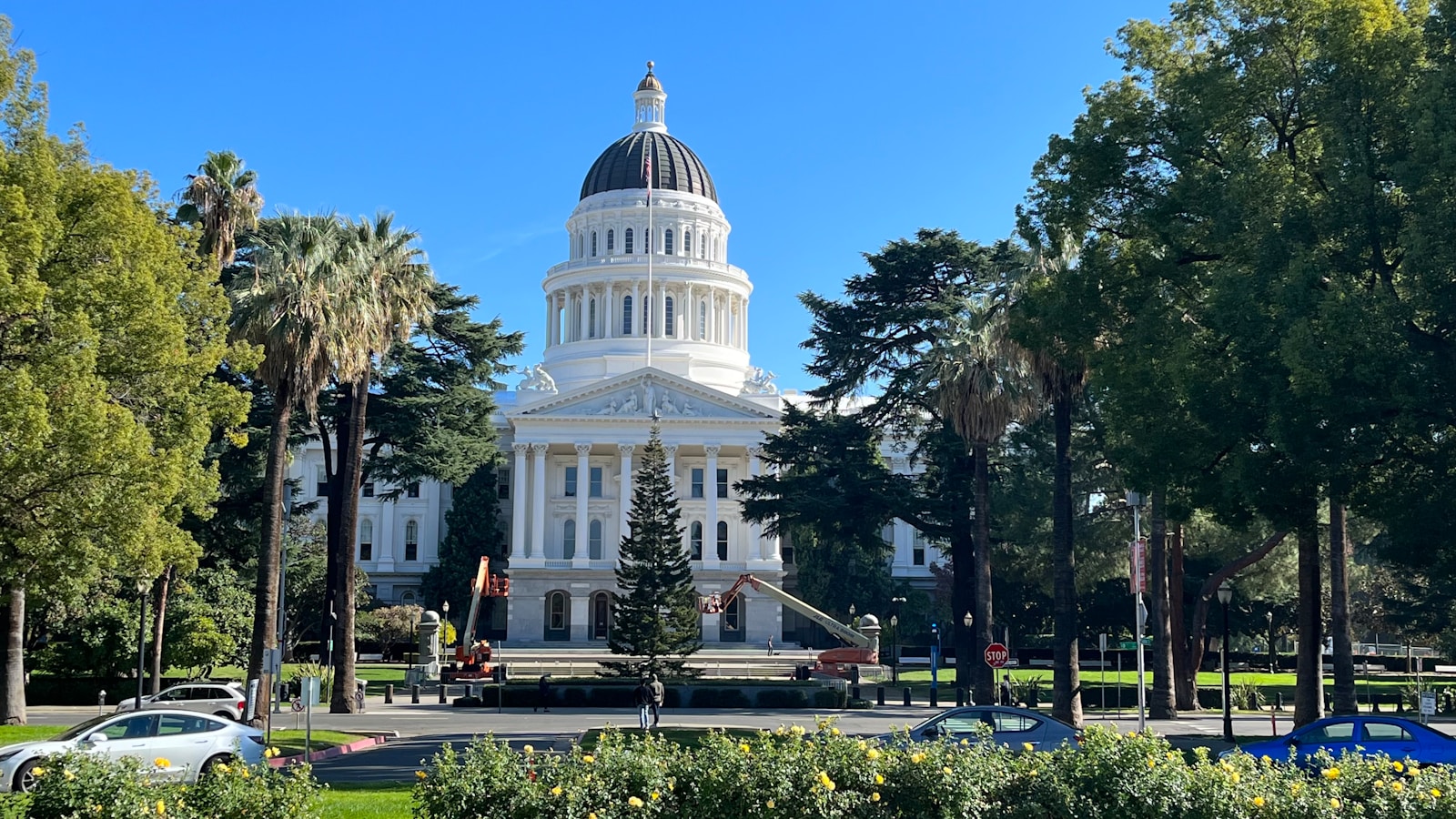
On September 29, 2025, California Governor Gavin Newsom signed Senate Bill 53 (SB 53) — formally named the Transparency in Frontier Artificial Intelligence Act. This move marks one of the most significant AI regulatory moves by a U.S. state to date. The law aims to hold big AI developers accountable, increase transparency, and manage catastrophic risks. But its details, strengths, and weak points matter a lot — for California, for the U.S., and for the future of AI governance.

What SB 53 Requires — Key Provisions & Obligations
Who Is Covered
- The law targets large AI firms—those with more than $500 million in revenue or major “frontier model” activity in California.
- It includes core tech players like OpenAI, Google, Meta, Nvidia, Anthropic, and others active in the state.
- It is not a blanket law for every AI developer, especially smaller ones or those whose scale is limited.
Transparency & Safety Disclosures
- Covered firms must publish safety frameworks (frontier AI frameworks) detailing how they assess, test, mitigate, and respond to risks.
- They must produce transparency reports, showing risk evaluations and deployment plans for powerful models.
- If safety incidents occur—e.g., model abuse, security breaches, or unexpected harms—companies must report them to state authorities within 15 days.
- Whistleblower protections are included, allowing employees to report violations without retaliation.
Penalties & Enforcement
- Violations can carry fines of up to $1 million per violation.
- The California Department of Technology is empowered to suggest updates, guidelines, and rule changes to keep the law responsive as AI evolves.
- But the law stops short of imposing liability or deep enforcement mandates (e.g. mandatory third-party audits for all models) — parts of earlier versions were softened or removed after industry negotiations.
Broader Ecosystem & Supporting Elements
- The law follows a large state-commissioned AI policy report (53 pages) that warned of “irreversible harms” and recommended guardrails for frontier AI. That report heavily influenced SB 53’s design.
- California already has a broad suite of AI and digital laws passed in 2024 and earlier — covering issues like deepfakes, training data disclosure, privacy, watermarking, and algorithmic transparency. The new law adds a frontier AI dimension to that existing regulatory baseline.
- Previous attempts such as SB 1047, a more ambitious “frontier model regulation” bill, were vetoed by the governor in 2024. SB 53 is a more calibrated successor meant to balance innovation and oversight.
What the Law Leaves Out / Weaknesses & Gaps
Limited Enforcement Mandates
- SB 53 prioritizes transparency over prescriptive control. Many strict mandates and liability clauses from earlier drafts were removed or diluted after industry feedback.
- The law relies in part on voluntary compliance models, enforcement by fines, and administrative oversight rather than aggressive legal demands.
No Universal Third-Party Auditing
- While some requirements may examine testing or mitigation, the law does not universally require independent third-party audits of all high-risk models.
- Developers retain discretion in designing internal processes, which may lead to inconsistency or loopholes.
Ambiguity in “Frontier AI” Definition
- The threshold for what constitutes frontier AI is somewhat vague. That gives developers latitude but also makes compliance harder to assess.
- Redactions for intellectual property (IP) are allowed, which may limit public scrutiny of risk analysis or technical detail.
Liability & Legal Responsibility Left Weak
- Unlike earlier proposals, SB 53 does not impose broad liability on developers for harms caused by their AI systems.
- The law does not guarantee citizens a right to appeal or damages from harms caused by AI.
Regulatory Fragmentation Risk
- Because AI is global, patchwork state laws could impose burdensome compliance regimes, especially for firms operating in multiple jurisdictions.
- Many in industry prefer a federal framework, fearing that 50 different state rules will create complexity and cost.
Deferred Bills and Incomplete Rules
- Another bill, AB 1018, which would require disclosure and appeal rights when AI systems make consequential decisions, has been delayed for future sessions.
- And the broader “No Robo Bosses” Act (SB 7), regulating AI in the workplace, is still awaiting next steps.
Implications & Strategic Stakes
For Tech Firms
- Big developers will need to revise their workflows, risk assessments, and disclosure practices to comply.
- Startups may gain a regulatory advantage if they don’t cross the revenue or frontier thresholds initially.
- Some firms may push for federal preemption — a single national law that overrides state regulation to avoid compliance fragmentation.
For AI Governance & Policy
- California becomes a visible testbed: successes or failures here may guide national standards or influence other states.
- The law signals that states will no longer be passive — in absence of federal AI rules, states are forging their own.
- It may accelerate discussions in Congress about a U.S. AI regulatory framework to harmonize rules across states.
For Public Safety & Trust
- The law aims to reassure the public that AI systems will be more accountable and transparent.
- But ultimately, its effectiveness depends on enforcement, compliance integrity, and meaningful oversight (not just box-checking).
For Innovation & Competitiveness
- Some worry that burdens may push firms (or talent) out of California to more lenient states.
- Others see regulation as a competitive edge: firms that adopt safety by design may differentiate themselves as trusted providers.
Frequently Asked Questions (FAQs)
| Question | Answer |
|---|---|
| 1. Does SB 53 fully stop AI harm or misuse? | No. It’s a transparency-first law. It reduces risk by exposing practices and requiring incident reporting — but it does not guarantee harm prevention or liability. |
| 2. What counts as a “frontier AI” system under the law? | The law focuses on high-scale, high-risk or compute-intensive systems deployed by large firms. The exact definition is intentionally flexible to adapt to evolving AI capabilities. |
| 3. Are all AI companies affected by SB 53? | Only those surpassing revenue or frontier model thresholds. Many smaller or niche AI developers won’t fall under the law initially. |
| 4. Can a citizen sue if an AI system harms them under SB 53? | The law does not explicitly grant new private rights of action. Its primary tools are administrative enforcement and fines. |
| 5. Does California’s law conflict with federal authority? | Potentially. If Congress enacts a federal AI law, it might preempt state rules. Until then, states and federal bodies may negotiate overlapping jurisdiction. |
| 6. Will this slow AI innovation? | That’s a risk. Some regulation could become burdensome. But proponents argue that well-designed rules can steer safer AI innovation rather than stifle it. |
| 7. How will the law be enforced? | California state agencies (e.g., Department of Technology) are tasked with oversight. Enforcement relies on reporting requirements, audits, and penalties. |
| 8. Is California’s law a model for other states? | Very likely. Given California’s central role in tech, other states may adopt similar transparency laws or even stricter rules, depending on how SB 53 performs. |
Conclusion
California’s signing of SB 53 is a watershed moment. It underscores a new reality: in the absence of federal AI regulation, states are stepping in. The law’s emphasis on transparency, incident reporting, and whistleblower protections may help create more accountable AI development — but many tough gaps remain. The real test will be not whether the law exists on paper, but how rigorously it’s enforced and whether its disclosures lead to safer, more equitable AI.

Sources The New York Times