For years, the U.S. believed that controlling access to advanced AI chips would slow China’s technological rise. But a surprising twist in late 2025 tells a very different story.
Even after Washington eased restrictions and allowed Nvidia’s powerful H200 AI chips to be sold to China under strict conditions, Beijing hasn’t rushed to buy them. In fact, China appears to be deliberately limiting — and in some cases rejecting — the very chips the U.S. once fought hard to keep out.
This isn’t hesitation.
It’s strategy.
China’s response exposes a deeper reality of the global AI race: hardware control alone is no longer enough to shape outcomes.
The H200 Reversal That Was Supposed to Change Everything
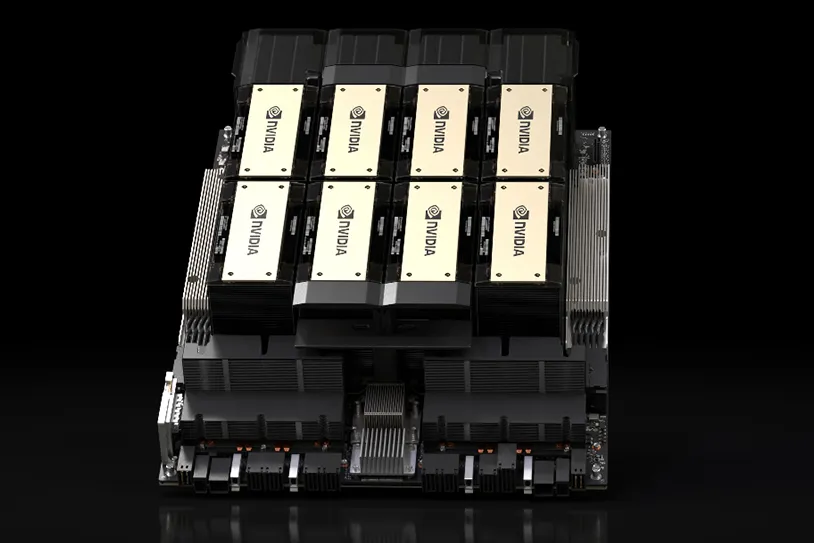
The H200 chip represents one of Nvidia’s most advanced AI accelerators — vastly more powerful than earlier export-approved models. When the U.S. government unexpectedly approved its sale to China (with conditions and added fees), the move was framed as a win for American business and influence.
The logic was simple:
- U.S. companies regain access to a massive market
- The U.S. maintains leverage over global AI infrastructure
- China gets better chips — but under American rules
What happened next surprised almost everyone.
China Didn’t Celebrate — It Calculated
Rather than welcoming the H200, China took a cautious and calculated approach.
1. China Wants Independence, Not Permission
Beijing’s long-term goal is clear: technological self-sufficiency.
Accepting large volumes of U.S. AI chips — even advanced ones — runs counter to years of investment in domestic semiconductor programs. Chinese policy increasingly prioritizes homegrown chips, even if they are less powerful today.
The message is blunt:
Better to be slightly slower now than dependent forever.
2. Foreign Chips Now Face Extra Scrutiny
Reports suggest China may require buyers to prove that local alternatives cannot handle the workload before approving imported AI chips.
That flips the script.
Instead of foreign hardware being the default, it becomes the exception.
3. The H20 Lesson Still Lingers
China’s reaction to Nvidia’s earlier H20 chip was lukewarm at best. Many companies either avoided it or shifted toward domestic options.
That experience likely informed Beijing’s stance:
Imported chips come with political risk, uncertainty, and strings attached.
4. Accepting U.S. Chips Sends the Wrong Signal
From Beijing’s perspective, embracing American AI hardware too openly could:
- undermine domestic chipmakers
- weaken bargaining power
- suggest vulnerability in a geopolitical tech rivalry
Restraint becomes a form of leverage.
Why This Is a Bigger Deal Than It Looks
China’s quiet resistance to the H200 reveals something critical:
Export controls no longer define the AI race.
China has already adapted by:
- scaling domestic chip development
- redesigning AI workloads around available hardware
- optimizing software to compensate for weaker chips
- investing heavily in local AI ecosystems
In other words, China learned how to work around restrictions instead of waiting for them to disappear.
What This Means for Nvidia
For Nvidia, the situation is complicated:
- China is still a massive potential market
- But regulatory friction exists on both sides
- Export fees reduce margins
- Demand may be lower than expected
- Domestic Chinese alternatives are gaining momentum
The company is caught between geopolitics and growth.
The Real Shift: Power Is Moving Away From Hardware Alone
The assumption that “better chips equal dominance” is fading.
Modern AI progress depends on:
- software optimization
- distributed computing
- model efficiency
- data pipelines
- system integration
China’s strategy reflects this shift — control the ecosystem, not just the silicon.
Why the U.S. Strategy Looks Increasingly Outdated
By allowing exports, the U.S. hoped to regain influence.
But China’s reaction suggests the leverage has already diminished.
If China can:
- limit imports voluntarily
- build around constraints
- prioritize domestic innovation
Then export approvals become symbolic — not decisive.
The Bigger Picture: This Is About Long-Term Power
This isn’t about one chip model.
It’s about:
- who controls AI supply chains
- who defines standards
- who owns innovation ecosystems
- who sets the pace of technological independence
China’s message is subtle but clear:
Access is no longer enough to dictate outcomes.

Frequently Asked Questions
Q1. What is the Nvidia H200 chip?
A high-performance AI accelerator designed for large-scale training and inference.
Q2. Did China officially ban the H200?
No — but it appears to be restricting and discouraging widespread adoption.
Q3. Why would China reject better chips?
To reduce long-term dependence on foreign technology and protect domestic industry.
Q4. Does this hurt Nvidia?
It limits potential growth in China and adds uncertainty to future sales.
Q5. Are Chinese AI chips competitive?
They still lag in raw performance but are improving rapidly with strong state support.
Q6. Did U.S. export controls fail?
They slowed China temporarily — but also accelerated China’s push for independence.
Q7. Can software really offset weaker chips?
Yes. Optimization and system design can significantly narrow performance gaps.
Q8. What does this mean for the global AI race?
The race is shifting from hardware dominance to ecosystem resilience.
Q9. Will China ever rely heavily on U.S. chips again?
Unlikely, unless geopolitical conditions change dramatically.
Q10. What’s the biggest takeaway?
Control over AI is no longer decided by who sells the best chip — but by who builds the most independent system.
Sources Bloomberg