
China’s artificial intelligence industry is often portrayed as an unstoppable force: massive investment, rapid deployment, state backing, and a seemingly endless supply of data. From facial recognition and smart cities to industrial automation and generative models, China’s AI footprint is growing fast — fast enough to raise a provocative question: Is China actually on track to overtake the United States in AI?
The short answer: it depends on what “winning” means.
This article goes beyond the headline narrative to examine where China truly excels, where structural weaknesses remain, what is often missing from the discussion, and why the global AI race is not a simple U.S.-versus-China scoreboard.

Why China’s AI Momentum Looks So Powerful
China’s AI rise is real — and visible.
Key drivers include:
- Heavy state investment and coordination
- Rapid commercialization of AI tools
- Willingness to deploy AI at national scale
- Integration of AI into manufacturing, logistics, and governance
Unlike the U.S., where innovation is often fragmented across private firms, China’s AI strategy benefits from centralized direction and execution.
Where China Is Genuinely Ahead
1. Large-Scale Deployment
China excels at implementation.
AI is already embedded across:
- Smart cities and traffic systems
- Public surveillance and security
- E-commerce and digital payments
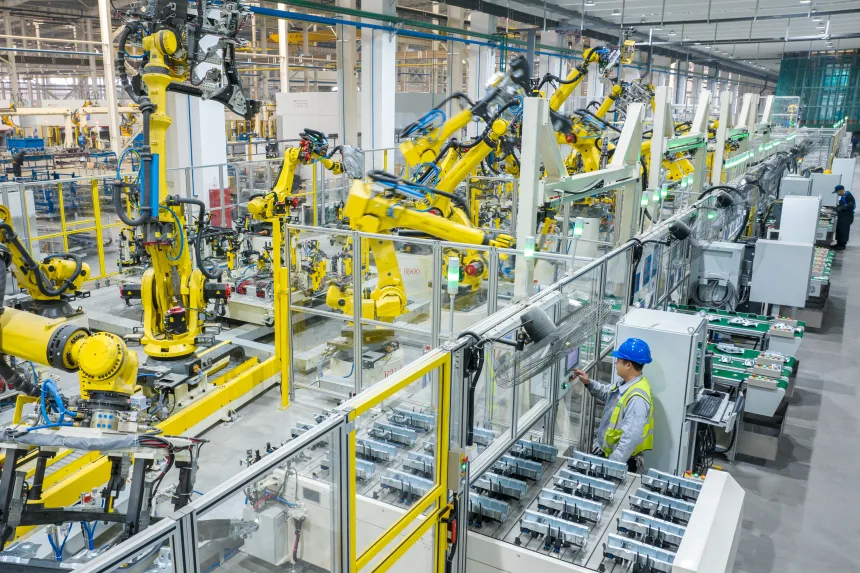
- Industrial robotics and factories
These systems may not always be the most advanced, but they are widely used, generating real-world feedback at massive scale.
2. Manufacturing and Industrial AI
China’s dominance in global manufacturing gives it an edge in:
- AI-powered quality control
- Robotics-driven production
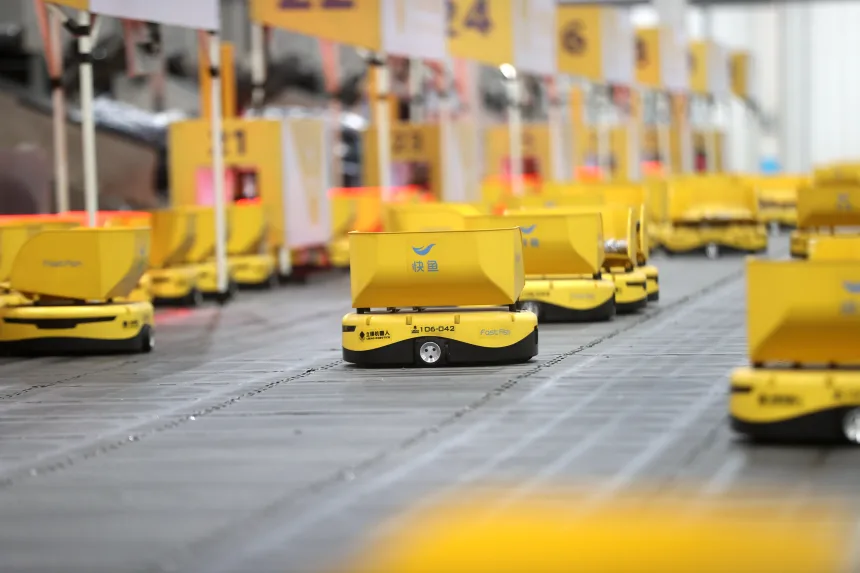
- Supply chain optimization
This is a form of AI leadership that doesn’t depend on flashy consumer apps — but it delivers measurable economic impact.
3. Government Alignment
China’s political system allows:
- Faster rollout of national AI initiatives
- Unified standards and infrastructure
- Direct alignment between policy, industry, and research
This reduces friction and accelerates adoption.
Where the “Unstoppable” Narrative Breaks Down
1. Advanced Chips Remain a Bottleneck
Cutting-edge AI depends on high-end semiconductors.
China faces:
- Restricted access to top-tier chips
- Difficulty manufacturing at the most advanced nodes
- Reliance on workarounds and efficiency gains
These constraints don’t stop AI progress — but they cap frontier performance.
2. Frontier Research Still Favors the U.S.
The U.S. continues to lead in:
- Foundational AI research
- Breakthrough model architectures
- Elite research institutions
- Open scientific collaboration
China produces strong applied research, but fewer globally dominant theoretical breakthroughs.
3. Data Quantity Isn’t the Same as Data Quality
China is often assumed to have a data advantage due to population size. In practice:
- Data silos limit usability
- Censorship and regulation restrict access
- Synthetic data reduces the importance of raw scale
The advantage is narrower than commonly believed.
What Most Coverage Misses
This Is Not One Race — It’s Many
AI leadership varies by domain:
- The U.S. leads in frontier models and platforms
- China leads in deployment and industrial use
- Europe leads in regulation and governance
No single country dominates every layer.
Energy and Infrastructure Matter as Much as Algorithms
AI growth depends on:
- Power generation
- Grid stability
- Data center capacity
China has strengths here — but so do U.S. tech hubs with access to capital and energy.
Talent Flows Still Matter
China has deep technical talent, but faces:
- Brain drain risks
- Limited international collaboration
- Constraints on academic openness
Innovation thrives on exchange — and restrictions slow that process.
The Strategic Trade-Offs China Faces
China’s AI system prioritizes:
- Control over openness
- Deployment over experimentation
- Stability over disruption
This delivers fast gains — but may limit long-term creativity and adaptability.
The U.S. system, by contrast, tolerates chaos, failure, and competition — producing uneven outcomes but frequent breakthroughs.
What This Means for the Global AI Landscape
The future is likely multipolar, not binary:
- China dominates applied, state-aligned AI systems
- The U.S. dominates frontier platforms and research
- Other countries specialize in niches and regulation
The real competition is about ecosystems, not single models.
Risks Both Sides Underestimate
- Overconfidence driven by short-term metrics
- Escalating AI arms races
- Supply chain fragility
- Public backlash over surveillance and job loss
AI power without trust can undermine its own success.
Frequently Asked Questions
Is China winning the AI race?
In deployment and industrial use, China is very strong. In frontier research and platforms, the U.S. still leads.
Do U.S. chip restrictions stop China’s AI growth?
They slow access to top-tier performance but do not stop AI development entirely.
Does China’s data advantage guarantee better AI?
No. Data quality, relevance, and openness matter more than raw volume.
Will one country dominate AI globally?
Unlikely. AI leadership will be divided by domain and geography.
Why does this rivalry matter globally?
Because AI standards, supply chains, and governance decisions affect every country — not just the U.S. and China.
Final Thoughts
China’s AI industry is impressive — disciplined, fast-moving, and deeply integrated into the real economy. But “unstoppable” is the wrong word.
AI leadership is not a sprint. It’s a long, uneven transformation shaped by chips, energy, talent, institutions, and values. In that race, China is a formidable competitor — but not an inevitable winner.
The real mistake isn’t underestimating China’s AI strength.
It’s oversimplifying a contest that will define global power — without ever producing a single, clear victor.
Sources CNN