

For years, the AI conversation has been dominated by fears:
- job losses
- deepfakes
- misinformation
- automation chaos
- superintelligence risks
But quietly, another race is accelerating underneath the headlines.
A race to use AI not to replace humans…
…but to help prevent environmental collapse.
With its new “AI for the Planet” accelerator program in Asia-Pacific, Google DeepMind is making a major strategic bet:
The future of climate innovation may depend heavily on artificial intelligence.
And unlike many flashy AI announcements, this initiative targets something brutally practical:
- climate resilience
- agriculture
- biodiversity
- energy optimization
- disaster prediction
- environmental monitoring
In other words:
AI is no longer just becoming digital infrastructure.
It is becoming planetary infrastructure.
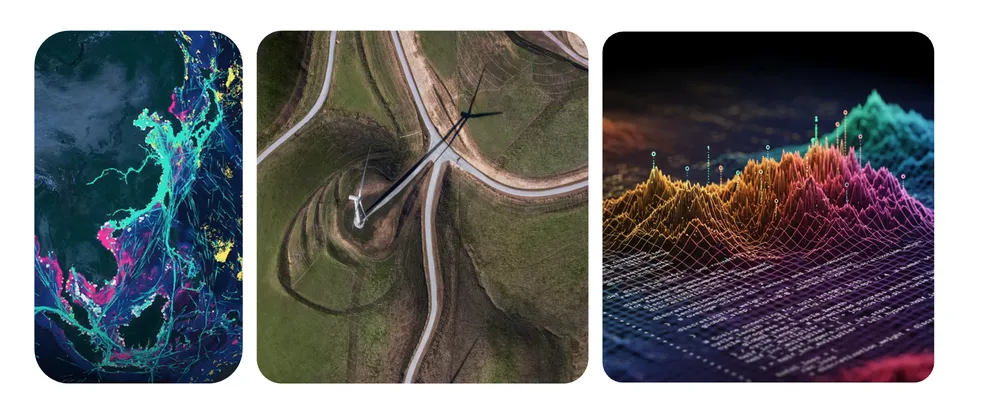
🌍 Why Asia-Pacific Became the Focus
The Asia-Pacific region sits at the center of two massive global trends:
1. Explosive economic growth
Countries across APAC continue rapidly industrializing and urbanizing.
2. Severe climate vulnerability
The same region faces:
- rising sea levels
- extreme heat
- flooding
- agricultural disruption
- water stress
- biodiversity loss
Google explicitly noted that environmental risks are rising faster than green technologies are scaling.
That creates an urgent gap:
humanity needs faster environmental problem-solving capacity.
And AI potentially offers exactly that.
🤖 What Is the “AI for the Planet” Accelerator?
The new accelerator is a three-month Google DeepMind program designed for:
- startups
- nonprofits
- research teams
working on environmental and sustainability problems using AI.
Selected participants receive:
- expert mentorship
- AI engineering support
- technical guidance
- access to frontier AI models
- collaboration with Google AI experts
- scaling assistance for real-world deployment
The initiative begins with an in-person bootcamp in Singapore before continuing through hybrid mentoring and development phases.
But the deeper story is bigger than a startup program.
This is part of a much larger shift:
AI companies are increasingly positioning themselves as climate infrastructure providers.
🧠 AI Is Becoming a Planetary Observation System
One reason AI matters so much for environmental science is scale.
The Earth generates unimaginable amounts of environmental data:
- satellite imagery
- weather patterns
- ocean temperatures
- agricultural signals
- biodiversity indicators
- energy usage
- emissions tracking
Humans alone cannot process all of it efficiently.
AI can.
Google DeepMind’s climate-focused systems already include:
- WeatherNext forecasting models
- AlphaEarth environmental mapping
- Earth observation systems
- climate prediction tools
These models increasingly function like:
a digital nervous system for the planet.
🛰️ AlphaEarth May Hint at the Future of Environmental AI
One of Google DeepMind’s most fascinating projects is:
AlphaEarth Foundations
The system processes enormous amounts of satellite data into detailed environmental maps capable of tracking:
- land use changes
- ecosystem shifts
- agriculture patterns
- deforestation
- water systems
- urban expansion
Researchers described it as acting almost like:
a “virtual satellite” for Earth observation.
This matters because environmental policy often suffers from:
- incomplete data
- delayed monitoring
- fragmented analysis
AI dramatically improves:
- speed
- precision
- predictive capability
And climate systems increasingly require exactly that.
⚡ Why AI Could Transform Climate Science Faster Than Expected
Traditional environmental research often moves slowly because:
- datasets are enormous
- simulations are expensive
- ecosystems are complex
- climate interactions are nonlinear
AI changes the equation by accelerating:
- pattern recognition
- predictive modeling
- anomaly detection
- scientific simulation
- optimization systems
Researchers increasingly use AI to:
- predict floods
- optimize irrigation
- forecast energy demand
- improve crop resilience
- model wildfire risks
- track methane leaks
This turns AI into:
a scientific acceleration engine.
🌱 Agriculture May Become One of AI’s Biggest Environmental Battlegrounds
Food systems are especially vulnerable to climate disruption.
AI-driven agriculture systems can help:
- optimize water usage
- detect crop disease early
- improve soil monitoring
- predict weather stress
- reduce fertilizer waste
- improve yield forecasting
In regions facing:
- drought
- heat waves
- flooding
those optimizations become economically critical.
And because Asia-Pacific contains massive agricultural economies, the accelerator’s regional focus makes strategic sense.
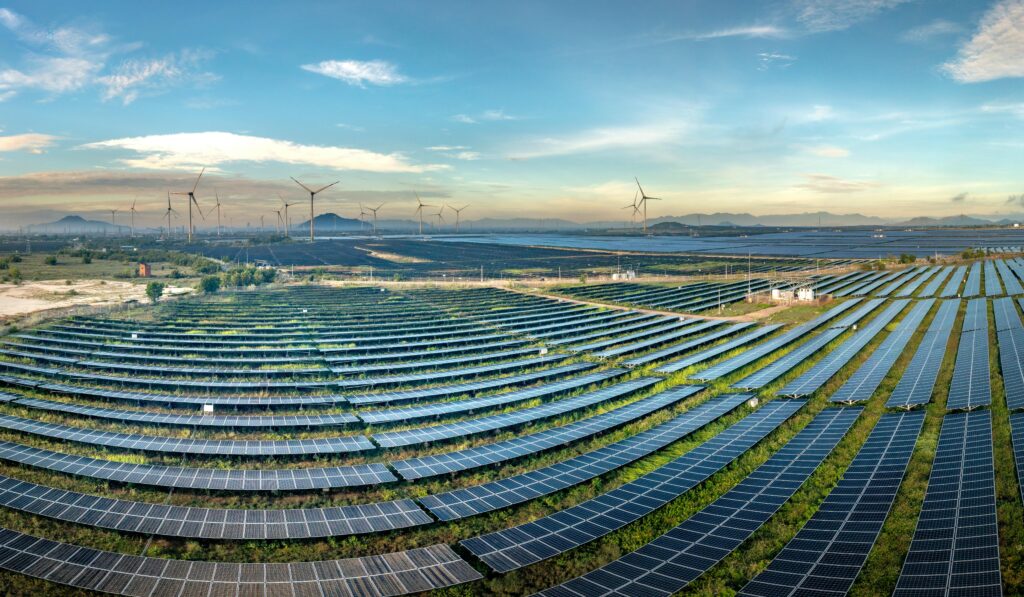
🔋 Energy Systems Are Becoming AI-Controlled Networks
Modern energy infrastructure is growing too complex for traditional optimization methods alone.
AI increasingly helps manage:
- electricity grids
- renewable energy balancing
- battery systems
- power demand forecasting
- industrial energy efficiency
This is especially important because renewable systems like:
- solar
- wind
generate variable output that requires constant balancing.
AI excels at:
dynamic optimization under uncertainty.
That makes it ideal for future energy systems.
⚠️ But There’s a Massive Contradiction Nobody Can Ignore
Here’s the uncomfortable irony:
AI itself consumes enormous energy.
Training frontier AI models requires:
- huge data centers
- advanced chips
- large electricity demand
- water-intensive cooling systems
Critics increasingly question whether AI’s environmental benefits outweigh its resource costs.
Google argues responsible AI deployment can create net-positive environmental impact if used efficiently and collaboratively.
But the debate is far from settled.
Especially as global AI infrastructure expands aggressively.
🧩 The Next Big AI Race May Be Scientific, Not Consumer
For the past several years, AI competition focused heavily on:
- chatbots
- image generators
- content creation
- productivity tools
Now a second wave is emerging:
scientific AI systems.
Companies increasingly see opportunities in:
- climate science
- biology
- medicine
- robotics
- materials science
- energy optimization
DeepMind already demonstrated this shift through breakthroughs like:
- AlphaFold for protein prediction
- weather forecasting systems
- scientific simulation tools
This suggests AI’s most important long-term impact may not be social media…
…but accelerated scientific discovery itself.
🏢 Big Tech Is Quietly Competing to Own Climate AI
Google is not alone.
Major technology companies increasingly invest in:
- environmental modeling
- smart infrastructure
- sustainability analytics
- AI-powered forecasting
- climate-risk systems
Because climate adaptation is becoming a gigantic future market.
Governments, insurers, agriculture firms, utilities, and infrastructure operators all need:
- predictive intelligence
- environmental monitoring
- risk modeling
AI companies want to become the backbone of those systems.
🌍 AI Could Reshape Environmental Governance
One under-discussed consequence is political.
As AI systems improve environmental prediction, they may increasingly influence:
- resource allocation
- climate policy
- disaster response
- insurance pricing
- agricultural planning
- urban development
This means AI may eventually shape not only:
how we understand the planet
…but how governments manage it.
That introduces major questions around:
- accountability
- transparency
- data access
- geopolitical power
🔮 What Happens Next?
Several major shifts are likely:
1. Climate AI startups explode globally
Environmental AI may become one of the fastest-growing startup sectors.
2. AI-driven environmental monitoring becomes standard
Governments and businesses may rely increasingly on AI forecasting systems.
3. Scientific AI overtakes consumer AI in strategic importance
Long-term value may come more from scientific breakthroughs than chatbot engagement.
4. AI becomes deeply embedded into planetary management
Energy, agriculture, weather, and infrastructure systems may increasingly operate through AI optimization layers.
❓ Frequently Asked Questions (FAQ)
What is Google DeepMind’s “AI for the Planet” accelerator?
A three-month program supporting startups, nonprofits, and research teams using AI to solve environmental and climate-related problems.
Why is the accelerator focused on Asia-Pacific?
Because APAC faces severe environmental risks while also experiencing rapid economic growth and infrastructure expansion.
What environmental areas can AI help improve?
Examples include:
- climate forecasting
- agriculture
- biodiversity tracking
- disaster prediction
- energy optimization
- emissions monitoring
What is AlphaEarth Foundations?
An AI-powered Earth observation system developed by Google DeepMind that analyzes massive satellite datasets to monitor environmental changes.
Can AI really help fight climate change?
Potentially yes. AI can improve efficiency, prediction, monitoring, and scientific discovery related to environmental systems.
What are the risks of AI in environmental systems?
Possible concerns include:
- energy consumption
- data centralization
- infrastructure inequality
- overreliance on automated systems
Is AI itself environmentally costly?
Yes. Advanced AI training and infrastructure require substantial electricity, computing power, and cooling resources.

🧠 Final Thought
For decades, humans treated the planet like a system too large and complex to fully understand in real time.
Artificial intelligence may change that.
For the first time in history, humanity is building systems capable of continuously analyzing:
- ecosystems
- weather
- agriculture
- energy
- biodiversity
- planetary change itself
The implications are enormous.
Because the future of AI may not ultimately be defined by chatbots writing emails…
…but by whether intelligent systems can help civilization manage a planet entering an era of unprecedented environmental stress.
Sources Google

