
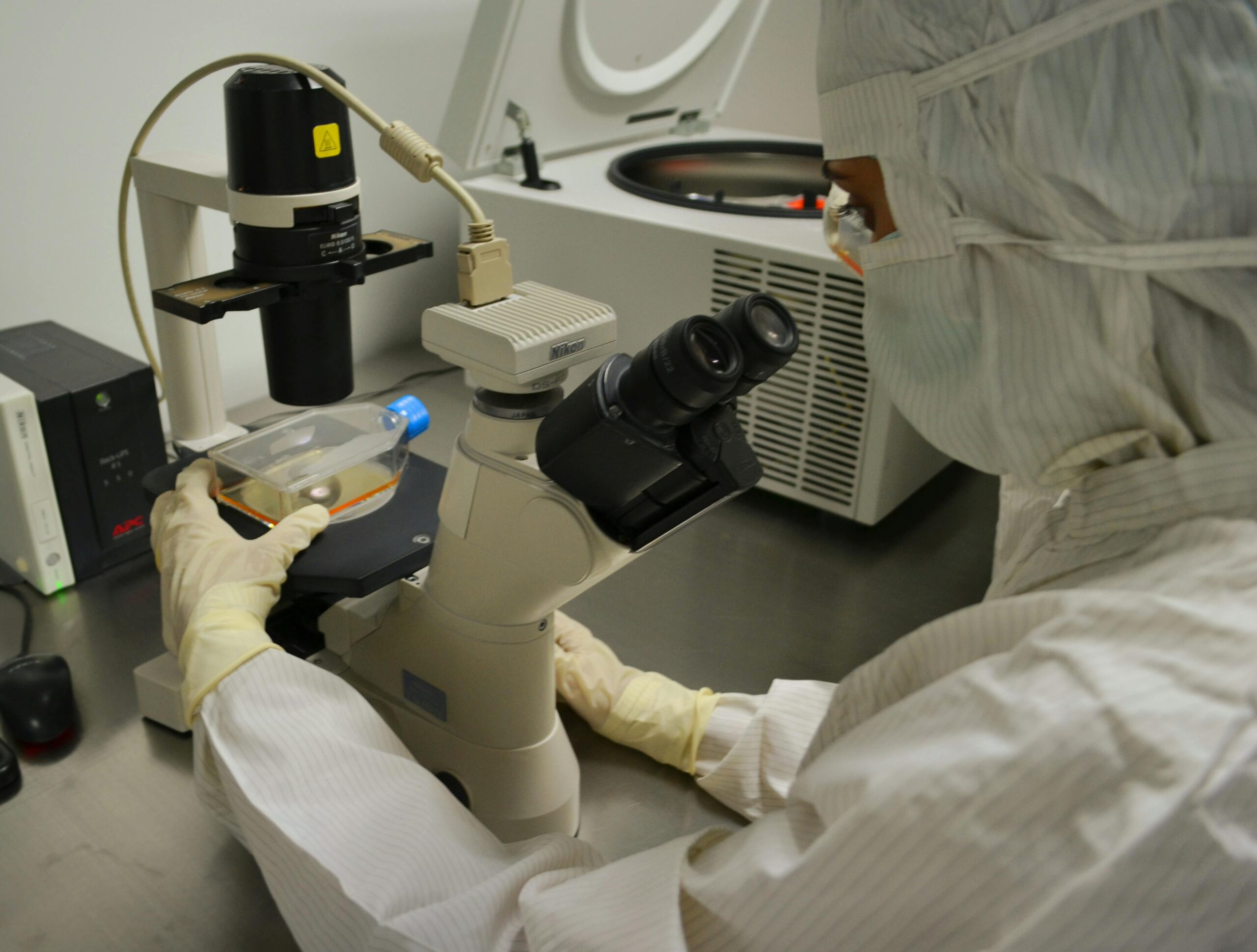
For centuries, scientific progress moved at the speed of human limitation.
Researchers spent years reading papers.
Labs burned millions testing theories.
Breakthroughs often depended on isolated experts connecting scattered pieces of knowledge across different disciplines.
Now Google believes artificial intelligence may fundamentally change that equation.
At Google I/O 2026, the company unveiled Gemini for Science — an ambitious new ecosystem of AI-powered scientific tools designed to accelerate hypothesis generation, computational discovery, literature analysis, and experimental research.
This is not just another chatbot for researchers.
It represents something much larger:
the transformation of AI from an information tool into an active collaborator in scientific discovery itself.
And if Google’s vision succeeds, the future scientist may no longer work alone.
🧠 Gemini for Science Is Built Around One Radical Idea
Google’s central argument is surprisingly simple:
Modern science is producing more knowledge than humans can realistically process.
Millions of scientific papers are published every year.
New datasets grow exponentially.
Cross-disciplinary insights become harder to identify manually.
Google describes this as a scientific bottleneck:
humans can no longer fully synthesize humanity’s collective knowledge fast enough.
Gemini for Science aims to solve that problem using AI agents capable of:
- analyzing massive scientific literature
- generating hypotheses
- proposing experiments
- evaluating evidence
- organizing research workflows
- surfacing hidden patterns across disciplines
This could fundamentally change how scientific discovery happens.
⚡ The Scientific Method Is Quietly Becoming AI-Augmented
Historically, scientific progress depended heavily on:
- intuition
- pattern recognition
- manual literature review
- experimental iteration
- slow collaboration cycles
Google now wants AI systems to accelerate nearly every stage of that process.
Gemini for Science introduces three major experimental systems:
1. Hypothesis Generation
Built using Google’s “Co-Scientist” system, this tool simulates scientific ideation by generating, debating, and evaluating research hypotheses using multi-agent AI reasoning.
2. Computational Discovery
Powered by AlphaEvolve and Empirical Research Assistance (ERA), the system can generate and test thousands of computational experiment variations in parallel.
3. Literature Insights
Built with NotebookLM, this system analyzes scientific papers, structures findings into searchable formats, and creates reports, summaries, and visual artifacts from large research corpora.
Together, these systems attempt to compress months of scientific analysis into hours.
Maybe even minutes.
🔬 Google Is Trying to Build an “AI Scientist”
One of the most important details is philosophical.
Google no longer frames AI merely as:
“a research assistant.”
Instead, the company increasingly describes AI as:
a collaborative scientific partner.
That language matters enormously.
Because it signals a shift from:
- AI helping scientists search information
to:
- AI participating in scientific reasoning itself.
This is one of the biggest conceptual leaps in the AI industry today.
🤖 Multi-Agent AI Systems Are Entering Research Labs
A major innovation inside Gemini for Science is the use of:
multi-agent systems.
Instead of one chatbot generating answers, multiple AI agents:
- debate ideas
- critique proposals
- test assumptions
- validate claims
- compete in “idea tournaments”
Google says this helps improve rigor and reduce weak reasoning.
This mirrors how real scientific communities operate:
- peer review
- criticism
- replication
- adversarial analysis
AI is increasingly imitating the structure of human scientific institutions themselves.
🧬 Biology and Medicine May Benefit First
The most immediate breakthroughs may emerge in:
- genomics
- molecular biology
- pharmaceuticals
- protein analysis
- disease modeling
Google revealed that Gemini for Science integrates more than 30 major scientific databases and tools, including:
- UniProt
- AlphaFold Database
- AlphaGenome API
- InterPro
This allows researchers to conduct complex workflows involving:
- genomic analysis
- structural biology
- bioinformatics
- protein modeling
far faster than traditional manual approaches.
In one early test, Google researchers reportedly identified new insights involving a rare AK2 genetic disease using Science Skills workflows that reduced hours of analysis to minutes.
That is a massive acceleration.
🏢 AI for Science Is Becoming Big Business
While Google frames Gemini for Science as a research breakthrough, there is also a massive commercial angle.
The company says enterprise versions are already being tested by organizations including:
- BASF
- Bayer Crop Science
- Daiichi Sankyo
- U.S. National Labs
Applications include:
- supply chain optimization
- pharmaceutical discovery
- epidemiology modeling
- industrial R&D
This reveals a larger truth:
AI-driven science may become one of the biggest enterprise markets of the next decade.
🌍 Google Wants AI to Become the Operating System of Science
Historically, researchers used separate systems for:
- literature search
- simulations
- coding
- databases
- collaboration
- publishing
Google increasingly wants Gemini to unify all of it.
That strategy resembles Google’s broader AI philosophy:
AI everywhere, integrated into workflows invisibly.
In the future, researchers may:
- brainstorm with Gemini
- simulate experiments with Gemini
- analyze data with Gemini
- draft papers with Gemini
- conduct peer review with Gemini
The scientific workflow itself may become AI-mediated.

📚 Scientific Publishing Could Change Forever
One of the most disruptive ideas involves:
AI-assisted peer review.
Google announced partnerships with conferences including:
- ICML
- STOC
- NeurIPS
to test systems such as:
- Paper Assistant Tool (PAT)
- ScholarPeer
These systems aim to help:
- review papers
- detect flaws
- validate research quality
- assist scientific evaluation
That could dramatically reshape academic publishing.
But it also introduces difficult questions:
- Can AI fairly judge novel ideas?
- Could biases become automated?
- Will researchers optimize papers for AI reviewers instead of humans?
The consequences could be enormous.
⚠️ AI-Generated Science Carries Major Risks
Despite the excitement, many researchers remain cautious.
AI systems can still:
- hallucinate information
- generate flawed reasoning
- fabricate citations
- overfit conclusions
- amplify biases
Scientific research demands extraordinary precision.
An incorrect hypothesis in a chatbot is annoying.
An incorrect hypothesis in medicine, biology, or chemistry could be catastrophic.
That is why Google emphasizes:
- citation grounding
- verification systems
- trusted tester communities
- collaboration with human scientists
But the risks remain real.
🧩 AI May Change What It Means to Be a Scientist
One subtle but profound implication is this:
Scientists may increasingly become:
orchestrators of AI research systems.
Instead of manually performing every analysis step, researchers may focus more on:
- asking better questions
- guiding AI exploration
- validating outputs
- designing conceptual frameworks
- interpreting results
This could massively increase productivity.
But it may also change the skills future scientists require.
💻 AI and Science Are Becoming Deeply Intertwined
Google’s announcement reflects a broader industry trend.
AI companies increasingly view scientific discovery as:
- a strategic frontier
- a commercial opportunity
- a national competitiveness issue
- a long-term justification for massive AI investment
From drug discovery to materials science, AI is increasingly positioned as:
a force multiplier for human innovation.
Some researchers already describe AI-assisted science as potentially comparable to:
- the microscope
- the printing press
- the internet
in terms of civilizational impact.
🔥 The Real Goal Is Faster Discovery Cycles
Perhaps the most important concept behind Gemini for Science is:
acceleration.
Scientific discovery often moves slowly because:
- humans read slowly
- experiments take time
- collaboration is fragmented
- literature is overwhelming
Google believes AI agents can compress these cycles dramatically.
If true, breakthroughs in:
- medicine
- climate science
- materials engineering
- energy systems
- epidemiology
could potentially arrive much faster than before.
That possibility is what makes this technology so significant.
🌐 The Future Laboratory May Be Part Human, Part AI
The future research environment may look radically different from today’s labs.
Scientists could soon work alongside:
- autonomous AI research agents
- simulation systems
- multimodal analysis tools
- real-time literature synthesis engines
- AI peer reviewers
- AI experimental planners
Research itself may become increasingly hybrid:
human intuition combined with machine-scale cognition.
That changes science at a foundational level.
🔮 What Happens Next?
Several major shifts now seem increasingly likely:
1. AI-assisted science becomes mainstream
Research institutions may rapidly adopt AI-powered discovery workflows.
2. Scientific productivity accelerates
Hypothesis testing and literature analysis may speed up dramatically.
3. AI peer review expands
Scientific publishing systems may increasingly incorporate AI evaluation tools.
4. Scientific inequality could widen
Institutions with advanced AI infrastructure may gain major advantages over smaller labs.
❓ Frequently Asked Questions (FAQ)
What is Gemini for Science?
Gemini for Science is Google’s new collection of AI-powered scientific research tools designed to accelerate discovery, hypothesis generation, computational experimentation, and literature analysis.
What tools are included in Gemini for Science?
Key tools include:
- Hypothesis Generation
- Computational Discovery
- Literature Insights
- Science Skills for Google Antigravity
What is “Co-Scientist”?
Co-Scientist is Google’s AI system designed to help researchers generate, debate, and evaluate scientific hypotheses using multi-agent AI workflows.
What is AlphaEvolve?
AlphaEvolve is part of Google’s AI-powered computational discovery system that helps automate scientific experimentation and optimization workflows.
How could Gemini help scientific research?
The system may:
- accelerate literature reviews
- automate hypothesis testing
- improve data analysis
- identify hidden patterns
- speed up scientific workflows
Could AI replace scientists?
Probably not entirely. Most experts believe AI will augment scientists rather than fully replace human creativity, judgment, and interpretation.
What are the biggest risks?
Major concerns include:
- hallucinated findings
- flawed reasoning
- automated bias
- overreliance on AI-generated conclusions
Which industries may benefit most?
Potential sectors include:
- biotechnology
- pharmaceuticals
- genomics
- climate science
- materials engineering
- industrial R&D
🧠 Final Thought
For centuries, science advanced through human curiosity constrained by human limitation.
A brilliant scientist could only read so many papers.
Test so many ideas.
Connect so many disciplines.
Gemini for Science hints at something historically unprecedented:
a world where scientific discovery operates at machine scale.
If that future arrives, the greatest breakthroughs of the next century may not emerge from humans alone.
But from humans collaborating with intelligence systems capable of processing knowledge far beyond any individual mind.
The scientific revolution may no longer be purely human.
And honestly?
That possibility is both thrilling… and a little terrifying.
Sources Google

