
When people think about artificial intelligence, they often picture powerful algorithms, massive data centers, or cutting-edge graphics processors (GPUs).
Few consider what happens after a chip is manufactured.
Yet one of the most critical technologies powering today’s AI boom isn’t the chip itself—it’s advanced semiconductor packaging, a highly specialized manufacturing process that connects multiple chips into a single high-performance computing system.
For years, chip packaging was viewed as a routine final assembly step.
Today, it has become one of the most valuable and strategically important technologies in the global semiconductor industry.
As AI models continue growing in size and complexity, demand for advanced chip packaging has exploded, creating supply shortages, delaying AI hardware shipments, increasing costs, and reshaping the competitive landscape for technology companies around the world.
What was once an obscure engineering specialty has become one of the biggest bottlenecks in artificial intelligence.

What Is Advanced Chip Packaging?
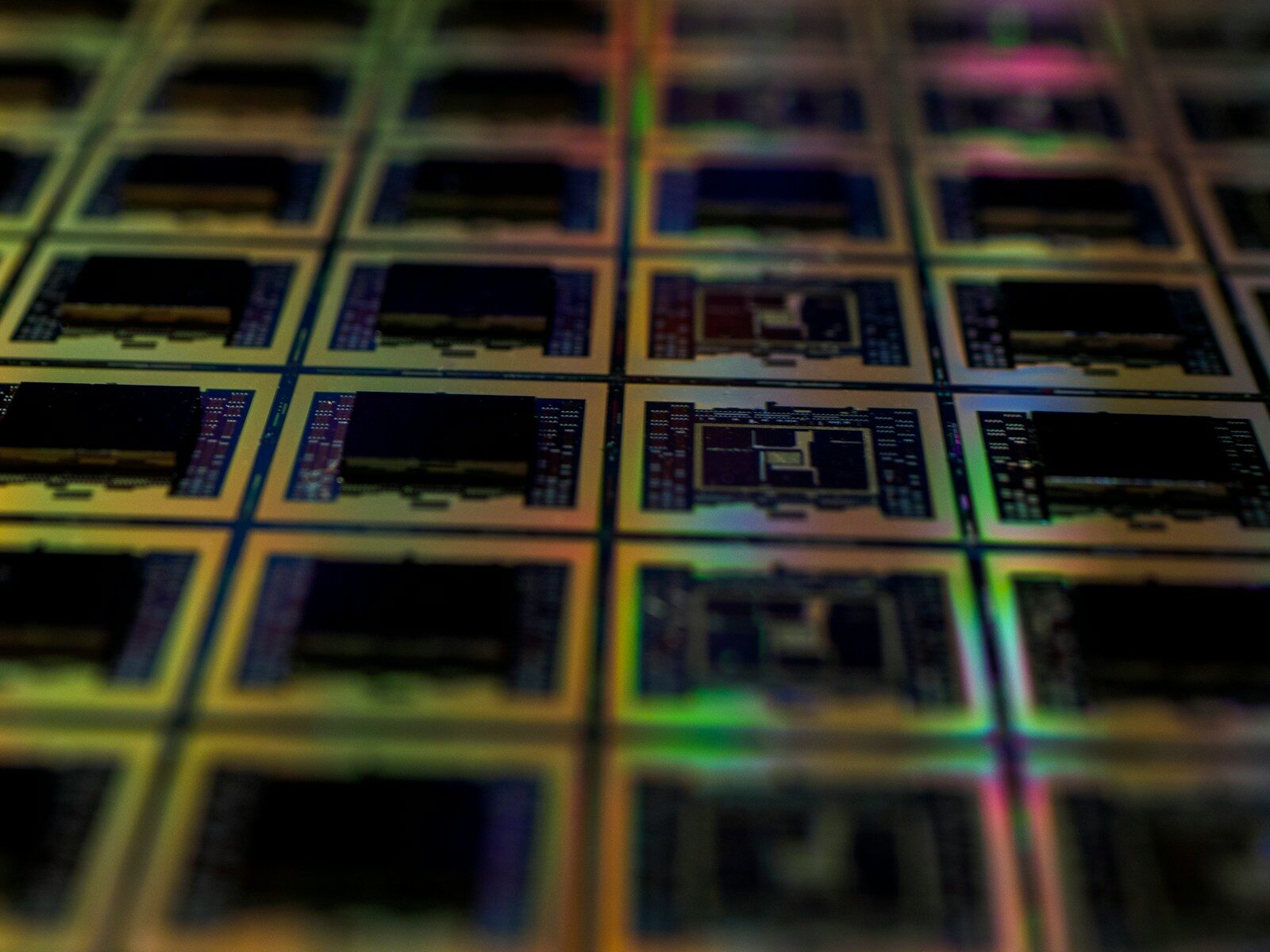
Traditional semiconductor manufacturing focuses on creating individual chips using sophisticated lithography and fabrication processes.
Once manufactured, those chips must be connected to memory, power systems, cooling solutions, and other components before they can function inside servers or computers.
This final integration process is known as chip packaging.
Advanced packaging goes far beyond simply placing a chip inside a protective case.
Modern techniques combine multiple specialized chips into one tightly integrated system capable of operating almost like a single processor.
These systems often include:
- AI processors (GPUs or AI accelerators)
- High-bandwidth memory (HBM)
- Input/output controllers
- Cache components
- High-speed interconnects
The closer these components are physically connected, the faster they can exchange data.
For AI workloads, that speed is crucial.
Why AI Needs Advanced Packaging
Training large AI models requires enormous amounts of data to move rapidly between processors and memory.
Simply building faster chips is no longer enough.
Data transfer has become one of the industry’s biggest performance limitations.
Advanced packaging helps solve this challenge by:
- Reducing communication delays between chips
- Increasing memory bandwidth
- Lowering power consumption
- Improving overall computing efficiency
- Allowing multiple processors to work together more effectively
Without these improvements, even the world’s most advanced AI chips would struggle to reach their full potential.
Why Moore’s Law Is No Longer Enough
For decades, semiconductor progress largely followed Moore’s Law, the observation that chip performance generally improved as manufacturers packed more transistors onto silicon.
However, shrinking transistors has become increasingly difficult, expensive, and physically challenging.
Instead of relying solely on smaller transistors, manufacturers now improve performance by integrating multiple specialized chips into a single package.
This approach is often called heterogeneous integration.
Rather than one enormous chip, engineers combine:
- Compute chips
- Memory chips
- Specialized accelerators
- Communication components
Working together, these components deliver far greater performance than traditional designs.
High-Bandwidth Memory Has Become Essential
One reason advanced packaging matters so much is the growing importance of High-Bandwidth Memory (HBM).
Modern AI processors consume extraordinary amounts of data.
Traditional memory technologies cannot always supply information quickly enough.
HBM solves this by stacking memory chips vertically and placing them extremely close to AI processors.
Benefits include:
- Faster data transfer
- Lower latency
- Reduced energy consumption
- Improved AI training performance
However, integrating HBM requires extremely sophisticated packaging techniques that only a small number of manufacturers currently possess.
Why Packaging Has Become a Global Choke Point
Ironically, producing advanced AI chips is no longer the only manufacturing challenge.
Packaging capacity itself has become a major bottleneck.
Even if chip fabrication increases, companies still require sufficient advanced packaging facilities to assemble complete AI processors.
Demand has surged because nearly every major technology company is investing heavily in AI infrastructure.
These include:
- Cloud providers
- AI startups
- Enterprise software companies
- Research institutions
- Government agencies
As orders continue growing, packaging facilities have struggled to keep pace.
Why So Few Companies Can Do It
Advanced packaging is extraordinarily difficult.
It requires:
- Nanometer-level precision
- Specialized manufacturing equipment
- Highly automated production
- Complex thermal management
- Advanced materials science
- Rigorous quality control
Only a limited number of semiconductor companies possess both the expertise and production capacity needed for cutting-edge packaging.
Building new facilities also requires billions of dollars in investment and years of construction.
As a result, expanding supply cannot happen overnight.

AI Is Driving Unprecedented Demand
The explosion of generative AI has transformed semiconductor demand.
Large language models, image generators, scientific AI systems, and autonomous technologies all require increasingly powerful computing hardware.
Major technology companies are investing hundreds of billions of dollars in:
- AI data centers
- GPU clusters
- Networking equipment
- Specialized accelerators
- Cooling infrastructure
Each new AI server depends on advanced packaged chips.
As demand rises, packaging has become one of the industry’s most valuable capabilities.
Why Advanced Packaging Improves Energy Efficiency
AI is extraordinarily power-intensive.
Advanced packaging helps reduce electricity consumption by shortening the distance data must travel between chips.
Benefits include:
- Lower electrical resistance
- Reduced heat generation
- Faster communication
- Higher computational efficiency
Given growing concerns about AI’s energy use, these efficiency improvements are becoming increasingly important.
The Geopolitical Importance of Semiconductor Packaging
Semiconductors have become central to economic competitiveness and national security.
Most public attention focuses on chip fabrication plants.
However, advanced packaging is now attracting similar strategic interest.
Governments increasingly recognize that controlling packaging capacity is nearly as important as manufacturing chips themselves.
Countries are investing heavily in domestic semiconductor ecosystems that include:
- Chip design
- Wafer fabrication
- Packaging
- Testing
- Equipment manufacturing
- Materials supply
The goal is to reduce dependence on single points of failure in global supply chains.
Can Other Companies Catch Up?
Many semiconductor manufacturers are expanding their advanced packaging capabilities.
However, catching up presents major challenges.
Companies must overcome:
- Long construction timelines
- Shortages of skilled engineers
- Equipment availability
- High capital costs
- Complex manufacturing processes
While new facilities are under construction worldwide, demand for AI hardware continues growing even faster.
This means supply constraints could persist for several years.
Beyond AI: Other Industries Also Benefit
Although AI is driving current demand, advanced packaging supports many technologies.
These include:
- Autonomous vehicles
- Smartphones
- Medical devices
- Aerospace systems
- Telecommunications
- Edge computing
- Robotics
Future electronics will increasingly rely on integrating multiple specialized chips rather than building ever-larger individual processors.
Emerging Packaging Technologies
The semiconductor industry is already developing next-generation packaging methods.
Future innovations may include:
3D Chip Stacking
Processors stacked vertically to increase density.
Chiplet Architectures
Smaller modular chips combined into flexible systems.
Silicon Interposers
Ultra-fast communication layers connecting multiple chips.
Optical Interconnects
Using light instead of electrical signals for faster data transfer.
Advanced Cooling Systems
Improved heat management for increasingly powerful AI hardware.
These innovations could dramatically increase computing performance while reducing energy consumption.
The Future of AI Depends on the Entire Supply Chain
Artificial intelligence often appears to be driven purely by software breakthroughs.
In reality, hardware innovation is equally important.
The AI ecosystem depends upon:
- Chip designers
- Foundries
- Packaging specialists
- Equipment manufacturers
- Memory producers
- Data center operators
- Energy providers
Weakness in any part of this chain can slow AI progress.
Advanced packaging has emerged as one of its most critical links.
Conclusion
The rise of artificial intelligence has transformed advanced semiconductor packaging from a little-known manufacturing process into one of the world’s most strategically important technologies.
As AI models grow larger and more computationally demanding, simply producing better chips is no longer sufficient.
The ability to efficiently connect processors, memory, and specialized components has become just as important as the chips themselves.
With limited production capacity, soaring global demand, and increasing geopolitical significance, advanced packaging has become one of AI’s defining bottlenecks.
The next breakthroughs in artificial intelligence may depend not only on smarter algorithms but also on the engineers and manufacturers quietly reinventing how the world’s most powerful chips are assembled.
Frequently Asked Questions (FAQ)
1. What is advanced chip packaging?
Advanced chip packaging is a manufacturing process that integrates multiple semiconductor components—such as processors, memory, and communication chips—into a single high-performance package, enabling faster data transfer, improved efficiency, and greater computing power.
2. Why is advanced packaging important for AI?
Modern AI systems process enormous amounts of data. Advanced packaging places processors and memory much closer together, reducing communication delays, increasing bandwidth, lowering power consumption, and significantly improving AI performance.
3. Why has chip packaging become a bottleneck?
Only a limited number of companies have the expertise, equipment, and production capacity to perform advanced packaging at scale. The explosive demand for AI hardware has exceeded available packaging capacity, delaying shipments and increasing costs.
4. Can semiconductor companies simply build more packaging factories?
Yes, but expanding capacity is expensive and time-consuming. New facilities require billions of dollars in investment, specialized equipment, highly trained engineers, and years to become fully operational.
5. Will advanced packaging remain important beyond artificial intelligence?
Absolutely. Advanced packaging is expected to play a critical role in future technologies including autonomous vehicles, robotics, 6G communications, edge computing, aerospace, medical devices, quantum computing, and next-generation consumer electronics.
Sources The New York Times

