
As generative AI tools become capable of writing essays, solving equations, and producing polished academic work in seconds, colleges are facing a serious challenge: how do you fairly assess what students actually know?
Traditional exams and take-home assignments are increasingly vulnerable to AI misuse. In response, professors across universities are reviving a centuries-old solution that AI can’t easily exploit: oral exams.
Once considered outdated or impractical, oral assessments are quietly making a comeback — and they’re reshaping how learning is measured in the AI age.
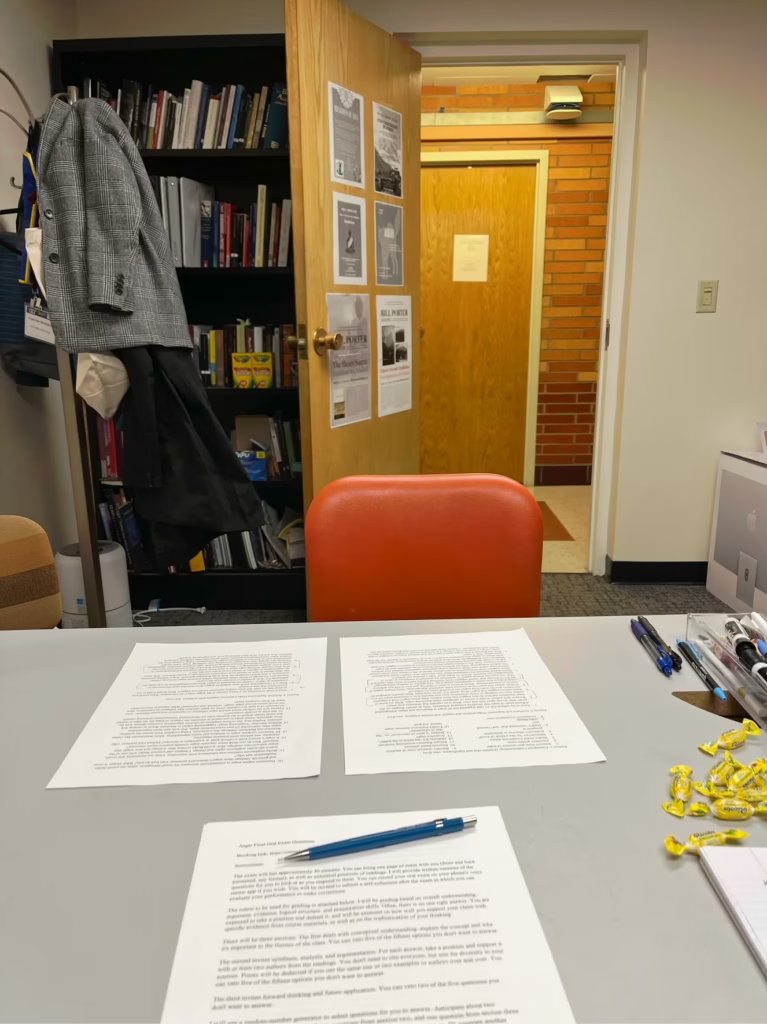
Why Professors Are Turning to Oral Exams
1. AI Has Made Cheating Too Easy
Students can now generate essays, code, and even complex analyses with minimal effort. Detection tools often fail, and many educators admit they can no longer reliably tell whether a submission reflects student understanding or AI output.
This has created an integrity crisis in higher education.
2. Oral Exams Make AI Shortcuts Almost Impossible
Oral exams require students to:
- explain ideas in real time
- respond to follow-up questions
- defend their reasoning
- adapt to unexpected prompts
AI tools can generate text, but they can’t participate in a live academic conversation or demonstrate spontaneous understanding.
3. They Reveal Real Understanding
Unlike written submissions, oral exams expose how students think. Professors can quickly see whether a student truly understands a concept or is repeating memorized material.
This aligns assessment with what education is supposed to measure: comprehension, reasoning, and communication.
Where Oral Exams Are Being Used Today
Humanities and Seminars
Small classes often use 20–30 minute oral finals where students discuss readings, arguments, and interpretations.
STEM and Technical Courses
In math, computer science, and engineering, students are asked to verbally walk through code, formulas, or problem-solving logic.
Large Classes (With New Formats)
Some instructors are experimenting with structured oral check-ins, group oral exams, or short individual interviews to scale the method.
Hybrid Assessments
Written assignments followed by short oral defenses are becoming popular to confirm authorship and understanding.

Benefits Beyond Preventing AI Cheating
1. Builds Real-World Skills
Oral exams develop abilities students actually need after college:
- clear communication
- critical thinking
- explaining complex ideas
- professional confidence
These skills translate directly to job interviews and workplace discussions.
2. Immediate Feedback
Students receive instant clarification and correction, helping them learn more deeply and quickly.
3. Stronger Engagement
Students tend to prepare more thoroughly when they know they must explain ideas in their own words.
The Challenges No One Can Ignore
1. Time and Scalability
One-on-one exams require significant instructor time, making them harder to implement in large classes.
2. Student Anxiety
Some students experience heightened stress during oral assessments. Fair grading rubrics and supportive formats are essential to avoid bias.
3. Training and Consistency
Instructors need clear guidelines to ensure grading remains consistent and equitable across students.
Oral Exams Aren’t the Only Tool
Colleges are also experimenting with:
- handwritten, in-person exams
- supervised classroom testing
- redesigned assignments that emphasize process over output
- hybrid assessments combining writing and live explanation
Oral exams are part of a broader rethink of how learning is evaluated in an AI-rich world.
What This Shift Means for the Future of Education
The return of oral exams signals a deeper change:
- Assessment is moving from product to process
- Understanding matters more than polished output
- Human judgment is becoming central again
- AI is being integrated into learning — but not assessment
Education isn’t rejecting technology.
It’s redefining what authentic learning looks like when machines can generate answers instantly.

Frequently Asked Questions
Q1. Why are oral exams becoming popular again?
Because they reliably test real understanding and are difficult to fake with AI.
Q2. Are oral exams only used in humanities?
No. They’re increasingly used in STEM, business, and technical fields.
Q3. Can students still use AI during oral exams?
Not effectively. Live questioning prevents meaningful AI assistance.
Q4. Do students like oral exams?
Many feel anxious at first, but later appreciate the fairness and clarity of the assessment.
Q5. Will oral exams replace written exams?
No. They are more likely to supplement written work.
Q6. Are oral exams fair to all students?
They can be, if designed with clear rubrics, flexibility, and sensitivity to anxiety and accessibility needs.
Q7. Are oral exams practical for large classes?
They are challenging, but hybrid and group formats are emerging.
Q8. Do oral exams improve learning?
Yes. They encourage deeper preparation and active thinking.
Q9. Is this a temporary reaction to AI?
Likely not. Many educators see oral assessment as a long-term solution.
Q10. What’s the biggest takeaway?
In the age of AI, how students explain what they know matters more than what they submit.
Sources The Washington Post