
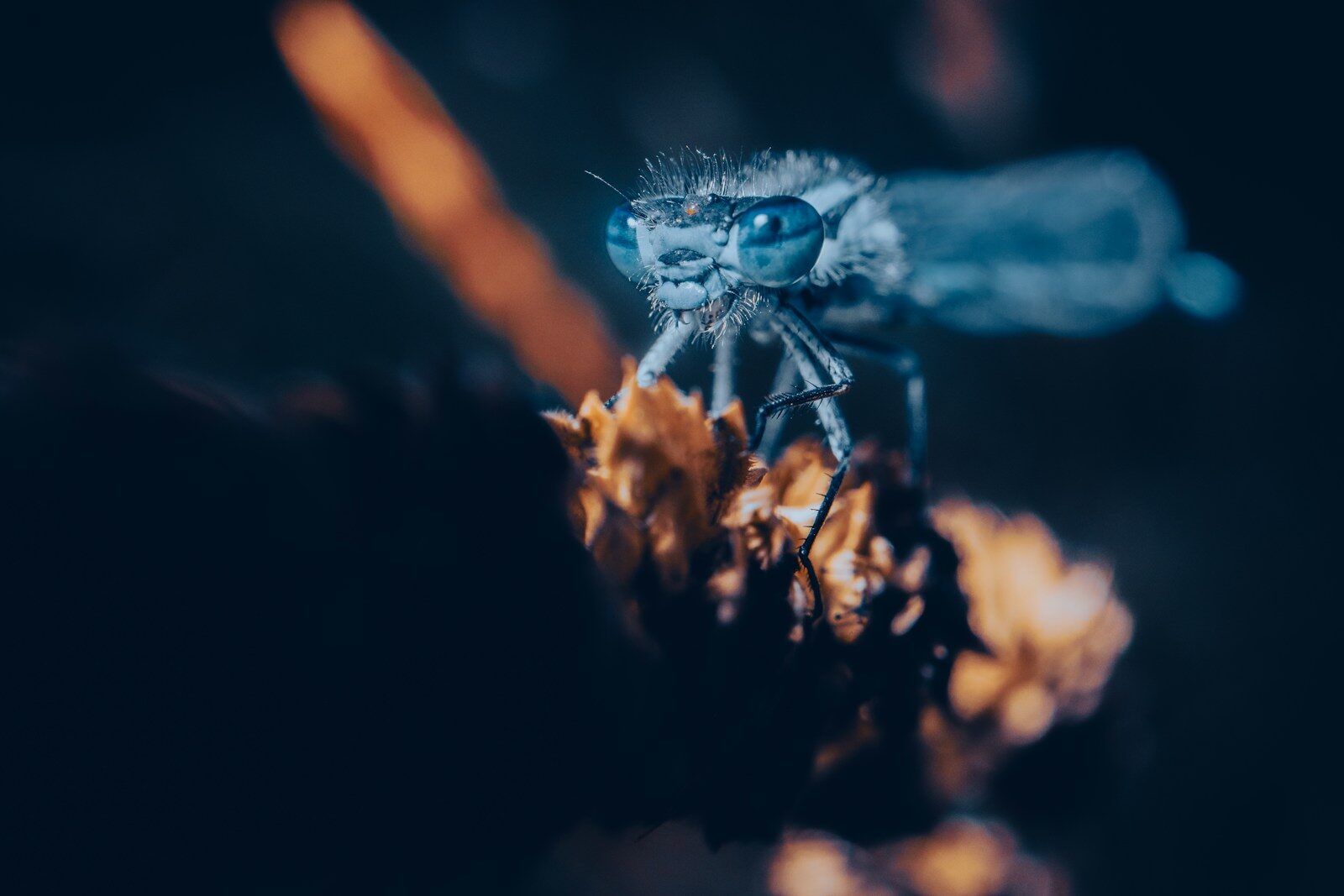
The future of artificial intelligence may not come from giant data centers or trillion-parameter models.
It may come from something far smaller:
The brain of an insect.
Scientists and AI researchers are increasingly turning to insects—especially bees, ants, and flies—for inspiration in building smarter, faster, and dramatically more efficient AI systems.
Why?
Because despite having tiny brains, insects can:
- Navigate complex environments
- Learn from experience
- Make decisions quickly
- Work together efficiently
All while using a fraction of the energy consumed by modern AI.
And that’s exactly why researchers believe insect intelligence could spark the next major breakthrough in artificial intelligence.
The Big Problem With Modern AI
Today’s AI systems are incredibly powerful.
But they also have major weaknesses:
- Massive energy consumption
- Huge computing requirements
- Expensive infrastructure
- Limited efficiency
Modern AI models often require:
- Enormous datasets
- Thousands of GPUs
- Warehouse-sized data centers
Yet even with all that power, they still struggle with:
- Adaptability
- Real-world reasoning
- Energy efficiency
Why Insects Fascinate AI Researchers
Insects achieve remarkable intelligence using:
Extremely small neural systems
For example:
- A bee brain contains fewer than one million neurons
- The human brain has roughly 86 billion
Yet bees can:
- Recognize patterns
- Navigate long distances
- Communicate with others
- Solve simple problems
All with minimal energy use.
Nature’s Ultimate Efficiency Machine
One of the biggest lessons insects offer is:
Intelligence does not necessarily require massive computational power
Insects evolved over millions of years to optimize:
- Survival
- Efficiency
- Adaptability
That makes them ideal models for:
- Lightweight AI
- Autonomous systems
- Robotics
How Insect Brains Work Differently
Unlike modern AI models that rely heavily on brute-force computation, insect brains prioritize:
1. Efficiency
Only essential information is processed.
2. Fast Decision-Making
Insects react quickly without needing massive calculations.
3. Specialized Functions
Different neural circuits handle specific tasks efficiently.
4. Low Energy Usage
Insect brains consume tiny amounts of power compared to modern computers.
What Scientists Are Trying to Build
Researchers are developing AI systems inspired by insect behavior for applications like:
- Autonomous drones
- Swarm robotics
- Navigation systems
- Environmental monitoring
- Search-and-rescue robots
The goal is:
Smarter systems using far less power
Swarm Intelligence: The Ant Colony Effect
One of the most exciting areas is:
Swarm intelligence
This is inspired by how insects like ants and bees cooperate.
Individually:
- Each insect is relatively simple
Together:
- They create highly intelligent group behavior
AI researchers are applying this idea to:
- Robot coordination
- Traffic systems
- Distributed computing
Why Energy Efficiency Matters So Much
AI’s growing energy demands are becoming a global concern.
Large AI systems consume:
- Huge electricity resources
- Massive cooling infrastructure
Insect-inspired AI could help create:
- Lower-power systems
- Portable AI devices
- More sustainable computing
The Robotics Connection
Insect-inspired AI is especially important for robotics.
Why?
Because robots operating in the real world need:
- Fast reactions
- Efficient processing
- Low energy consumption
Examples include:
- Delivery drones
- Exploration robots
- Agricultural monitoring systems
What Makes Insects So Adaptable
Insects survive in:
- Harsh environments
- Rapidly changing conditions
They can:
- Learn from mistakes
- Adjust behavior quickly
- Operate with incomplete information
These are abilities current AI still struggles with.
The Challenge: Simplicity vs Complexity
While insect brains are impressive, they are also:
- Limited
- Specialized
Researchers must figure out:
- Which biological principles matter most
- How to translate them into AI systems
Could Insect AI Replace Large Models?
Probably not entirely.
Instead, experts believe:
Insect-inspired AI could complement existing systems
Large AI models may still handle:
- Language
- Complex reasoning
While insect-style AI handles:
- Navigation
- Real-time decision-making
- Autonomous movement
The Future of Bio-Inspired AI
This field is part of a broader trend called:
Bio-inspired computing
Researchers are studying:
- Animal brains
- Evolutionary systems
- Natural intelligence
To build:
- More adaptable
- More efficient AI architectures
Why This Could Be the Next AI Revolution
The current AI model may not scale forever.
Costs are rising.
Energy demands are growing.
Infrastructure requirements are becoming enormous.
Insect-inspired systems offer:
- Smaller models
- Lower costs
- Greater efficiency
This could redefine:
How AI is designed in the future
The Bigger Philosophical Lesson
Insects challenge one of the biggest assumptions in technology:
That bigger always means smarter.
Nature shows that:
- Small systems can be powerful
- Simplicity can outperform complexity
- Efficiency matters as much as intelligence
Frequently Asked Questions (FAQ)
1. Why are scientists studying insect brains for AI?
Because insects perform complex tasks using extremely small and efficient brains.
2. What is insect-inspired AI?
AI systems designed using principles observed in insect behavior and neural systems.
3. What is swarm intelligence?
A form of collective behavior inspired by groups of insects like ants or bees.
4. How could this improve AI?
By making systems:
- More energy-efficient
- Faster
- Better at real-world tasks
5. Will insect-inspired AI replace current AI models?
Not completely—it will likely complement larger AI systems.
6. Why is energy efficiency important in AI?
Modern AI consumes enormous amounts of electricity and computing resources.
7. What’s the biggest takeaway?
The future of AI may not come from building bigger systems—
But from learning how nature solved intelligence millions of years ago.
Final Thoughts
For decades, AI development focused on scale:
- Bigger models
- More data
- More computing power
But insects are teaching researchers something surprising:
Intelligence can also come from simplicity, efficiency, and adaptation.
And in a world where AI is becoming increasingly expensive and resource-intensive, that lesson may prove revolutionary.
Because the next breakthrough in artificial intelligence might not come from a supercomputer.
It might come from the tiny brain of a bee.
Sources BBC

