

For years, Amazon’s competitive edge has been built on one critical factor: speed.
Consumers now expect deliveries within a day, a few hours, or even the same day they place an order. Meeting those expectations requires one of the world’s most advanced logistics and fulfillment networks.
To stay ahead, Amazon is accelerating its investment in automation.
The company recently introduced an upgraded version of its Proteus warehouse robot, an AI-powered autonomous machine capable of understanding conversational instructions, planning tasks independently, and navigating warehouse environments with far greater flexibility than previous robotic systems. The move highlights Amazon’s growing commitment to robotics, artificial intelligence, and next-generation fulfillment technology.
At the same time, the advancement has reignited concerns about the future of warehouse employment and whether increasingly intelligent machines could eventually replace human workers in certain roles.
The question facing Amazon—and many industries worldwide—is simple but significant:
Will AI-powered robots become valuable coworkers, or are they the beginning of a major workforce transformation?
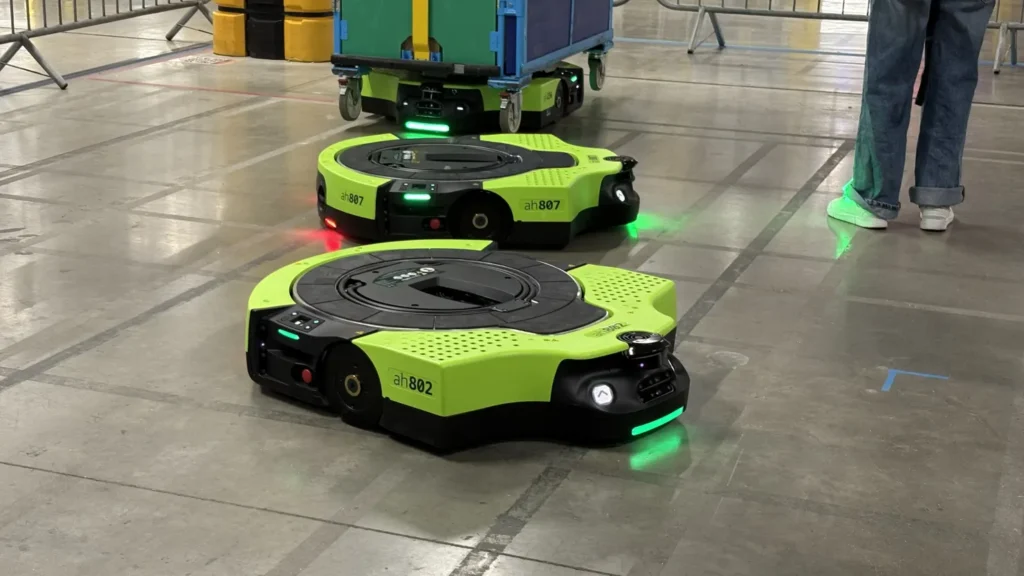
Meet Proteus: Amazon’s Most Advanced Warehouse Robot Yet
Amazon originally introduced Proteus as its first fully autonomous mobile robot designed to safely operate alongside human employees.
The latest version marks a major technological leap.
Unlike earlier warehouse robots that relied on predefined instructions and restricted operating zones, the upgraded Proteus can understand natural-language commands and determine the most efficient way to complete assigned tasks. It can prioritize workloads, optimize routes, and adapt to changing warehouse conditions in real time.
According to Amazon, employees can increasingly communicate with Proteus in a way that feels more like interacting with a colleague than programming a machine.
This evolution reflects a broader trend in robotics: moving from rigid automation to intelligent systems capable of making operational decisions independently.
Why Amazon Is Betting Big on Robotics
Amazon’s success depends heavily on operational efficiency.
Even small improvements in warehouse performance can generate enormous benefits across its global logistics network.
Every second saved during fulfillment can contribute to:
- Faster deliveries
- Lower operating expenses
- Improved customer satisfaction
- Increased warehouse productivity
- Better inventory control
As online shopping continues to grow, expanding warehouse operations solely through human labor becomes increasingly costly and complex.
Robotics offers a scalable solution.
Around-the-Clock Productivity
Unlike human workers, robots can operate continuously without breaks, fatigue, or shift limitations.
Higher Accuracy
Automated systems can reduce sorting mistakes, inventory errors, and package handling issues.
Better Space Utilization
Robots help optimize warehouse layouts, allowing businesses to store and move inventory more efficiently.
Faster Fulfillment
AI-powered systems can streamline workflows and accelerate order processing.
For Amazon, these advantages directly support its mission of delivering products faster while controlling costs.
Amazon’s Automation Journey Didn’t Start With Proteus
Proteus is only one component of Amazon’s rapidly expanding robotics ecosystem.
Over the years, the company has invested billions of dollars in technologies such as:
- Autonomous mobile robots
- Robotic sorting systems
- Automated inventory tracking
- AI-powered route optimization
- Advanced robotic arms
Amazon has also showcased innovations like Vulcan, a robot equipped with a sense of touch, and STARK, an automated tote-handling system designed to improve warehouse efficiency.
Together, these technologies point toward a future where fulfillment centers become increasingly automated and interconnected.
How Artificial Intelligence Changes Warehouse Robotics
Traditional warehouse robots followed fixed instructions.
They could perform repetitive tasks efficiently but struggled when conditions changed.
Artificial intelligence changes that equation.
Modern AI-powered robots can:
- Understand instructions
- Prioritize tasks
- Adapt to unexpected situations
- Optimize routes dynamically
- Coordinate with other machines and systems
This added intelligence transforms robots from simple tools into autonomous operational partners.
As a result, warehouses can become more responsive, efficient, and capable of handling complex logistics challenges.
The Productivity Gains Could Be Enormous
Supporters of warehouse automation argue that AI-powered robotics can deliver substantial economic benefits.
Potential advantages include:
- Increased productivity
- Reduced workplace injuries
- Lower operating costs
- Improved inventory accuracy
- Faster order fulfillment
Consumers may benefit through:
- Faster shipping times
- Lower prices
- Better product availability
Businesses gain a competitive advantage by improving efficiency and reducing operational bottlenecks.
The Growing Debate Over Job Displacement
Despite the benefits, automation remains controversial.
Throughout history, technological innovation has often replaced certain jobs while creating entirely new industries and opportunities.
The challenge is determining whether AI-powered robotics will follow the same pattern.
Critics argue that robots could eventually perform many warehouse tasks currently handled by humans, including:
- Moving inventory
- Sorting packages
- Transporting goods
- Conducting basic inspections
- Performing repetitive logistics operations
As AI capabilities continue to improve, the list of automatable tasks may expand significantly.
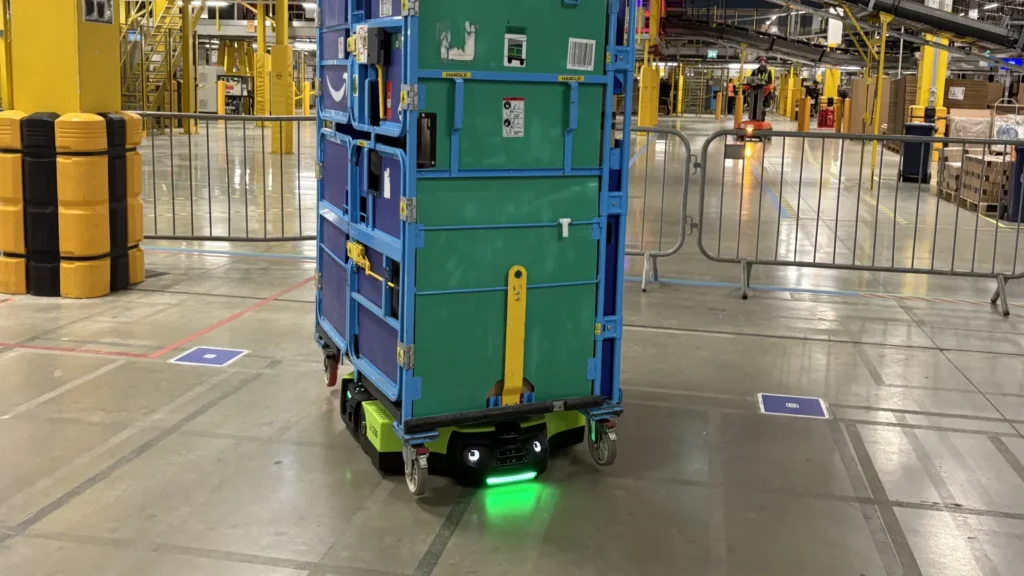
Amazon’s View: Robots and Humans Working Together
Amazon maintains that its robotics strategy is designed to support workers rather than replace them.
The company argues that automation creates opportunities for employees to transition into higher-skilled positions such as:
- Robotics maintenance
- Systems management
- Data analytics
- Technical operations
- Process optimization
Amazon has also invested in workforce training and upskilling programs aimed at helping employees adapt to increasingly technology-driven workplaces.
However, labor advocates remain cautious, noting that efficiency gains often reduce the need for certain categories of work over time.
Why Layoffs Intensify Automation Concerns
Whenever companies invest heavily in automation while reducing staff, concerns naturally increase.
Amazon has undergone several rounds of restructuring and workforce reductions in recent years while simultaneously expanding its investments in AI and robotics.
Although these cuts represent a relatively small portion of Amazon’s overall workforce, they contribute to broader fears that automation could eventually reduce labor demand across logistics and fulfillment operations.
The relationship between technological progress and employment remains one of the most closely watched issues in the AI era.
New Career Opportunities Emerging From Automation
Automation doesn’t simply eliminate jobs—it also creates new ones.
As warehouses become more technologically advanced, demand is growing for professionals such as:
- Robotics technicians
- Automation engineers
- AI operators
- Data analysts
- Warehouse technology managers
- Cybersecurity specialists
The challenge for businesses and governments is ensuring workers have access to the training needed to transition into these emerging roles.
Automation Could Make Warehouses Safer
Warehouse work often involves physically demanding tasks, including:
- Heavy lifting
- Repetitive movements
- Long walking distances
- Continuous manual handling
Robots can take over many of these activities, reducing physical strain on workers.
By handling repetitive transportation and lifting tasks, autonomous systems may help lower injury rates and improve workplace safety.
For many experts, this is one of the strongest arguments in favor of warehouse automation.
Retailers Everywhere Are Following the Same Path
Amazon is not alone in its pursuit of robotics.
Companies across retail, logistics, manufacturing, and e-commerce are investing heavily in:
- Warehouse automation
- AI-powered inventory systems
- Autonomous vehicles
- Smart logistics networks
As more businesses adopt these technologies, automation is becoming less of a competitive advantage and more of an operational necessity.
Organizations that fail to modernize risk falling behind competitors that can deliver products faster and more efficiently.
What the Warehouse of the Future Could Look Like
Tomorrow’s fulfillment centers may look dramatically different from today’s facilities.
Future warehouses could feature:
- Large fleets of autonomous robots
- AI-driven inventory management systems
- Automated picking and packing stations
- Real-time logistics optimization
- Human supervisors overseeing robotic operations
Rather than eliminating human workers entirely, many experts envision a hybrid workplace where people and machines collaborate.
Humans will likely focus on:
- Strategic decision-making
- Problem-solving
- Oversight and supervision
- Exception handling
- Customer-focused operations
Meanwhile, robots will manage repetitive, physically demanding, and highly predictable tasks.
The Bigger Picture: A New Era of Intelligent Logistics
Amazon’s Proteus robot represents more than just another warehouse innovation.
It offers a glimpse into the future of work and the growing role of artificial intelligence in everyday business operations.
AI is enabling machines to move beyond simple automation and toward autonomous decision-making.
Warehouses are among the first environments where these capabilities can be deployed at massive scale, but similar transformations are expected across manufacturing, transportation, healthcare, and other industries.
The benefits are compelling:
- Faster operations
- Lower costs
- Greater efficiency
- Improved workplace safety
The concerns are equally important:
- Workforce disruption
- Skills gaps
- Job displacement
- Economic inequality
How businesses, workers, educators, and policymakers respond to these challenges will shape the future of the global workforce.
One thing is clear: logistics is becoming smarter, faster, and more automated than ever before—and Amazon intends to lead that transformation.
Frequently Asked Questions (FAQ)
1. What is Amazon’s Proteus robot?
Proteus is Amazon’s autonomous mobile warehouse robot. The latest version uses artificial intelligence to understand conversational instructions, prioritize tasks, and navigate warehouse environments independently.
2. Will Proteus replace warehouse workers?
Amazon says Proteus is designed to assist employees and improve efficiency rather than replace them. However, some experts believe increasing automation could reduce demand for certain warehouse positions over time.
3. How is the new Proteus different from earlier warehouse robots?
Previous robots operated in limited areas and relied on structured commands. The upgraded Proteus can understand natural language, make decisions, prioritize tasks, and operate more flexibly throughout fulfillment centers.
4. Why is Amazon investing so heavily in robotics?
Automation helps Amazon improve efficiency, reduce costs, accelerate deliveries, optimize logistics operations, and support growing e-commerce demand.
5. What jobs could automation create?
Automation is expected to increase demand for robotics technicians, automation engineers, AI operators, warehouse technology specialists, cybersecurity experts, and data analysts.
6. What are the biggest risks of warehouse automation?
Major concerns include job displacement, workforce retraining challenges, cybersecurity threats, technical failures, and increased dependence on automated systems.
7. Are other companies using warehouse robots?
Yes. Many retailers, logistics providers, manufacturers, and e-commerce companies are investing heavily in robotics and AI-powered warehouse technologies.
8. Could robots eventually outnumber humans in warehouses?
Some experts believe highly automated facilities may eventually operate with significantly fewer workers. However, most analysts expect humans to remain essential for oversight, maintenance, and complex decision-making.
9. How does AI improve warehouse robotics?
AI enables robots to understand instructions, adapt to changing conditions, optimize workflows, coordinate tasks, and make operational decisions without extensive programming.
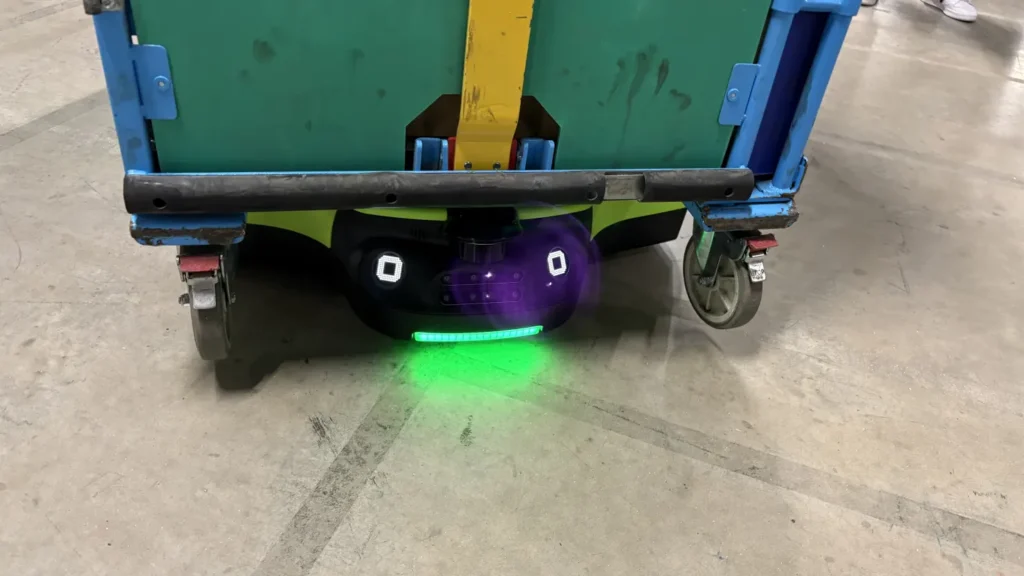
10. What does this mean for the future of work?
The rise of AI-powered robotics suggests that many jobs will evolve rather than disappear completely. Workers who develop technical, analytical, and supervisory skills are likely to be best positioned for success in increasingly automated workplaces.
Sources CNBC

