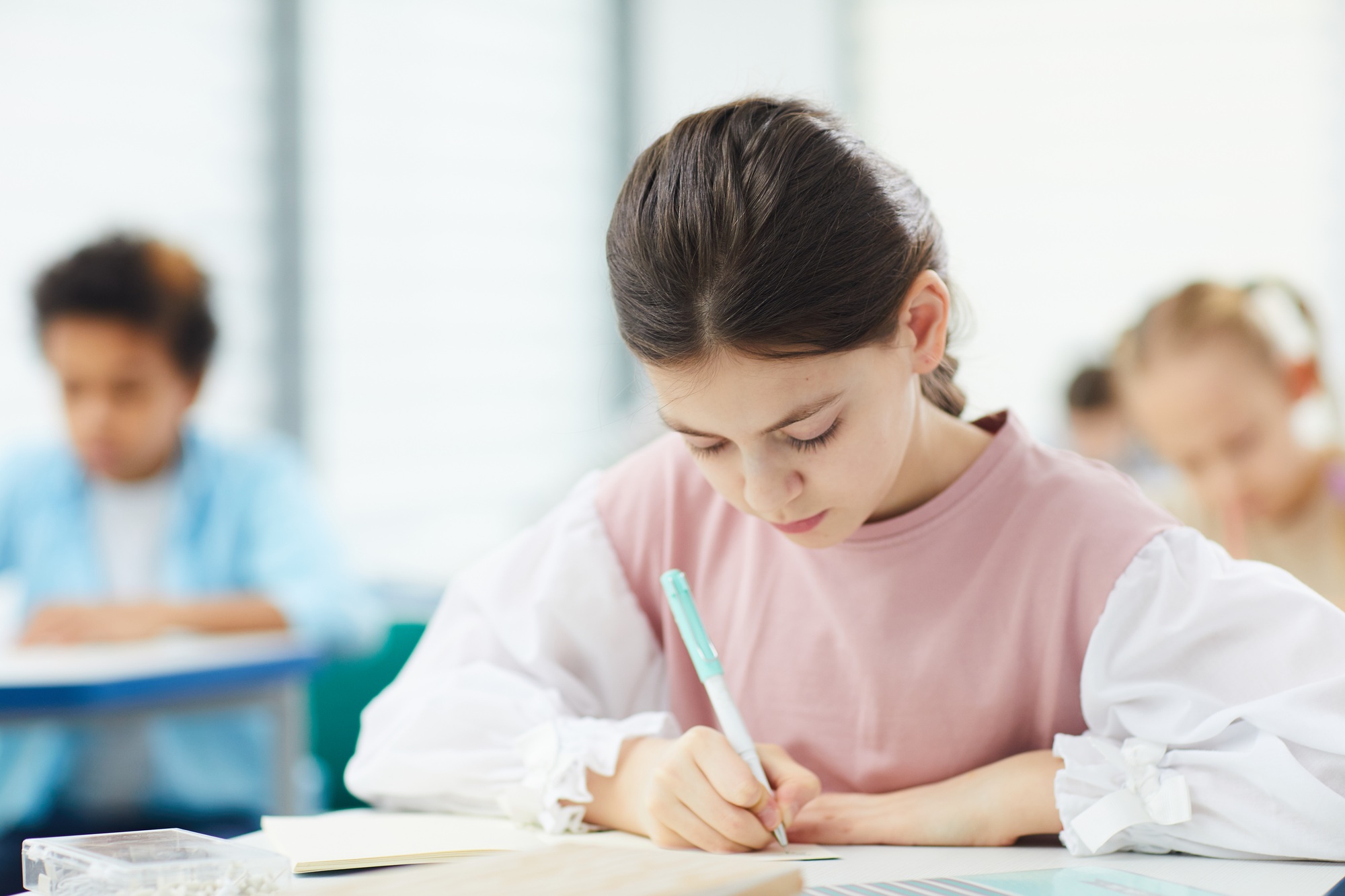
In the war against AI-powered essay mills, one low-tech weapon is proving unbeatable: good old pen and paper. A crafty teacher has rolled out in-class handwritten essays and surprise prompts—forcing students to ditch ChatGPT and prove they really know their stuff.

How the Strategy Works
- Handwritten Essays On Demand: Students must write responses by hand in a locked-down classroom, eliminating any chance to copy-paste AI text.
- Randomized Prompts: At the start of each session, teachers pull unpredictable essay questions—so no pre-written AI drafts can match the topic.
- Spot-Check Signing: Pupils sign and date each page; teachers compare handwriting style and past work to catch swap-outs or off-task devices.
This approach turns classrooms back into pen-and-paper proving grounds, where AI’s speed advantage vanishes—because no chatbot can hold a pencil.
Why It’s Gaining Traction
- Immediate Verification: Teachers instantly see who’s pulling their weight, without special software or forensic text analysis.
- Equal Footing: All students face the same hurdle, whether they have paid AI subscriptions or not—restoring fairness.
- Skill Reinforcement: Handwriting under pressure strengthens memory recall and critical thinking, doubling as an anti-cheating measure.
Schools experimenting with this “analog lock-down” report sharper focus, fewer plagiarism flags, and a renewed sense of academic integrity.
Frequently Asked Questions (FAQs)
Q1: Can’t students still use AI before class to prepare notes?
A1: Surprise prompts and timed essays limit prep. Even if they draft outlines at home, handwriting speed and on-the-spot thinking prevent polished AI text from slipping through.
Q2: Is handwriting fair to students with slower penmanship?
A2: Teachers emphasize content over speed, and accommodations—like extra time—are offered to those with documented needs, ensuring equity.
Q3: Does this method work for all subjects?
A3: It’s most effective for essays in humanities and social sciences. For math or coding, teachers use on-paper problem solving or in-class whiteboard demos.
Comparison: Paper Tactic vs. Estonia’s Phone Ban
Both the paper-first strategy and Estonia’s classroom phone ban tackle AI’s disruptive power with analog remedies. Estonia removes devices to curb AI distractions schoolwide, while this teacher’s trick uses handwritten, in-class work to outsmart AI cheats at the assignment level. Each approach shows that sometimes the simplest tools—locked-away phones or a blank sheet—remain the strongest line of defense in an AI-driven world.

Sources Wall Street Journal