

Artificial intelligence has become one of the defining technologies of the 21st century, influencing everything from scientific research and healthcare to manufacturing, finance, education, and national security. At the center of this transformation is a growing debate over open-source AI—whether advanced AI models should be openly shared with developers around the world or kept behind proprietary platforms.
As the United States and China continue competing for leadership in AI, open-source models have emerged as both an innovation accelerator and a strategic concern. Supporters argue that open-source AI democratizes technology, encourages transparency, and fuels entrepreneurship. Critics warn that unrestricted access could increase security risks, enable misuse, and reduce the competitive advantages of companies investing billions of dollars in frontier AI research.
The discussion is no longer limited to software developers. Governments, businesses, universities, investors, and policymakers are now deciding how openness, security, and innovation should coexist in an increasingly AI-driven world.

Understanding Open-Source AI
Open-source AI generally refers to AI projects that publicly share significant components of their technology, such as:
- Source code
- Model architectures
- Model weights (in some cases)
- Documentation
- Development tools
- Community contributions
This allows developers to study, modify, improve, and deploy AI systems under the terms of their respective licenses.
However, not every “open” AI project provides complete transparency. Some release only model weights, while others publish code but not the datasets or training methods used to build the models.
Why Open-Source AI Has Gained Momentum
Open-source development has long been successful in software through projects like Linux, Python, Kubernetes, and TensorFlow.
The same collaborative approach is increasingly influencing AI because it offers:
- Faster innovation
- Lower development costs
- Global collaboration
- Independent verification
- Greater customization
- Reduced vendor lock-in
- Easier academic research
Organizations can build on existing work instead of developing every component from scratch.
Silicon Valley’s Changing Perspective
Many technology companies historically relied on proprietary AI systems as competitive advantages.
Today, some organizations are also supporting open-source or open-weight initiatives because they can:
- Expand developer ecosystems
- Encourage platform adoption
- Accelerate innovation
- Increase enterprise trust
- Improve transparency
- Strengthen research collaboration
This creates a hybrid ecosystem where both proprietary and open AI models coexist.
China’s Approach to Open AI
China has rapidly expanded investments in artificial intelligence across:
- Semiconductor development
- Cloud computing
- Robotics
- Manufacturing
- Education
- Scientific research
- Smart cities
- Industrial automation
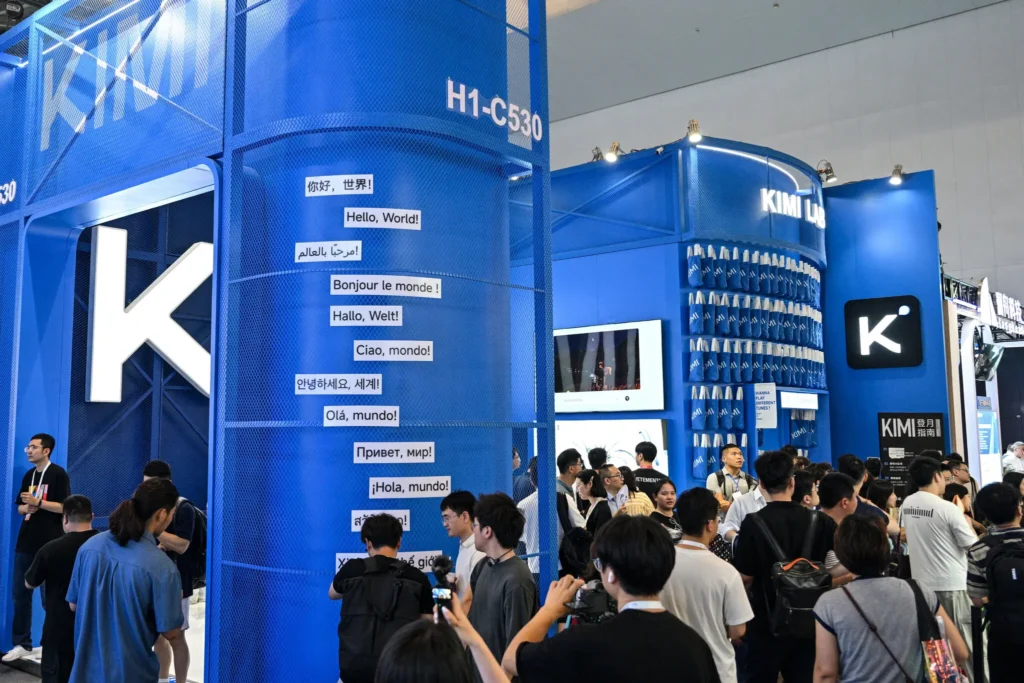
Chinese technology companies and research institutions have increasingly released open-source AI projects to encourage adoption, strengthen domestic AI capabilities, and build global developer communities.
This strategy helps broaden participation while supporting national ambitions in advanced technology.
Why Governments Care About Open AI
Artificial intelligence increasingly influences:
- Economic competitiveness
- Scientific leadership
- National security
- Industrial productivity
- Workforce development
- Digital sovereignty
Governments therefore evaluate open AI from multiple perspectives, balancing innovation with security and public interest.
The Role of AI Infrastructure
Even when AI software is openly available, deploying powerful models requires significant infrastructure.
Essential resources include:
- Data centers
- GPUs
- AI accelerators
- High-speed networking
- Cloud platforms
- Large-scale storage
- Reliable electricity
Infrastructure investment remains one of the largest barriers to developing frontier AI systems.
Open AI Encourages Startup Innovation
Young companies benefit from open-source AI by avoiding the need to build large models entirely from scratch.
Instead, startups can focus on:
- Specialized applications
- Enterprise software
- Healthcare tools
- Financial services
- Education platforms
- Robotics
- Customer support
This lowers development costs and shortens time to market.

Academic Research Benefits
Universities and research laboratories use open AI to:
- Reproduce scientific results
- Benchmark new techniques
- Explore model behavior
- Train students
- Publish independent research
- Collaborate internationally
Open access supports scientific progress through transparency and peer review.
Security Concerns Remain
Greater openness also creates challenges.
Potential risks include:
- Cybersecurity misuse
- Automated phishing
- Malware generation
- Deepfakes
- Misinformation
- Intellectual property disputes
- Unauthorized model modifications
Developers increasingly implement safeguards and responsible licensing to reduce these risks.
Enterprise Adoption Continues to Grow
Businesses increasingly deploy open-source AI for:
- Internal knowledge assistants
- Software development
- Customer support
- Data analysis
- Workflow automation
- Document processing
- Business intelligence
Private deployment gives organizations greater control over security and data privacy.
Open AI Drives Competition
Healthy competition encourages:
- Better model performance
- Lower costs
- Faster feature development
- More deployment choices
- Improved efficiency
- Greater accessibility
Competition between proprietary and open ecosystems often benefits end users through continuous innovation.
AI Governance Is Becoming More Important
As AI becomes more capable, organizations are adopting governance frameworks covering:
- Risk management
- Security testing
- Human oversight
- Model evaluation
- Transparency
- Compliance
- Responsible deployment
Strong governance helps build public confidence while supporting innovation.
The Semiconductor Connection
Advanced AI depends heavily on semiconductor technology.
Critical components include:
- AI accelerators
- Graphics processors
- High-bandwidth memory
- Networking chips
- Advanced manufacturing processes
Access to cutting-edge semiconductor technology remains a strategic factor in global AI competition.
International Collaboration Continues
Despite geopolitical competition, researchers worldwide still collaborate in areas such as:
- Healthcare
- Climate science
- Mathematics
- Open scientific research
- AI safety
- Educational initiatives
Many scientific advances benefit from international knowledge sharing.
The Future Will Likely Be Hybrid
Rather than one approach replacing the other, the AI ecosystem is likely to include:
- Proprietary frontier models
- Open-source foundation models
- Open-weight enterprise models
- Specialized domain-specific AI
- Cloud-hosted AI services
- On-premises enterprise deployments
Different organizations will choose different approaches depending on their goals and regulatory requirements.
Challenges Ahead
Several issues will shape the next phase of open-source AI:
- Balancing openness with security
- Protecting intellectual property
- Ensuring responsible AI use
- Managing infrastructure costs
- Developing international standards
- Addressing regulatory differences
Resolving these challenges will require cooperation among governments, businesses, researchers, and civil society.
The Bigger Picture
The debate over open-source AI reflects a broader transformation in the global technology landscape. Artificial intelligence is no longer simply a commercial software product—it has become a strategic platform influencing economic competitiveness, scientific discovery, national security, and digital infrastructure.
Open-source AI has demonstrated that collaborative development can accelerate innovation, reduce barriers to entry, and expand access to advanced technologies. At the same time, increasingly capable AI systems raise legitimate questions about cybersecurity, intellectual property, responsible deployment, and international governance.
Rather than framing the future as a choice between fully open or completely proprietary systems, many experts anticipate a balanced ecosystem in which both models coexist. Open-source projects will continue driving research, education, and startup innovation, while proprietary platforms may focus on large-scale commercial services, enterprise integration, and specialized capabilities.
Ultimately, the success of artificial intelligence will depend not only on building more powerful models but also on creating governance frameworks that encourage innovation while protecting security, promoting transparency, and ensuring that the benefits of AI are shared as broadly as possible.
Frequently Asked Questions (FAQs)
1. What is open-source AI?
Open-source AI generally refers to AI projects that make significant components—such as source code, model architectures, documentation, or sometimes model weights—available for others to study, modify, and use under specific license terms.
2. Why is open-source AI important?
It encourages collaboration, accelerates innovation, lowers development costs, supports academic research, enables startup growth, reduces vendor lock-in, and allows organizations to customize AI systems for specialized applications.
3. Does open-source AI pose security risks?
Yes. While openness promotes innovation, it can also increase the risk of misuse, including cyberattacks, misinformation, or unauthorized modifications. Responsible licensing, governance, and security safeguards are important for reducing these risks.
4. Why are semiconductors important for AI?
Advanced AI models require specialized processors such as GPUs and AI accelerators to train and run efficiently. Semiconductor technology is therefore a critical component of global AI competitiveness.
5. What is the future of open-source AI?
Open-source AI is expected to remain a major force in research, enterprise software, education, and startup innovation. The future will likely feature a hybrid ecosystem where open-source, open-weight, and proprietary AI models coexist to meet different technical, commercial, and regulatory needs.
Sources The New York Times

