
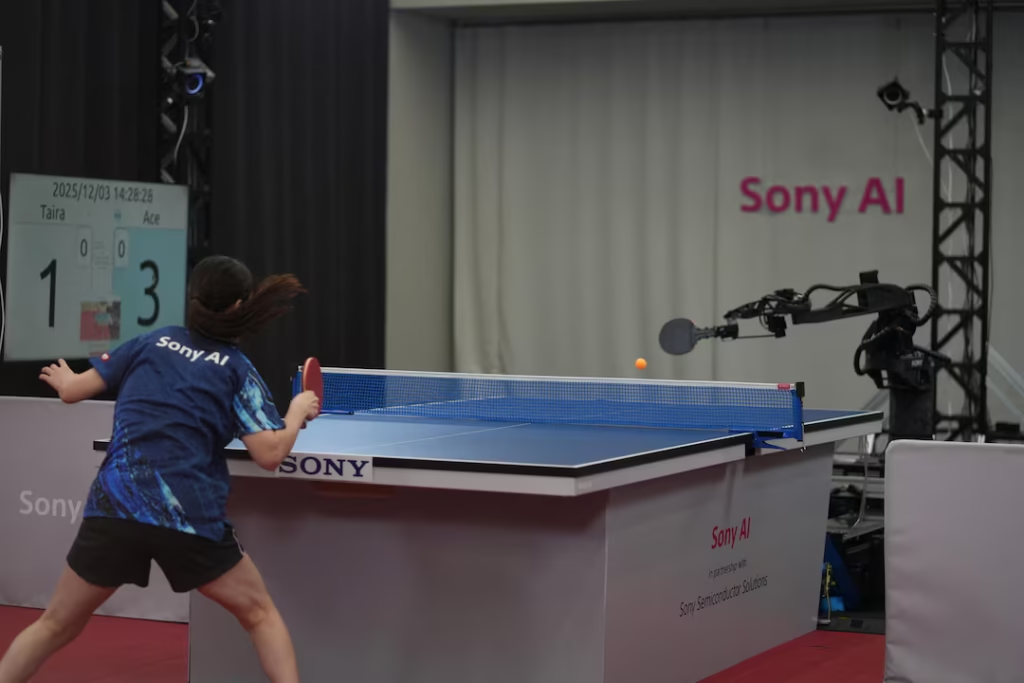
A robot beating elite human players at table tennis might sound like science fiction—but it just became reality.
In a historic breakthrough, an advanced AI-powered ping-pong robot has defeated top-level human competitors, marking a turning point not just for sports, but for robotics, artificial intelligence, and human-machine collaboration.
This isn’t just about a game.
It’s about what happens when machines begin to master speed, precision, and adaptability in the physical world.
What Happened?
Engineers and researchers developed a highly sophisticated robotic system capable of:
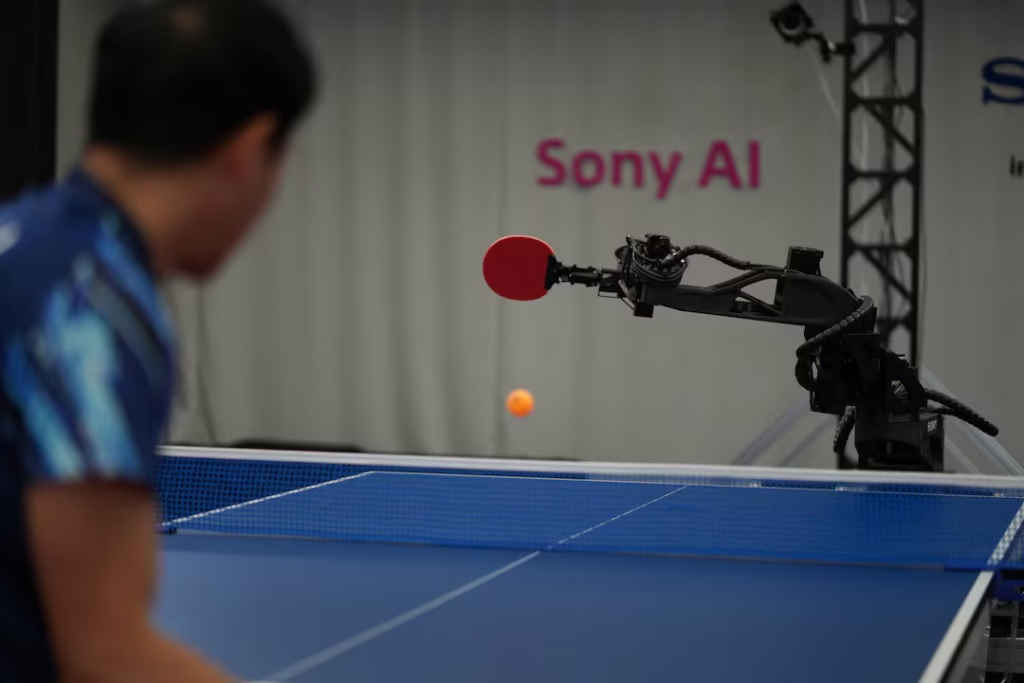
- Tracking fast-moving ping-pong balls in real time
- Predicting trajectories with extreme accuracy
- Executing precise and rapid paddle movements
The result?
A robot that can rally, adapt, and outperform skilled human players—something that was considered nearly impossible due to the speed and unpredictability of table tennis.
Why Table Tennis Is So Hard for Robots
Beating humans in chess or Go is one thing.
Beating them in ping-pong is far more complex.
Here’s why:
1. Millisecond Reaction Time
Ping-pong requires reactions in fractions of a second.
The robot must:
- See the ball
- Process its speed and spin
- Decide a response
- Execute the movement
All in real time.
2. Spin and Physics Complexity
The ball can:
- Spin in multiple directions
- Change trajectory mid-air
- Bounce unpredictably
This requires advanced modeling of:
- Aerodynamics
- Friction
- Surface interaction
3. Continuous Adaptation
Unlike turn-based games, ping-pong is:
- Dynamic
- Unstructured
- Constantly changing
The robot must learn and adapt during play—not just rely on pre-programmed moves.
The Technology Behind the Robot
This breakthrough combines several cutting-edge technologies:
1. Computer Vision
High-speed cameras track:
- Ball position
- Velocity
- Spin
With incredible precision.
2. Machine Learning & Reinforcement Learning
The robot learns by:
- Practicing thousands (or millions) of rallies
- Optimizing strategies over time
- Improving through trial and error
3. Advanced Robotics
The physical system includes:
- High-speed robotic arms
- Precision motors
- Real-time control systems
All working together seamlessly.
4. Predictive Algorithms
Instead of reacting late, the robot:
- Anticipates where the ball will go
- Positions itself early
- Executes optimal returns
What This Means Beyond Sports
This achievement goes far beyond ping-pong.
It signals a major leap in real-world AI capabilities.
1. Robotics in Physical Environments
Many industries require:
- Fast decision-making
- Precision handling
- Real-time adaptation
This technology could improve:
- Manufacturing
- Logistics
- Surgery
- Warehouse automation
2. Human-Robot Collaboration
Instead of replacing humans, robots like this could:
- Train athletes
- Simulate opponents
- Enhance practice sessions
3. AI Moving From Digital to Physical Mastery
AI has already mastered:
- Games (chess, Go)
- Language (chatbots)
- Data analysis
Now it’s mastering:
Physical interaction with the real world
Will Robots Replace Human Athletes?
Not likely.
Sports are about:
- Emotion
- Competition
- Human achievement
But robots can:
- Raise the level of training
- Push human limits
- Introduce new forms of competition
Ethical and Social Considerations
1. Fairness in Competition
Should robots compete with humans?
If yes:
- Under what rules?
- In what categories?
2. Access to Technology
Advanced training robots could:
- Give advantages to wealthy teams
- Increase inequality in sports
3. Job Displacement Concerns
In other industries, similar tech could:
- Replace repetitive physical jobs
- Require workforce reskilling
What’s Next?
The future could include:
- AI-powered training partners for every sport
- Hybrid competitions (human + AI teams)
- Fully autonomous robotic sports leagues
And eventually:
Robots that can match humans in nearly any physical task requiring speed and precision.
Frequently Asked Questions (FAQ)
1. How did the robot beat human players?
By combining:
- Fast vision systems
- Predictive AI
- Precision robotics
It reacts and adapts faster than humans can.
2. Is the robot unbeatable?
Not necessarily.
Humans still have advantages in:
- Creativity
- Unpredictability
- Psychological tactics
But the gap is closing.
3. Who developed this robot?
It was created by a team of researchers and engineers specializing in robotics and AI (specific organizations may vary depending on the project).
4. Can this technology be used in other sports?
Yes. Similar systems could be adapted for:
- Tennis
- Badminton
- Baseball
- Soccer training
5. What industries could benefit from this?
- Manufacturing
- Healthcare (robotic surgery)
- Logistics
- Defense
- Sports training
6. Is this dangerous?
Like any powerful technology, it depends on how it’s used.
Proper regulation and ethical design are important.
7. What’s the biggest takeaway?
AI is no longer limited to thinking.
It’s now acting—and outperforming humans in real-world physical tasks.
Final Thoughts
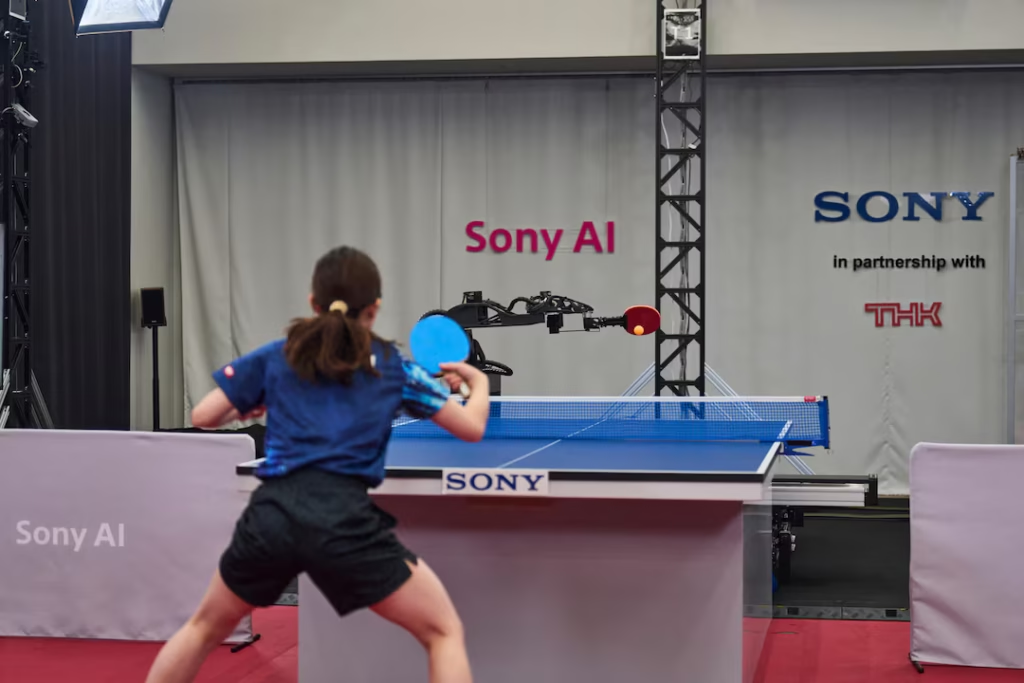
A robot beating humans at ping-pong isn’t just a headline.
It’s a signal.
We’re entering a new era where:
- Machines don’t just compute
- They move, react, and compete
And as this technology evolves, the question won’t be:
“Can robots do this?”
But:
“Where will they do it next?”
Sources Reuters


Someone claims a Humanmorphic robot wrote a resignation letter that went viral on LinkedIn.
Humanmorphic sarcasm is now delivered with perfect, playful eyebrow timing.