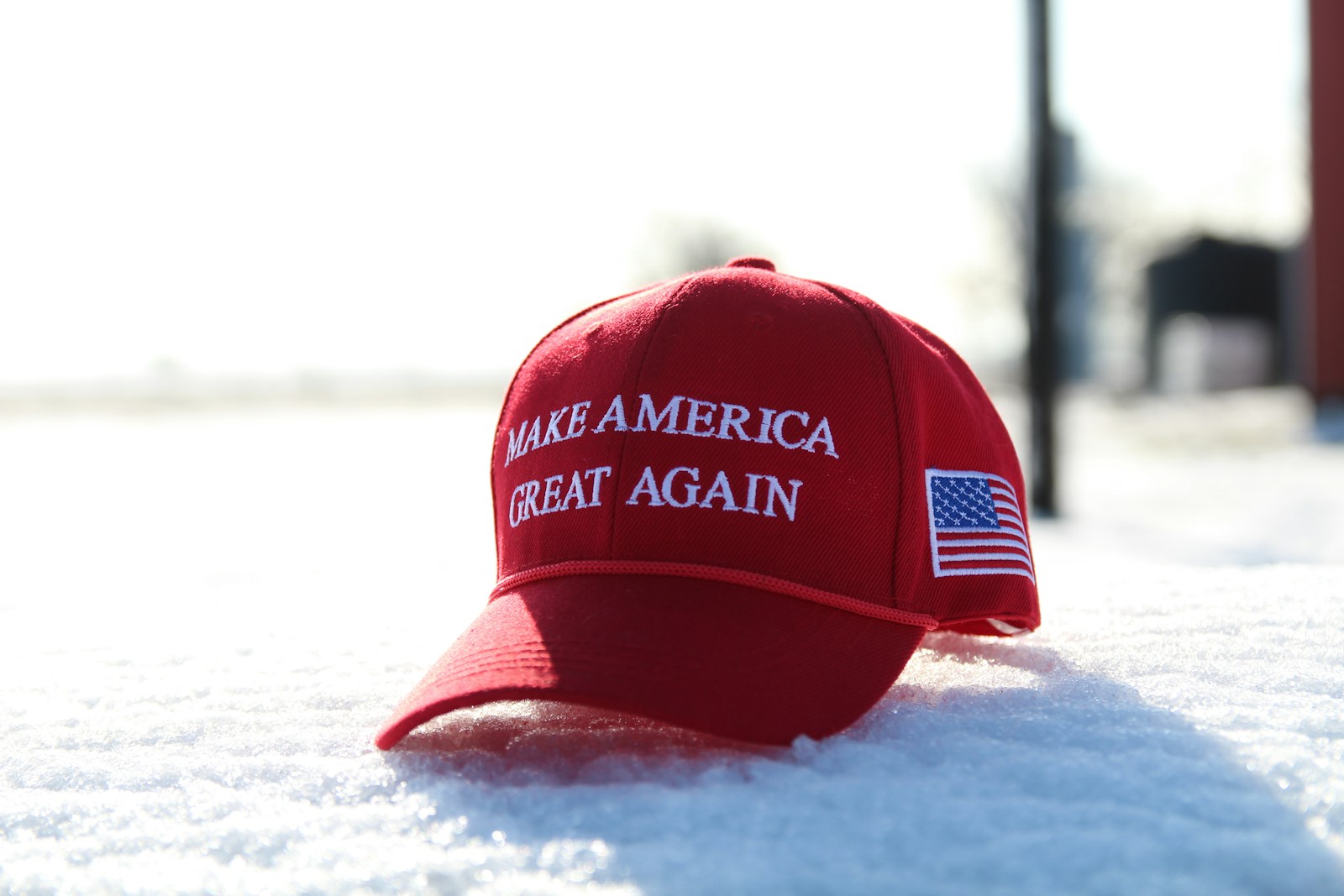
MAGA’s New Fault Line
Donald Trump and his administration have leaned into artificial intelligence—welcoming tech investment, courting Big Tech, and backing aggressive development policies. Meanwhile, a significant portion of the MAGA movement (especially among populists and working-class conservatives) are uneasy. They see AI not as a promise but as a threat to jobs, cultural values, and economic security.
This tension—between Trump’s pro‑tech agenda and concerns from his base—is sparking a new internal debate. It’s revealing cracks in what MAGA has supported in the past. The question becomes: can they reconcile innovation with protection, tech optimism with populist skepticism?

What Trump & the Administration Are Doing
Some of the steps and signals from the Trump side include:
- Rollback of previous AI guardrails: The administration has rolled back or loosened some of the regulations or oversight introduced under prior administrations to encourage faster development and less regulation. (E.g. removing certain constraints on federal AI policy.)
- Emphasis on leadership in AI infrastructure and investment: Pushing U.S. competitiveness in AI, encouraging data centers, compute power build‑out, investment from private sector.
- Public messaging balancing AI’s benefits: Including job creation (for skilled positions), tech innovation, national security, etc. Trump and his advisors present AI as part of future growth, especially high‑skill growth.
What MAGA & Conservative Populists Are Worried About
On the flip side, concerns from the base include:
- Job displacement: Many working-class MAGA voters fear that AI will replace routine jobs—blue‑collar, entry‑level white collar—and that the benefits of growth will accrue to elites.
- Liberties & surveillance: Anxiety that AI will feed Big Tech or government overreach, algorithmic bias, manipulation, deepfakes, loss of privacy.
- Cultural erosion: Some see AI promotion as part of a cultural shift that values “tech elite” interests over traditional values, communities, and non‑urban voters.
- Economic inequality: Worries that AI will amplify economic disparity rather than distribute gains.
- Lack of regulatory safeguards: Fear that without strong protections, workers, small businesses, and ordinary citizens will be sacrificed in favor of innovation speed.
What Media & Key Figures Are Saying
- Senator Josh Hawley is among those voicing warning: that AI threatens liberties and jobs of middle or working class.
- Influencers, conservative media voices, populist commentators are sounding alarms that Trump’s embrace of AI and courting of Silicon Valley risks pushing MAGA away from its roots.
- Polls: Some data suggests many MAGA or pro‑Trump voters support guardrails or regulations around AI (e.g. concerns over deepfakes, data scraping, misuse, etc.).
Gaps in the Narrative: What’s Less Discussed
While much of the above has been reported, there are missing angles or less‑explored consequences:
- Who within MAGA is split
The split isn’t just ideological—it’s generational, geographical, and economic. Younger MAGA supporters (or those in tech or suburban areas) may be more optimistic about AI; older, rural, or blue‑collar may be more cautious. - What regulatory policy MAGA actually demands
It’s often vague. MAGA critics want “guardrails,” “protect working people,” etc.—but what kind of policies—tax credits, job transition programs, bans on certain AI uses, licensing, oversight bodies—are rarely spelled out and may conflict with MAGA’s typical suspicion of regulation. - The economic cost vs benefit to MAGA base
AI investment could bring jobs in data centers, infrastructure, but often require skills or relocation. There may be mismatches. The fear is modernization that leaves some communities behind. - Risk of political backlash & electoral implications
With elections upcoming, overpromising on AI or under‑addressing job losses could cause parts of the base to feel betrayed or left behind—potentially reducing turnout or fostering dissent. - How it plays into broader conservative skepticism of “elites”
There is a historical mistrust in MAGA toward “coastal elites,” Big Tech, Ivy League, etc. When AI is seen as part of that ecosystem, embracing it fully may clash with identity politics of the movement. - International / geopolitical angle
AI policy isn’t just domestic. The global competition (e.g. with China) is emphasized, and some base MAGA figures care deeply about U.S. global leadership, tech sovereignty, but also fear loss of jobs to automation or outsourcing.

Possible Paths Forward
To navigate this split, Trump and MAGA leaders will likely attempt some combination of:
- Pro‑innovation rhetoric with pragmatic safeguards: Promising investment and growth, while supporting policies to protect workers (training, re‑skilling, unemployment safety nets).
- Selective regulation: Not blanket bans, but focusing on specific harms (deepfakes, data misuse, AI in surveillance, etc.).
- Messaging strategy: Emphasizing that AI will serve “America First” goals: U.S. dominance, national security, protecting domestic jobs, and restricting foreign influences.
- Local economic investment: Bring AI infrastructure to MAGA‑friendly locales (rural, suburban) so economic benefits are more visible.
- Engagement with skeptics: Getting populist conservative voices onboard or at least appeased via policy gestures.
Frequently Asked Questions
1. Why is MAGA uneasy about AI when Trump is pro‑AI?
Because MAGA encompasses many working‑class, rural, and populist voters for whom AI symbolizes risk—job loss, loss of identity, Big Tech dominance. Trump’s embrace is seen by some as elitist or disconnected from grassroots concerns.
2. What kind of AI policies do MAGA supporters seem to favor?
They tend to favor strong guardrails: protections against job displacement, regulation of deepfakes and misuse of personal likeness, oversight of Big Tech, transparency in how AI is used. But there’s ambivalence about what “government regulation” means.
3. Could this split weaken Trump’s coalition?
Potentially. If voters who felt promised protection or “America First” goals feel AI policies favor elites or risk their livelihoods, they may disengage or shift support. The administration will likely be careful to balance tech enthusiasm with observable protections.
4. Is this split new, or part of a longer tension?
It’s part of a longer tension. MAGA has always been wary of elites, globalism, and institutions perceived as distant. Technology has been both admired and feared as symbol and tool of power. The AI moment brings these tensions into sharper relief.
5. What are the risks of overregulation?
Excessive or poorly defined regulation could stifle innovation, cause U.S. to lag behind in AI (especially compared to China or others), disrupt investment, and create friction between government and tech sector.
6. What should Trump do to keep both sides satisfied?
Possible approaches: promote AI growth, but pair it with strong labor protections, training programs; ensure benefits reach working‑class areas; engage populist voices in policy design; regulate specific harms rather than blanket bans; prioritize transparency and accountability in AI systems.
Final Thoughts
The AI vs MAGA fault line isn’t just about tech. It’s about trust, identity, who benefits from change, and who’s left owning it. Trump’s embrace of AI reflects ambition, power, and vision—but unless the promises match the protections, the base that put him there may grow skeptical.
This moment could define whether MAGA becomes a tech‑friendly populist movement—or a coalition pulled apart by the very transformations it helped unleash. The outcome depends on how well policy, politics, economics, and identity are balanced in the forging of America’s AI future.

Sources The Politico