Artificial intelligence is advancing at breakneck speed. Markets swing on AI headlines. Companies reorganize around automation. Workers worry about their livelihoods. Lawmakers debate regulation.
But beneath the noise lies a deeper question: Is the economic anxiety surrounding AI outpacing its actual measurable impact?
While disruption is real, the scale, speed and nature of AI’s economic transformation are often misunderstood. History suggests that technological revolutions rarely unfold in the linear, catastrophic way public imagination predicts. Yet the psychological and political consequences of fear can be just as powerful as the technology itself.
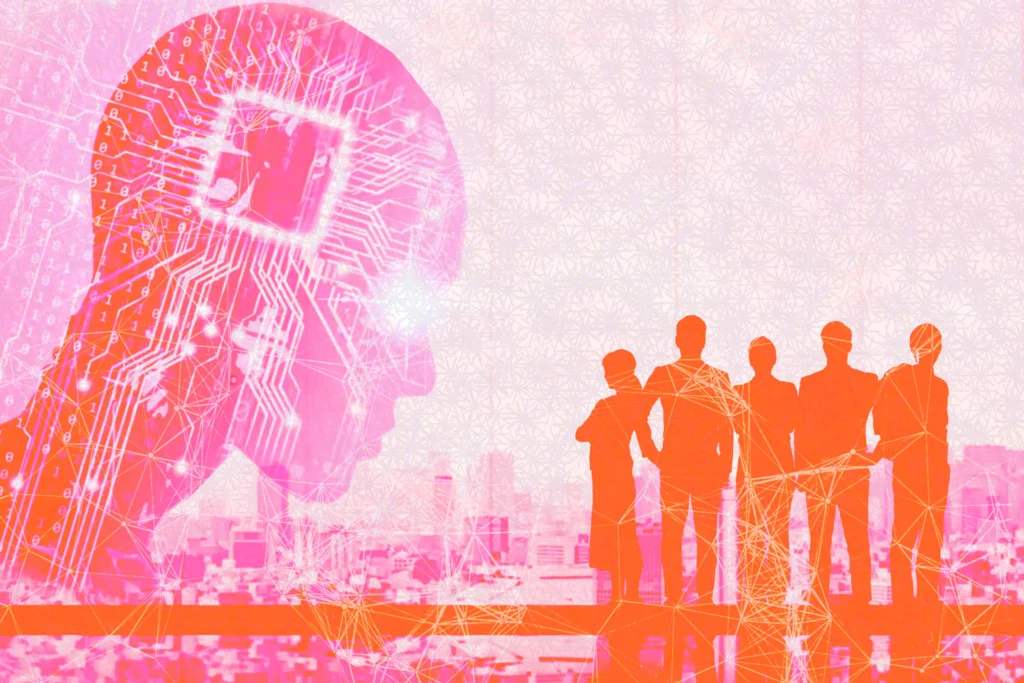
We may be entering not just an AI economy — but an AI anxiety economy.
The Gap Between Headlines and Hard Data
The public narrative often swings between extremes:
- “AI will eliminate millions of jobs within years.”
- “AI will double productivity overnight.”
- “Entire industries will collapse.”
- “Human labor will become obsolete.”
But macroeconomic indicators tell a more nuanced story.
Productivity growth, while showing pockets of improvement, has not yet surged dramatically across the entire economy. Employment levels remain historically strong in many sectors. Wages in certain AI-exposed industries have not collapsed en masse.
This doesn’t mean disruption isn’t happening — it is — but it is uneven, gradual and highly sector-specific.
Why AI Feels So Threatening
1. Cognitive Automation
Unlike past automation waves that targeted physical labor, AI affects cognitive work — writing, coding, analysis, design. These are jobs long associated with education and stability.
The psychological shock is greater when disruption touches white-collar professions.
2. Speed of Improvement
Generative AI models improve rapidly. What feels experimental one year may become standard the next. This acceleration amplifies uncertainty.
3. Visibility
AI tools are highly visible. Workers can watch a chatbot perform tasks similar to their own in real time. The comparison is immediate.
4. Market Amplification
Financial markets react dramatically to AI news, reinforcing the perception of massive transformation.
The Historical Pattern of Technological Panic
Technological anxiety is not new.
- The printing press was feared for disrupting scribes.
- The industrial revolution displaced artisans.
- Automation reduced factory jobs.
- The internet threatened retail and media industries.
In each case:
- Some jobs disappeared.
- New industries emerged.
- Overall employment eventually adjusted.
Transitions were painful — but rarely apocalyptic.
The real risk lies not in technology itself, but in how societies manage transitions.
Productivity: The Long Game
AI’s economic impact may resemble previous general-purpose technologies like electricity or the internet.
Early phases involve:
- Infrastructure buildout
- Experimental use cases
- Organizational restructuring
Productivity gains often lag innovation by years.
If AI follows historical patterns, widespread economic transformation may unfold gradually rather than explosively.

The Labor Market Reality
AI does not eliminate entire occupations instantly. It automates tasks within jobs.
For example:
- Lawyers still practice law, but AI accelerates document review.
- Programmers still write code, but AI assists with debugging.
- Marketers still strategize, but AI drafts content.
The question becomes whether increased efficiency reduces headcount or expands output.
Labor markets are dynamic. Some roles contract; others expand.
The Inequality Risk
Even if aggregate employment remains stable, distributional effects matter.
AI may disproportionately benefit:
- High-skilled technical workers
- Capital owners
- Companies with AI infrastructure
Meanwhile, routine cognitive workers may face wage pressure.
This divergence fuels economic anxiety — even if unemployment remains moderate.
The Role of Policy
AI anxiety becomes destabilizing when institutions fail to respond.
Governments can:
- Invest in workforce retraining
- Modernize education systems
- Encourage entrepreneurship
- Strengthen safety nets
- Promote competition in AI markets
Proactive policy can turn fear into adaptation.
Media, Markets and the Fear Feedback Loop
AI coverage often emphasizes extremes because dramatic narratives attract attention.
When:
- Media amplifies disruption
- Markets overreact
- Companies announce AI pivots
Public fear intensifies.
Fear influences consumer behavior, hiring decisions and political debate — potentially slowing economic momentum.
Anxiety itself becomes an economic force.
Is the Panic Rational?
Some fear is justified.
AI can:
- Replace certain roles
- Compress entry-level opportunities
- Accelerate skill obsolescence
But predictions of imminent mass unemployment may underestimate:
- Human adaptability
- Economic diversification
- New job creation
- Regulatory intervention
The most probable outcome is neither utopia nor catastrophe — but uneven transformation.
Frequently Asked Questions (FAQ)
Q: Is AI already causing massive unemployment?
No broad-based unemployment surge has occurred solely due to AI. Effects are sector-specific.
Q: Will AI replace most white-collar jobs?
Unlikely. AI automates tasks rather than entire professions in most cases.
Q: Why does AI feel more threatening than past technologies?
Because it affects cognitive work and improves rapidly, making displacement more visible.
Q: Could AI increase inequality?
Yes. Gains may concentrate among capital owners and highly skilled workers without policy intervention.
Q: Is productivity booming because of AI?
Not yet at a macro level, though localized improvements are evident.
Q: Should governments slow AI development?
Most experts advocate balanced regulation rather than outright restriction.
Q: Is economic anxiety harmful?
Excessive fear can reduce investment, hiring and innovation, potentially slowing growth.

Conclusion
Artificial intelligence is reshaping the economy — but not as instantly or uniformly as headlines suggest.
The greater risk may not be technological unemployment, but unmanaged transition and magnified fear.
The AI anxiety economy thrives on uncertainty. But history suggests that societies capable of adaptation, investment and thoughtful regulation can harness innovation rather than be overwhelmed by it.
The future of work will change. The question is whether fear drives the narrative — or preparation does.
Sources The Washington Post