
Artificial intelligence is no longer just a technology story.
What began as a race among tech companies to build more powerful AI systems has evolved into a major political battle involving lawmakers, lobbyists, advocacy groups, regulators, technology executives, and activists from across the ideological spectrum.
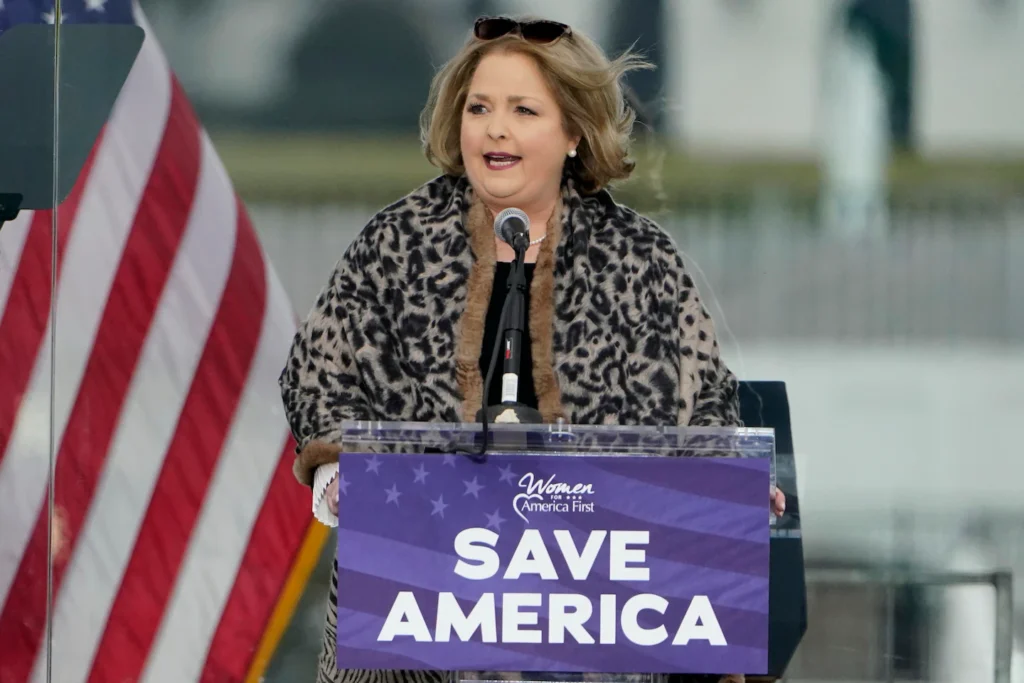
One of the most striking examples of this shift is the emergence of political figures who previously operated in entirely different arenas but are now focused on shaping the future of AI regulation. The Washington Post recently highlighted former Tea Party leader Amy Kremer—best known for helping organize the rally preceding the January 6, 2021 Capitol events—who has become involved in efforts advocating stronger oversight of artificial intelligence companies. Her involvement illustrates how AI policy is increasingly attracting participants from across the political landscape.
The growing debate reveals a larger reality: AI is no longer simply a business issue. It is becoming one of the defining political, economic, and national-security issues of the 21st century.
Why AI Regulation Has Become a Political Flashpoint
Artificial intelligence is advancing at a speed that many governments struggle to match.
New AI systems can:
- Generate human-like text
- Create realistic images and videos
- Write software code
- Conduct research
- Analyze large datasets
- Automate professional tasks
Supporters argue these capabilities could drive massive economic growth and improve productivity across nearly every industry.
Critics warn that unchecked development could create serious risks involving:
- Disinformation
- Election manipulation
- Privacy violations
- Job displacement
- Cybersecurity threats
- Market concentration
- National security vulnerabilities
As a result, policymakers are increasingly divided between those favoring rapid innovation and those seeking stronger safeguards.
The Unusual Political Coalition Forming Around AI
One of the most interesting developments in AI policy is the emergence of unexpected alliances.
Unlike many political issues, AI regulation does not fit neatly into traditional partisan categories.
Supporters of stronger regulation include:
- Consumer advocates
- National-security experts
- Labor organizations
- Privacy activists
- Some technology researchers
- Certain conservative populist groups
- Progressive lawmakers
Opponents of aggressive regulation include:
- Technology companies
- Venture capital firms
- Free-market advocates
- Some national-security hawks concerned about competition with China
These overlapping interests have created unusual political coalitions that would rarely collaborate on other issues.
Amy Kremer’s involvement highlights how concerns about concentrated corporate power, government accountability, and technological influence are attracting support from political groups that previously focused on very different priorities.
The Growing Fear of Big AI
Much of the current regulatory movement is driven by concerns that a handful of companies may dominate the future of artificial intelligence.
Today, a relatively small number of firms control:
- Frontier AI models
- Cloud-computing infrastructure
- Advanced semiconductor supply chains
- Massive training datasets
- AI research talent
Critics argue this concentration could create a new generation of technology monopolies.
Concerns include:
Market Power
Large firms may gain advantages that make competition increasingly difficult.
Political Influence
Wealthy technology companies are becoming more active in lobbying and election spending. AI-focused political organizations and super PACs have already begun spending heavily in congressional races to influence future policy outcomes.
Information Control
AI systems may influence how people access information, consume news, and form opinions.
Economic Inequality
The benefits of AI could become concentrated among a small number of corporations and investors.
How AI Is Reshaping Political Campaigns
Artificial intelligence is transforming politics itself.
Campaigns increasingly use AI for:
- Voter outreach
- Content generation
- Fundraising
- Advertising optimization
- Data analysis
- Message testing
Political organizations are already combining traditional campaign tactics with AI-generated media and targeting technologies to reach voters more efficiently.
While these tools improve campaign effectiveness, they also raise concerns about transparency and accountability.

The Deepfake Threat
One of the most frequently discussed AI risks involves political misinformation.
Modern generative AI can create:
- Fake videos
- Synthetic audio
- Fabricated images
- Automated social-media content
Researchers have documented a growing number of politically significant deepfake incidents and warn that synthetic media may increasingly influence public discourse and elections.
Potential consequences include:
- Voter confusion
- False accusations
- Reputation damage
- Election interference
- Reduced public trust
Many policymakers now consider deepfakes one of the strongest arguments for AI regulation.
The National Security Dimension
AI regulation is no longer driven solely by consumer protection concerns.
National-security officials increasingly worry about:
Cybersecurity
Advanced AI systems may accelerate cyberattacks and vulnerability discovery.
Foreign Influence Operations
AI-generated content could be used to manipulate public opinion.
Strategic Competition
The United States and China are competing aggressively for leadership in advanced AI technologies.
Critical Infrastructure Risks
AI systems are becoming integrated into energy, transportation, healthcare, and defense networks.
These concerns have elevated AI from a technology policy issue to a strategic national-security priority.
The Lobbying War Over AI
As AI’s importance grows, so does the influence of competing lobbying groups.
Several factions have emerged:
AI Safety Advocates
These groups argue for stricter testing, oversight, and transparency requirements.
AI Growth Advocates
These organizations fear excessive regulation could slow innovation and weaken U.S. competitiveness.
Corporate Coalitions
Technology companies are investing heavily in shaping future legislation.
Public Interest Groups
Consumer advocates seek stronger privacy, accountability, and transparency protections.
Recent election spending by AI-related political action committees demonstrates how rapidly AI policy has become a significant lobbying battlefield.
The Challenge of Regulating a Moving Target
One reason AI regulation remains controversial is the pace of technological change.
Legislation often takes years to develop.
AI capabilities can change dramatically within months.
This creates a difficult policy dilemma:
- Regulate too early and innovation may suffer.
- Regulate too late and harms may become widespread.
Governments worldwide are experimenting with various approaches, including:
- Licensing requirements
- Transparency mandates
- Safety audits
- Disclosure rules
- Risk-based regulation
- Model testing standards
No global consensus has yet emerged.
Should AI Companies Be Regulated Like Utilities?
Some policy experts argue that frontier AI developers may eventually resemble public utilities.
Their reasoning is simple:
If a small number of companies control technologies that affect communications, healthcare, education, employment, and government services, society may require stronger oversight.
Potential measures include:
- Independent audits
- Mandatory safety testing
- Public transparency reports
- Data governance standards
- Competition safeguards
Others argue such measures could discourage innovation and reduce economic growth.
The debate remains unresolved.
What the Future May Look Like
Most experts agree that AI regulation is inevitable.
The question is not whether governments will intervene, but how.
Possible future developments include:
- Federal AI regulatory agencies
- International AI treaties
- Mandatory model certification
- Election-related AI restrictions
- Stronger consumer protections
- Enhanced cybersecurity standards
- Transparency requirements for AI-generated content
The individuals shaping these policies will increasingly come from diverse political backgrounds, reflecting the broad societal impact of AI.
Conclusion
The rise of artificial intelligence is creating one of the most significant political debates of the modern era.
The technology promises extraordinary benefits, from medical breakthroughs to economic growth and scientific discovery.
At the same time, it raises profound questions about power, accountability, privacy, democracy, and national security.
The involvement of activists, political organizers, policymakers, and advocacy groups from across the political spectrum demonstrates that AI is no longer confined to Silicon Valley.
It is now a central issue in American politics.
The decisions made during the next decade will likely determine not only how AI develops, but also who controls it, who benefits from it, and how society manages its risks.
Frequently Asked Questions (FAQ)
1. Why are political activists becoming involved in AI regulation?
AI increasingly affects elections, employment, privacy, national security, and economic opportunity. As its societal impact grows, activists and political organizations view AI governance as an important public-policy issue.
2. What are the biggest concerns about AI companies?
Common concerns include market concentration, lack of transparency, privacy risks, misinformation, cybersecurity threats, and the potential influence of AI on democratic institutions.
3. How could AI affect future elections?
AI can be used for voter outreach, campaign advertising, content creation, and data analysis. However, it can also generate deepfakes, synthetic media, and misinformation that may influence public opinion.
4. Why is AI becoming a national-security issue?
Governments worry that advanced AI could accelerate cyberattacks, strengthen foreign influence campaigns, affect military capabilities, and create strategic advantages for rival nations.
5. What kind of AI regulation is most likely in the future?
Experts expect a combination of transparency requirements, safety testing, cybersecurity standards, disclosure rules for AI-generated content, and risk-based oversight of the most powerful AI systems.
Sources The Washington Post

