

Artificial intelligence is transforming industries worldwide, promising faster production, lower costs, and improved efficiency. Yet one of America’s largest automakers has demonstrated that AI is not a silver bullet.
Ford Motor Company recently acknowledged that relying too heavily on artificial intelligence and automated quality systems failed to deliver the level of vehicle quality it expected. In response, the company brought back hundreds of experienced engineers—many affectionately known as “greybeards”—to improve product quality, mentor younger employees, and help train the company’s AI systems.
The decision sends an important message to manufacturers everywhere: while AI is an incredibly powerful tool, it cannot replace decades of human experience, engineering judgment, and practical problem-solving.
Rather than signaling the failure of AI, Ford’s experience highlights the growing importance of combining artificial intelligence with human expertise to achieve the best results.
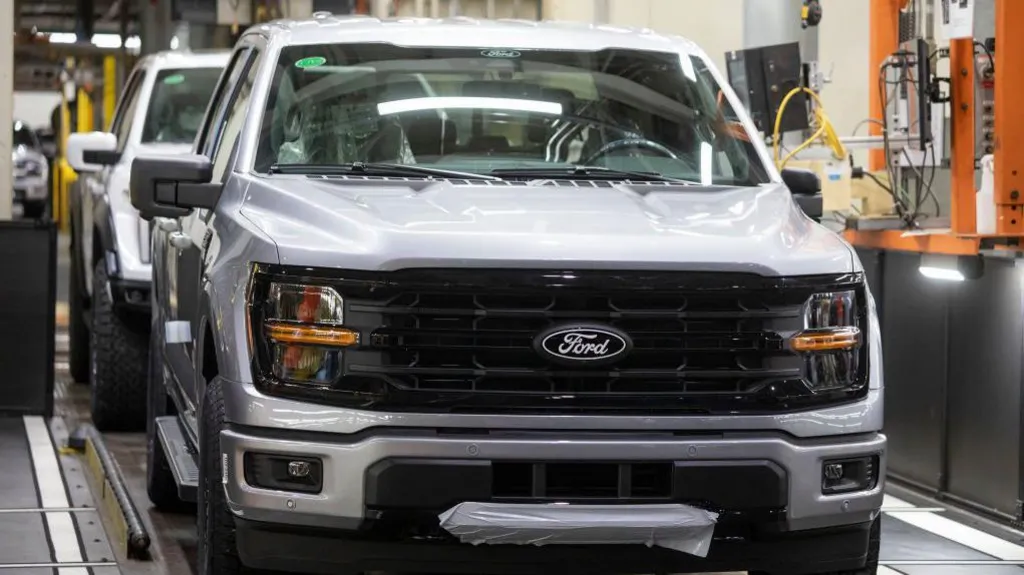
What Happened at Ford?
Over the past several years, Ford invested heavily in artificial intelligence, machine learning, and automated inspection technologies to improve vehicle quality.
The company introduced hundreds of AI-powered cameras and automated systems capable of:
- Detecting manufacturing defects
- Inspecting vehicle assembly
- Monitoring production quality
- Assisting engineering design
- Performing software validation
- Identifying production inconsistencies
The expectation was straightforward: AI would reduce errors while improving efficiency and lowering production costs.
However, reality proved more complicated.
Despite these technological investments, Ford continued experiencing quality issues and recalls, leading executives to reassess their strategy.
The company concluded that AI alone lacked the practical engineering knowledge accumulated by experienced employees over decades of vehicle development.
Why AI Struggled With Quality Control
Artificial intelligence excels at recognizing patterns within data.
But manufacturing quality involves much more than identifying visual defects.
Experienced engineers often recognize subtle warning signs that may never appear in historical datasets.
Examples include:
- unusual material behavior
- manufacturing tolerances
- supplier inconsistencies
- long-term durability concerns
- interactions between mechanical and software systems
- rare production anomalies
These situations require intuition developed through years—or even decades—of real-world experience.
AI cannot easily replicate this type of tacit knowledge because much of it was never formally documented.
The Importance of Institutional Knowledge
One of Ford’s biggest lessons involved the loss of institutional knowledge.
Over time, many veteran engineers retired or left the company before their expertise had been fully transferred into training materials or AI systems.
Institutional knowledge includes:
- lessons from previous vehicle programs
- understanding of recurring design issues
- supplier-specific experience
- troubleshooting methods
- manufacturing best practices
- practical engineering judgment
Unlike technical manuals, much of this knowledge exists only through experience.
Once experienced workers leave, rebuilding that expertise becomes extremely difficult.
Ford recognized that preserving this knowledge was essential for improving both human decision-making and AI performance.
Why Human Engineers Still Matter
Experienced engineers contribute in ways AI currently cannot.
They ask questions such as:
- Does this design make practical sense?
- Have we seen this failure before?
- What could happen after five years of customer use?
- Are multiple small issues combining into one larger problem?
These judgments rely on reasoning, intuition, creativity, and professional skepticism rather than simple pattern recognition.
Human engineers also understand trade-offs between cost, reliability, safety, manufacturability, and customer satisfaction.
AI Needs High-Quality Training Data
Artificial intelligence only performs as well as the information used to train it.
If historical data is incomplete, outdated, or missing unusual scenarios, AI may confidently produce incorrect recommendations.
Manufacturing presents unique challenges because:
- every vehicle model differs
- suppliers change
- materials evolve
- software updates alter system behavior
- customer usage varies dramatically
As a result, AI models require continuous human supervision and refinement.
Ford’s experienced engineers now play a critical role in improving the quality of the data used to train these systems.
From “Find and Fix” to “Prevent and Improve”
Ford has also changed its quality philosophy.
Previously, quality teams often focused on identifying defects after production.
The company now emphasizes preventing problems before manufacturing begins.
This includes:
- mandatory engineering reviews
- cross-functional collaboration
- earlier design validation
- supplier quality improvements
- AI-assisted simulations
- human-led engineering audits
This proactive approach reduces expensive recalls while improving customer satisfaction.
AI Isn’t Being Replaced—It’s Being Repositioned
Contrary to some headlines, Ford is not abandoning artificial intelligence.
Instead, the company is redefining AI’s role.
Today, AI continues supporting:
- software testing
- visual inspections
- predictive maintenance
- manufacturing analytics
- production monitoring
- engineering simulations
The difference is that experienced engineers now oversee, validate, and continuously improve these systems instead of assuming AI can operate independently.
This hybrid model combines automation with expert oversight.
What Other Industries Can Learn
Ford’s experience reflects challenges facing many industries adopting AI.
Healthcare still depends on physicians reviewing AI-generated diagnoses.
Banks require human oversight for fraud detection.
Law firms verify AI-assisted legal research.
Airlines rely on experienced pilots despite increasingly sophisticated automation.
Construction companies combine AI planning tools with skilled engineers and architects.
Across industries, AI performs best when enhancing human expertise—not replacing it.
The Growing Value of Senior Professionals
As AI automates routine tasks, experienced workers may become even more valuable.
Veteran employees provide:
- leadership
- mentoring
- strategic thinking
- crisis management
- complex decision-making
- interdisciplinary collaboration
Ironically, AI may increase demand for senior professionals capable of supervising both people and intelligent systems.
At the same time, entry-level employees may need broader skill sets as routine work becomes increasingly automated.
The Economic Impact
Improving vehicle quality delivers major financial benefits.
Better quality can lead to:
- fewer recalls
- lower warranty expenses
- improved customer satisfaction
- stronger brand reputation
- higher resale values
- increased profitability
Even modest improvements can save automakers hundreds of millions of dollars annually.
Ford has reported that its renewed emphasis on experienced engineering has contributed to improved quality rankings and reduced warranty-related costs.
Does This Mean AI Is Overhyped?
Not necessarily.
Artificial intelligence remains one of the most transformative technologies in modern manufacturing.
However, Ford’s experience demonstrates an important principle:
AI should augment human intelligence rather than replace it.
Organizations that view AI as an assistant rather than a substitute often achieve better long-term outcomes.
The future of manufacturing is unlikely to be fully automated or fully human-driven.
Instead, it will be increasingly collaborative.
Looking Ahead: The Future of Smart Manufacturing
The next generation of factories will likely combine:
- AI-powered quality inspections
- digital twins
- robotics
- predictive analytics
- Internet of Things (IoT) sensors
- human engineering expertise
Rather than eliminating engineers, these technologies will allow them to focus on solving more complex problems while AI handles repetitive analysis and monitoring.
Companies that successfully balance automation with human expertise are likely to achieve the greatest improvements in quality, safety, and innovation.
The Bottom Line
Ford’s decision to rehire experienced engineers is not a rejection of artificial intelligence—it is a recognition of its current limitations.
AI can process enormous amounts of data, identify patterns, and automate repetitive tasks with remarkable speed. But experience, intuition, judgment, and decades of accumulated engineering knowledge remain essential for building safe, reliable, and high-quality products.
Ford’s experience serves as an important reminder for businesses across every industry: the future belongs not to humans or AI alone, but to organizations that combine the strengths of both.
Frequently Asked Questions (FAQ)
1. Why did Ford rehire experienced engineers?
Ford found that its AI-powered quality systems could not consistently match the judgment and problem-solving abilities of experienced engineers. Veteran specialists were brought back to improve product quality, mentor younger staff, and help train AI systems more effectively.
2. Does this mean AI failed completely?
No. AI continues to play an important role in software testing, manufacturing inspections, and production analytics. Ford’s experience shows that AI performs best when combined with human expertise rather than used independently.
3. Why can’t AI replace experienced engineers?
AI relies on historical data and learned patterns. Experienced engineers contribute intuition, contextual understanding, and practical knowledge gained over decades—qualities that are difficult to capture in datasets or algorithms.
4. Will other manufacturers follow Ford’s approach?
Many manufacturers are already moving toward hybrid models that combine AI, automation, and human oversight. Industries where safety, quality, and reliability are critical are especially likely to retain experienced professionals alongside AI systems.

5. What lesson should businesses learn from Ford’s experience?
The biggest lesson is that technology should support—not replace—human expertise. Companies that preserve institutional knowledge, invest in employee development, and integrate AI thoughtfully are more likely to achieve sustainable improvements in quality and productivity.
Sources BBC

