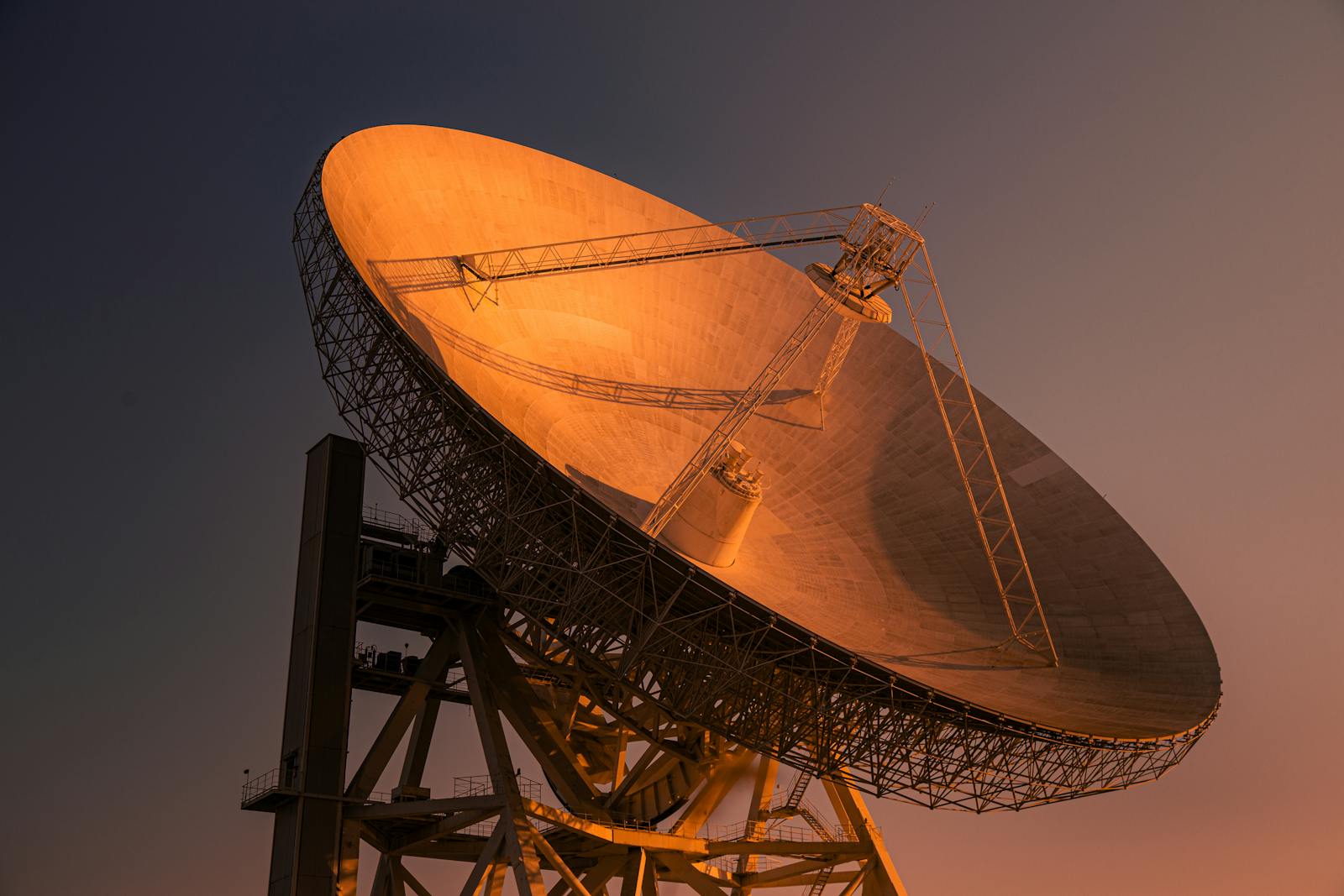
The next big battleground in artificial intelligence isn’t just about smarter models or faster chips.
It’s about where AI itself will live.
As Earth-based data centers strain power grids, consume massive amounts of water, and face growing environmental and political pushback, tech companies are looking up — literally. A new race is underway to move AI data centers into space, turning orbit into the next frontier of global computing.
What once sounded like science fiction is quickly becoming a serious strategic plan.
Why Earth Is Becoming a Problem for AI
AI runs on data centers — and data centers are hitting hard limits.
On Earth, modern AI facilities face mounting challenges:
- exploding electricity demand
- water shortages for cooling
- land scarcity near population centers
- local opposition to massive infrastructure
- rising carbon emissions
As AI workloads scale exponentially, simply building more ground-based data centers is no longer sustainable in many regions.
Space, surprisingly, offers a potential escape valve.
Why Space Suddenly Makes Sense
1. Unlimited Solar Power
In orbit, satellites receive constant sunlight without weather, night cycles, or seasonal variation. Solar panels in space can operate near peak efficiency almost all the time.
In theory, this provides:
- continuous clean energy
- no competition for land
- no stress on terrestrial power grids
For energy-hungry AI systems, this is incredibly appealing.
2. No Cooling Shortages
On Earth, cooling is one of the biggest data-center bottlenecks. In space, heat can be radiated away directly, eliminating the need for water-intensive cooling systems.
That alone could dramatically reduce environmental impact.
3. AI Workloads Don’t Always Need Ultra-Low Latency
Not all AI tasks require millisecond response times.
Training large models, processing satellite imagery, scientific simulations, and batch analytics can tolerate higher latency — making them suitable for orbital computing.
Who’s Racing to Build Space-Based Data Centers
This isn’t just a startup fantasy. Major players are already moving.
SpaceX
With thousands of Starlink satellites already in orbit, SpaceX has a natural platform for distributed AI compute — turning satellites into processing nodes instead of just communication relays.
Blue Origin
Jeff Bezos’ space company has been quietly developing concepts for large, solar-powered orbital computing platforms designed to reduce Earth’s energy burden.
Big Tech and Cloud Providers
Companies like Google and Nvidia are experimenting with orbital compute concepts, exploring how specialized AI hardware could operate in space environments.
Startups
New ventures are designing dedicated “space data centers,” aiming to launch early prototypes later this decade to prove the concept.
The Engineering Challenges No One Can Ignore
Building data centers in space is far harder than building them on Earth.
1. Launch Costs
Even with reusable rockets, sending heavy computing hardware into orbit is expensive. Matching the power of a single large Earth-based data center could require thousands of satellites.
2. Radiation and Harsh Conditions
Electronics in space must survive:
- high radiation levels
- extreme temperature swings
- micrometeoroid impacts
This requires hardened hardware, increasing costs and complexity.
3. Maintenance Is Brutal
On Earth, failed servers can be swapped in minutes.
In space, repairs may require robotic servicing — or complete replacement.
4. Networking and Latency
Moving huge amounts of data between Earth and orbit requires advanced laser or optical communication systems that are still maturing.
5. Space Debris and Traffic
Crowding orbit with computing satellites raises collision risks, threatening both AI infrastructure and other space assets.
Why Space Data Centers Won’t Replace Earth (Yet)
Despite the hype, orbital data centers won’t replace traditional cloud infrastructure anytime soon.
Instead, they’ll likely:
- handle specialized workloads
- offload energy-intensive AI training
- process space-generated data directly
- support future space missions and lunar bases
Earth-based data centers will remain essential for real-time applications like search, messaging, gaming, and local services.
The Bigger Picture: AI Is Becoming Infrastructure
This shift signals something deeper.
AI is no longer just software.
It’s becoming planet-scale infrastructure — like power grids, transportation networks, and telecommunications.
Once computing moves into orbit:
- AI becomes less tied to national borders
- energy constraints shift
- global competition takes on a new dimension
Whoever controls orbital compute could hold enormous long-term advantage.
How Soon Could This Be Real?
- Experimental satellites could launch within the next few years
- Early commercial systems may appear in the early 2030s
- Large-scale orbital AI infrastructure could take decades to mature
But the direction is clear:
the cloud is preparing to leave Earth.
Frequently Asked Questions
Q1. Why put data centers in space at all?
To access constant solar power, reduce cooling needs, and relieve pressure on Earth’s infrastructure.
Q2. Who is leading this effort?
SpaceX, Blue Origin, major cloud providers, and a growing number of startups.
Q3. Will this replace Earth-based data centers?
No. It will supplement them for specific workloads.
Q4. Isn’t launching hardware too expensive?
It is — but costs are falling, and AI demand keeps rising.
Q5. What about space debris?
It’s a serious concern and will require new regulations and traffic management systems.
Q6. Is this environmentally friendly?
Potentially yes, due to clean energy and reduced water use — but launches still have environmental costs.
Q7. What AI tasks make sense in space?
Model training, scientific simulations, satellite data processing, and large batch workloads.
Q8. How will data be sent back to Earth?
Through advanced laser and optical communication links.
Q9. Could governments regulate orbital data centers?
Almost certainly — space law and orbital governance will become critical.
Q10. What’s the biggest takeaway?
AI growth is pushing humanity beyond Earth-bound infrastructure — and space may be the next cloud.
Sources The Wall Street Journal