

Walmart is not just cutting jobs.
It is redesigning how one of the world’s largest companies operates in the AI era.
The retail giant recently announced plans to lay off or relocate around 1,000 corporate employees as it consolidates technology and product teams, particularly around AI and digital operations. The move follows an internal restructuring led by Walmart’s technology leadership as the company accelerates its push into automation, AI systems, and centralized operations.
At first glance, this looks like another corporate layoff story.
But underneath the headlines, something much bigger is happening:
Walmart is becoming a technology company that happens to sell groceries.
And that transformation is quietly reshaping the future of work across corporate America.
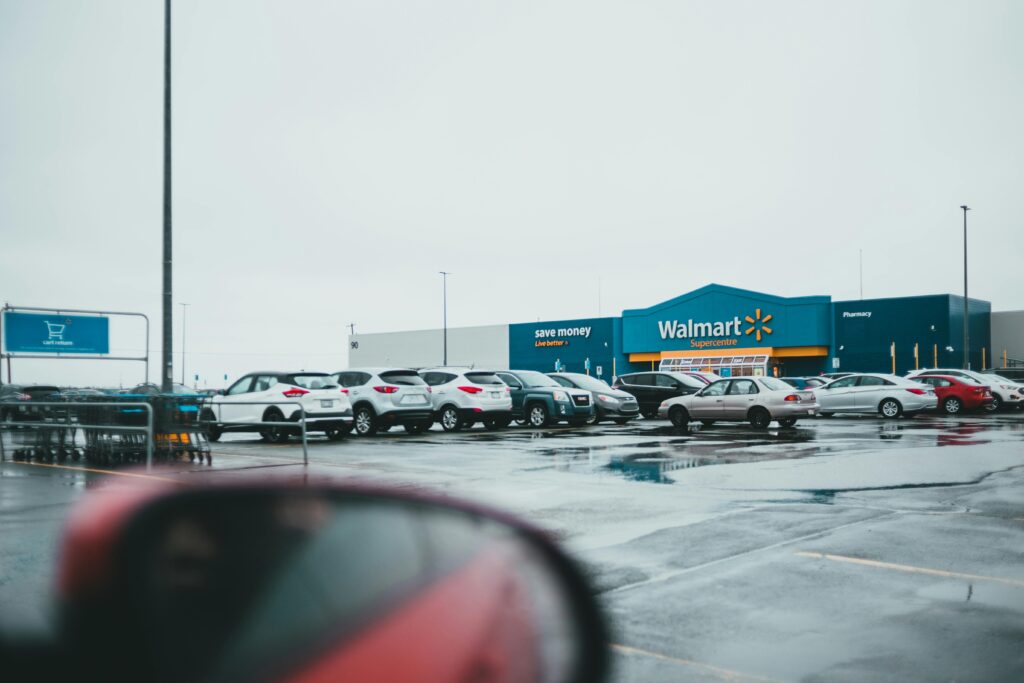
Why Walmart Is Restructuring Its Workforce
For decades, Walmart’s dominance came from logistics, scale, and ruthless operational efficiency.
Now the company believes the next retail war will be won through:
- AI systems
- automation
- supply-chain intelligence
- data infrastructure
- advertising technology
- predictive analytics
- digital commerce
The layoffs and relocations are part of a broader strategy to consolidate overlapping technology teams and centralize decision-making. According to reports, Walmart executives identified multiple groups solving similar problems across different divisions, leading to inefficiencies.
In plain English:
The company believes it has too many duplicated corporate functions.
And AI is making that redundancy harder to justify.
The Real Story Is Centralization
One of the most overlooked aspects of Walmart’s restructuring is relocation.
Many affected workers are being asked to move to:
- Bentonville, Arkansas
- Northern California
- Hoboken, New Jersey
This continues a trend Walmart has pursued for years: reducing scattered corporate offices and pulling workers into centralized hubs.
Why?
Because modern corporations increasingly believe innovation happens faster when:
- teams work physically together
- engineering groups are centralized
- leadership oversight becomes tighter
- AI initiatives are coordinated from core hubs
The remote-work era is colliding with the AI-transformation era.
And many large companies are quietly choosing centralization.
Walmart Is Quietly Becoming an AI Company
Most consumers still think of Walmart as a retailer.
But internally, Walmart increasingly operates like a massive technology platform.
The company has spent years investing in:
- warehouse automation
- AI-powered logistics
- predictive inventory systems
- advertising technology
- chatbot systems
- AI shopping assistants
- supply-chain optimization
- automated fulfillment
Walmart CEO Doug McMillon previously stated that AI will change “literally every job” inside the company. Executives have openly discussed how some roles will disappear while new AI-related positions emerge.
This is not experimental anymore.
AI is becoming part of Walmart’s operational infrastructure.
Why Retailers Are Obsessed With AI Right Now
Retail is one of the most brutally competitive industries in the world.
Margins are thin.
Consumer expectations are rising.
E-commerce pressure never stops.
Companies like Walmart are battling:
- Amazon
- Costco
- Aldi
- Target
- Chinese e-commerce giants
- AI-powered retail startups
That competition forces companies to constantly reduce costs while increasing efficiency.
AI promises exactly that.
Retailers increasingly use AI for:
- demand forecasting
- inventory management
- route optimization
- customer personalization
- fraud detection
- pricing adjustments
- labor scheduling
- customer support automation
For companies operating at Walmart’s scale, even tiny efficiency gains can save billions.
Why Corporate Workers Are Feeling Increasingly Vulnerable
The layoffs also highlight a major workforce shift happening across white-collar industries.
Historically, corporate roles felt safer than frontline jobs.
Now many corporate employees are discovering the opposite.
AI systems are strongest at:
- repetitive digital tasks
- reporting
- coordination workflows
- data analysis
- administrative functions
- documentation
- internal communications
That means middle-management and corporate support roles are increasingly exposed to restructuring.
And Walmart is far from alone.
Companies including Meta, Amazon, Microsoft, and consulting firms have all announced major workforce reductions tied partly to AI-driven operational changes.

This Is Not Just About Layoffs — It’s About Organizational Redesign
One mistake people make is assuming AI simply replaces workers directly.
What usually happens is more complicated.
AI changes:
- workflows
- reporting structures
- decision-making speed
- team size expectations
- operational priorities
That often results in:
- flatter organizations
- fewer management layers
- smaller teams
- higher productivity expectations
In Walmart’s case, executives appear focused on removing organizational complexity and accelerating decision-making.
This is less about robots taking jobs overnight.
It is more about corporations redesigning themselves around AI-enhanced productivity.
Why Relocation Matters More Than People Think
The relocation component may actually matter more than the layoffs themselves.
Forcing workers into centralized hubs creates several advantages for employers:
- stronger oversight
- faster coordination
- tighter company culture
- easier AI deployment integration
- more direct executive control
But it also creates pressure.
Some employees may refuse relocation entirely, effectively turning relocation into a softer form of workforce reduction.
This strategy is becoming increasingly common across corporate America.
The Hidden Goal: Lower Marginal Growth Costs
One revealing comment from Walmart leadership focused on achieving future growth at “much lower marginal cost.”
That phrase matters.
It reflects a major corporate goal emerging in the AI era:
Grow revenue without growing headcount proportionally.
In other words:
- more automation
- more AI systems
- leaner operations
- higher output per employee
This is rapidly becoming the dominant corporate strategy across technology, retail, finance, and logistics industries.
The Bigger Economic Question
Walmart’s restructuring reflects a larger transformation happening throughout the global economy.
The old corporate model relied on:
- large management structures
- growing headcounts
- decentralized operations
- human-heavy coordination systems
The emerging model looks different:
- AI-assisted operations
- centralized leadership
- smaller specialized teams
- automated workflows
- higher productivity expectations
The transition could permanently reshape white-collar employment.
And honestly, many companies are still figuring it out in real time.
Will AI Eventually Reduce Walmart’s Workforce Overall?
Walmart says its goal is not mass workforce elimination.
Executives have stated that some jobs will disappear while others will emerge, with the company expecting major changes in job composition rather than simple workforce collapse.
That distinction matters.
Historically, technology often:
- destroys certain jobs
- creates new categories of work
- changes skill requirements
- increases productivity
Research on automation and employment suggests technology-driven job displacement is often partially offset by new economic activity and new labor demand.
But transitions can still be painful — especially for workers caught in the middle.
Frequently Asked Questions (FAQ)
Why is Walmart laying off workers?
Walmart is restructuring and consolidating technology and product teams to improve efficiency, reduce overlap, and accelerate AI-driven operations.
Are the layoffs directly caused by AI?
Walmart says the restructuring is related to organizational alignment rather than direct AI replacement, though AI transformation is clearly influencing broader workforce strategy.
How many workers are affected?
Reports indicate around 1,000 corporate employees are being laid off or relocated.
Where are workers being relocated?
Many employees are being asked to move to Bentonville, Arkansas, Northern California, or Hoboken, New Jersey.
Why does Walmart want employees in centralized offices?
The company believes in-person collaboration improves innovation, coordination, company culture, and operational efficiency.
Is Walmart becoming a tech company?
Increasingly, yes. Walmart is investing heavily in AI, automation, logistics technology, digital advertising, and data infrastructure.
Will AI eliminate retail jobs entirely?
Probably not. AI is more likely to reshape retail work by automating certain tasks while creating new technical, logistics, and AI-management roles.
Are other companies doing similar restructurings?
Yes. Many large corporations including Amazon, Meta, and Microsoft are redesigning operations around AI-enhanced productivity and leaner organizational structures.

Final Thought
Walmart’s layoffs are not just another cost-cutting exercise.
They are part of a much larger corporate shift happening across the global economy.
The AI era is not simply replacing workers with machines.
It is reorganizing how companies function, where employees work, how teams are structured, and what productivity now means.
And the companies adapting fastest may end up redefining the future of work for everyone else.
Sources The Wall Street Journal

