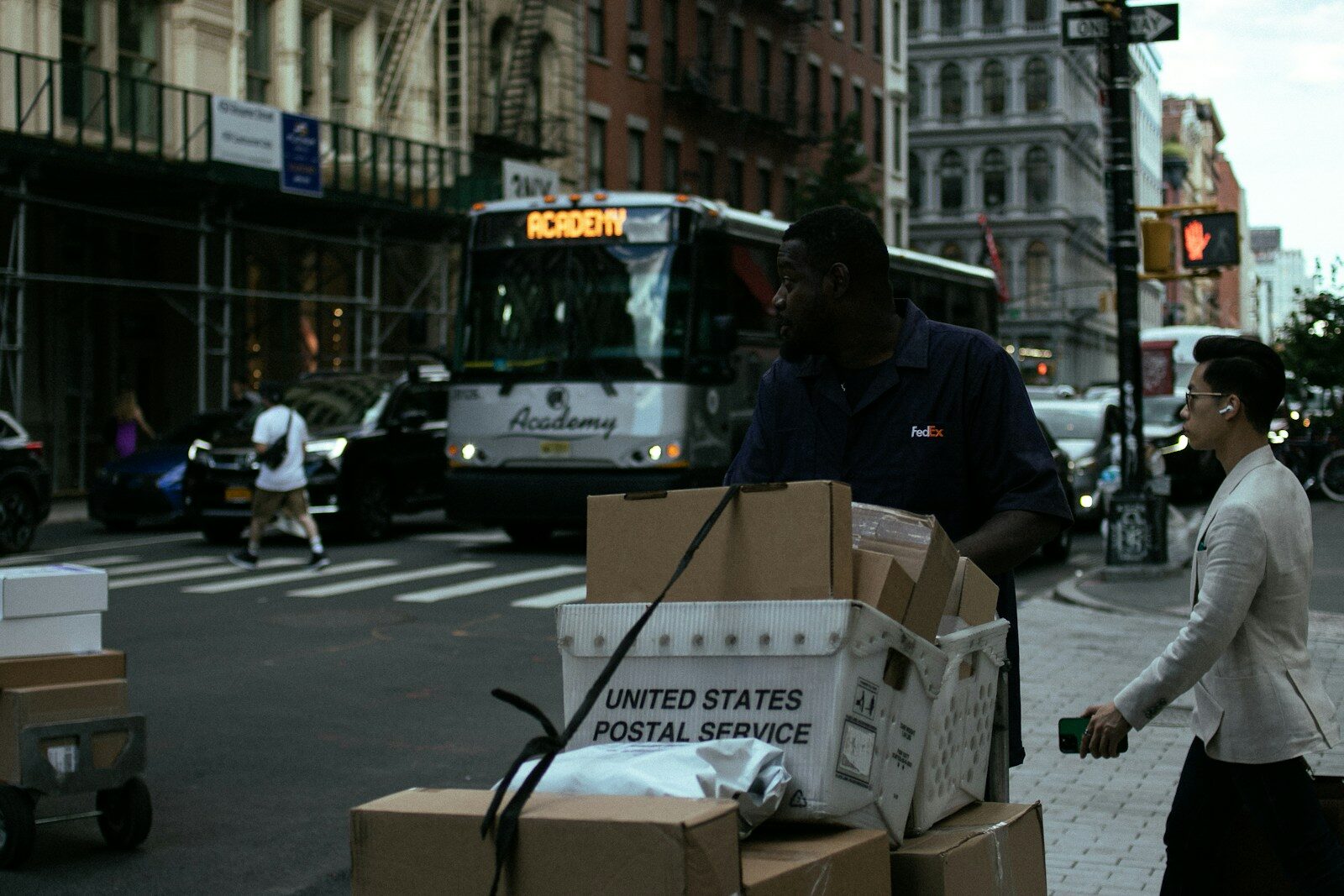
Artificial intelligence was supposed to feel exciting.
Instead, for millions of Americans, it feels unsettling.
Not because people think robots are about to march down the streets tomorrow.
Not because everyone believes Hollywood-style apocalypse scenarios.
The real fear is quieter. More personal. More immediate.
People fear becoming economically irrelevant in a world increasingly optimized for machines.
And that anxiety is spreading faster than the technology itself.
Recent polling and public sentiment studies show Americans are becoming significantly more skeptical about AI, even as usage of AI tools continues to rise.
That contradiction reveals something important:
Americans are using AI because they feel they have to — not because they fully trust it.

America’s AI Mood Has Shifted Dramatically
Just a few years ago, AI was mostly viewed as:
- futuristic
- innovative
- productive
- exciting
Now the mood is darker.
Surveys increasingly show Americans associating AI with:
- job insecurity
- misinformation
- economic instability
- surveillance
- loss of human creativity
- social manipulation
A growing percentage of Americans believe AI will harm job opportunities, while many also fear the technology is moving faster than society can responsibly manage.
And honestly, this shift did not happen randomly.
People are reacting to real signals.
The Biggest Fear Is Not “AI Apocalypse”
Contrary to internet stereotypes, most Americans are not primarily afraid of killer robots or machine uprisings.
The dominant fear is economic displacement.
Workers increasingly worry that:
- companies will automate roles
- entry-level jobs will disappear
- white-collar work will shrink
- wages will stagnate
- corporations will use AI to reduce labor costs
This has created a new workplace anxiety sometimes called “FOBO”:
Fear Of Becoming Obsolete.
People are not only afraid of losing jobs.
They are afraid of slowly becoming less valuable.
Americans Have Seen This Movie Before
Part of the distrust comes from history.
Americans were previously told that:
- globalization would help everyone
- social media would connect society
- gig economy apps would create freedom
- automation would improve quality of life
Instead, many people experienced:
- wage pressure
- unstable employment
- information overload
- social fragmentation
- declining trust in institutions
So when AI companies promise another technological revolution, many Americans react with skepticism.
The trust reserve is gone.
Silicon Valley Accidentally Helped Create the Fear
Ironically, AI companies themselves amplified public anxiety.
For years, major tech leaders publicly warned about:
- existential risk
- superintelligence
- civilization-ending AI
- mass job disruption
Then suddenly, many of those same companies pivoted toward aggressive commercialization.
To ordinary people, this looked bizarre:
- first: “AI may destroy humanity”
- then: “Please use our AI products daily”
That contradiction damaged credibility.
And many Americans now suspect tech companies are prioritizing growth over caution.
The AI Economy Feels Unequal Already
Another reason Americans fear AI is because the benefits appear concentrated at the top.
Many workers see:
- tech executives becoming wealthier
- investors pouring billions into AI firms
- corporations using AI to cut costs
- layoffs happening alongside AI adoption
Meanwhile ordinary workers face:
- uncertainty
- retraining pressure
- rising competition
- unstable career paths
This creates a perception that AI is not being built for society.
It is being built for corporate efficiency.
And whether fully true or not, perception matters politically.
Americans Fear Losing Human Control
There is also a psychological layer.
AI increasingly influences:
- hiring
- recommendations
- customer service
- education
- media feeds
- workplace evaluations
People worry decisions are becoming:
- opaque
- automated
- impossible to challenge
Research shows Americans consistently want human oversight in AI-driven systems, especially for employment and high-impact decisions.
This reflects a deeper fear:
Not just “Will AI make mistakes?”
but “Who is accountable when it does?”

Trust in Institutions Is Already Weak
AI entered society during a period of historically low institutional trust.
Americans already distrust:
- government
- big tech
- media
- corporations
- social platforms
That matters enormously.
Because AI requires trust to scale comfortably.
People must believe:
- systems are fair
- regulation exists
- safeguards work
- companies are accountable
Right now, many Americans simply do not believe those conditions exist.
And honestly, looking at the pace of AI deployment, it is understandable why.
Why AI Feels Different From Previous Technologies
Some argue:
“People feared every new technology.”
That is partly true.
But AI feels different for several reasons:
1. It targets cognitive work
Previous automation waves mostly affected physical labor. AI now threatens analytical and creative tasks many people considered uniquely human.
2. It moves unusually fast
AI adoption has accelerated faster than many previous technologies.
3. It affects identity
Work is not only income. It is status, purpose, and meaning.
When AI challenges creative and intellectual work, people experience it emotionally — not just economically.
Even AI Experts Disagree
One fascinating trend is the growing gap between experts and the public.
AI researchers and industry insiders tend to be significantly more optimistic about AI’s benefits than ordinary Americans.
But experts themselves disagree intensely about:
- timelines
- risks
- regulation
- economic impact
- labor disruption
That expert disagreement creates additional uncertainty for the public.
If the builders themselves cannot fully agree on the outcome, why would society feel calm?
The “Human Authenticity” Backlash Is Growing
Another emerging trend is a renewed appreciation for human-made work.
As AI-generated content floods the internet, people increasingly value:
- handmade art
- live performances
- authentic writing
- human interaction
- provenance and originality
Some economists believe the AI era could ironically increase demand for “human authenticity” as machine-generated content becomes ubiquitous.
In other words:
The more synthetic the digital world becomes, the more valuable genuinely human experiences may feel.
The Real Problem: Society Feels Unprepared
Perhaps the deepest reason Americans dread AI is this:
The technology appears to be advancing faster than institutions can adapt.
People see:
- schools unprepared
- laws outdated
- workers unsupported
- regulation fragmented
- companies racing ahead
That creates the feeling of standing on unstable ground.
And historically, societies become anxious when change accelerates faster than social systems can stabilize around it.
Why Fear Alone Won’t Solve Anything
Still, fear by itself is not a strategy.
The reality is:
- AI is already here
- adoption is accelerating
- businesses are restructuring around it
- governments are unlikely to stop it entirely
The real challenge now is governance.
The key questions become:
- How do workers adapt?
- How should AI be regulated?
- Who benefits economically?
- What protections exist?
- How do we preserve human agency?
Those are political and social questions — not just technological ones.
Frequently Asked Questions (FAQ)
Why are Americans afraid of AI?
Mainly because of concerns around job loss, economic instability, misinformation, loss of privacy, and lack of trust in tech companies and institutions.
Do Americans fear AI more than people in other countries?
Many surveys suggest Americans are more skeptical about AI than populations in countries like China, where public optimism about technology tends to be higher.
Is fear of AI mainly about robots taking over?
No. Most Americans are more concerned about economic disruption and loss of control than science-fiction apocalypse scenarios.
What is FOBO?
FOBO means “Fear Of Becoming Obsolete.” It describes growing worker anxiety about becoming economically irrelevant due to AI and automation.
Are AI fears irrational?
Not entirely. Many concerns reflect real economic, social, and governance issues that experts themselves debate seriously.
Will AI eliminate jobs completely?
Probably not completely, but it is expected to reshape many industries and automate certain tasks, especially repetitive digital work.
Why don’t people trust AI companies?
Many Americans believe tech companies prioritize growth and profits over public safety, transparency, and long-term societal consequences.
Could AI also create new opportunities?
Yes. Historically, technological revolutions often create new industries, jobs, and forms of productivity — though transitions can still be painful.
Is regulation likely?
Public support for AI regulation is growing rapidly across political lines, especially regarding employment decisions, privacy, and transparency.
Final Thought
Americans do not fear AI simply because it is powerful.
They fear it because it arrives during a moment when trust is already fragile, inequality already feels extreme, and institutions already seem overwhelmed.
That changes everything.
The AI debate is no longer just about technology.
It is becoming a debate about power, work, meaning, fairness, and who gets to shape the future.
And honestly?
That may be exactly why the fear feels so real.
Sources Financial Times