

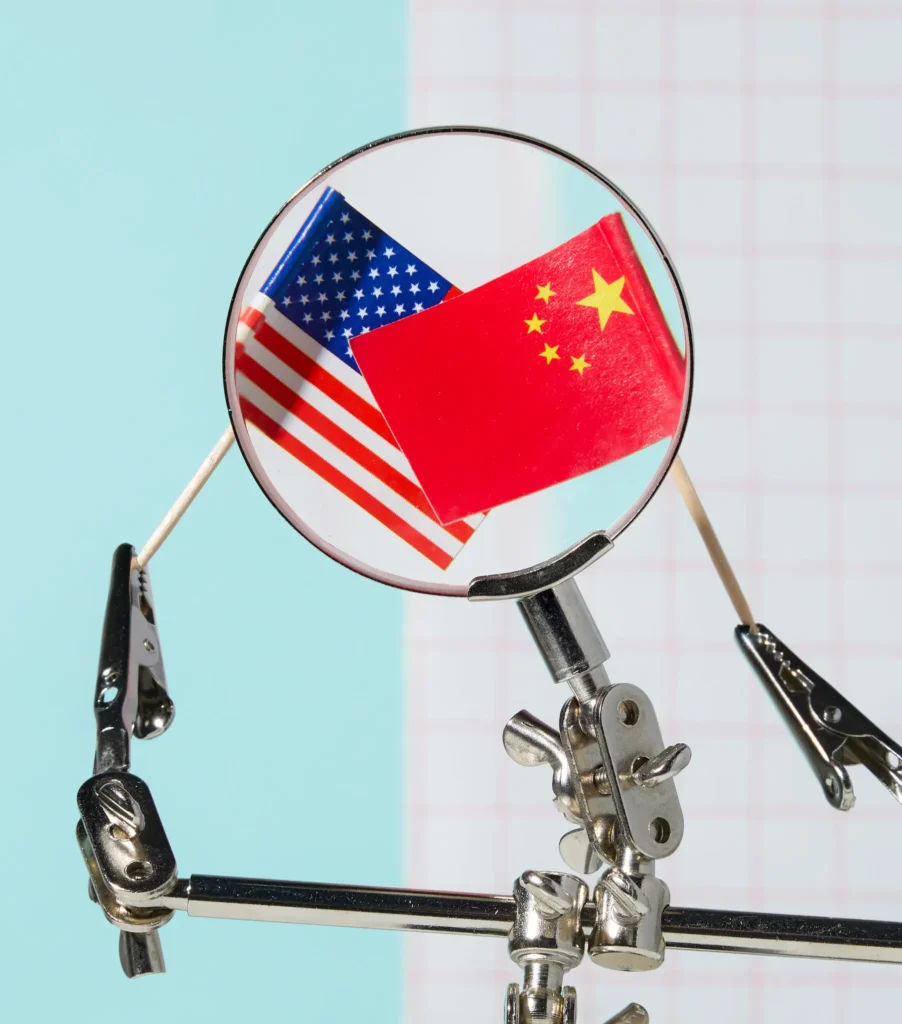
Artificial intelligence has become one of the defining technologies of the 21st century, influencing economic growth, scientific research, national security, education, healthcare, and global competitiveness. While countries around the world are investing heavily in AI, no rivalry receives more attention than the one between China and the United States.
Although both nations recognize AI as a strategic priority, they have adopted notably different approaches to developing, commercializing, and governing the technology. The United States has largely relied on private-sector innovation led by technology companies and venture capital, while China has emphasized long-term national planning, industrial policy, and coordinated public-private investment.
Neither model is universally superior. Each reflects different political systems, economic structures, regulatory philosophies, and national priorities. Understanding these differences provides valuable insight into how the global AI landscape may evolve over the coming decade.
Why AI Has Become a Strategic Technology
Artificial intelligence is often compared to transformative innovations such as electricity, the internet, and semiconductors because of its potential to reshape nearly every industry.
Governments increasingly view AI as essential for:
- Economic productivity
- Scientific discovery
- Healthcare innovation
- National defense
- Cybersecurity
- Advanced manufacturing
- Education
- Transportation
- Climate research
Leadership in AI is therefore seen as both an economic and geopolitical advantage.
The U.S. Model: Market-Driven Innovation
The American AI ecosystem is primarily driven by private enterprise.
Key characteristics include:
- Venture capital investment
- Startup culture
- University research
- Technology companies
- Entrepreneurial competition
- Open commercial markets
Major AI breakthroughs often emerge from collaborations among universities, research laboratories, startups, and established technology firms.
Competition encourages rapid experimentation and commercialization.
China’s Model: Coordinated National Strategy
China has pursued AI through a more centralized approach.
Characteristics often include:
- Long-term national planning
- Government-supported research
- Industrial policy
- Infrastructure investment
- Public-private coordination
- Strategic technology development
This model allows resources to be directed toward national priorities over extended periods.
Infrastructure Plays a Critical Role
Both countries recognize that AI leadership depends on more than software.
Essential infrastructure includes:
- Semiconductor manufacturing
- High-performance computing
- Data centers
- Cloud platforms
- Telecommunications
- Energy systems
- Skilled workforce
Investment in these areas has become increasingly important.
Research and Talent Remain Central
Artificial intelligence advances depend heavily on highly skilled researchers.
Both nations invest in:
- Universities
- Graduate education
- Scientific research
- International collaboration
- AI engineering
- Workforce development
Attracting and retaining top talent remains one of the most important competitive advantages.
Open Source Versus Proprietary Development
The AI industry increasingly includes both proprietary and open-source models.
Open-source AI may encourage:
- Faster innovation
- Academic research
- Startup development
- Global collaboration
Proprietary systems often emphasize:
- Commercial differentiation
- Intellectual property
- Enterprise services
- Security controls
Both approaches contribute to the broader AI ecosystem.
AI Regulation Differs
Countries adopt different regulatory philosophies.
Common policy areas include:
- Data privacy
- AI transparency
- Algorithm accountability
- Consumer protection
- Intellectual property
- National security
Different regulatory environments influence how companies develop and deploy AI technologies.

AI Is Driving Economic Competition
Artificial intelligence affects multiple sectors simultaneously.
Industries experiencing rapid AI adoption include:
- Healthcare
- Manufacturing
- Finance
- Retail
- Agriculture
- Transportation
- Education
- Scientific research
Countries that successfully integrate AI into these industries may strengthen long-term economic competitiveness.
Semiconductor Leadership Matters
Advanced AI systems depend on sophisticated chips.
Key technologies include:
- GPUs
- AI accelerators
- High-bandwidth memory
- Advanced packaging
- Chip manufacturing equipment
Semiconductors have become one of the most strategically important components of AI development.
Energy and Computing Capacity
Modern AI requires enormous computational resources.
Governments increasingly invest in:
- Data centers
- Renewable energy
- Electrical grid modernization
- High-speed networking
- Supercomputing facilities
Computing infrastructure is becoming as strategically important as software innovation.
AI Safety Is a Shared Concern
Despite competitive dynamics, many AI safety challenges are global.
Researchers continue working on:
- Model evaluation
- Alignment research
- Cybersecurity
- Responsible deployment
- Risk management
- Transparency
International cooperation may remain important for addressing shared risks.
Global South Opportunities
Many developing countries are becoming active participants in AI adoption.
Affordable AI tools may support:
- Education
- Healthcare
- Agriculture
- Financial inclusion
- Government services
- Entrepreneurship
The global AI ecosystem increasingly extends beyond the largest economies.
Businesses Operate Internationally
Many multinational companies conduct AI research, manufacturing, and software development across multiple countries.
Global supply chains involve:
- Semiconductor production
- Cloud computing
- Hardware manufacturing
- Software engineering
- Research partnerships
International collaboration remains an important feature of the technology industry.
Innovation Is About More Than Speed
Building successful AI ecosystems requires balancing:
- Innovation
- Safety
- Trust
- Privacy
- Security
- Economic opportunity
Long-term leadership depends on sustained investment rather than short-term breakthroughs alone.
The Future May Include Multiple AI Ecosystems
Rather than a single global model, the future could feature several AI ecosystems with different:
- Regulatory approaches
- Business models
- Infrastructure strategies
- Research priorities
- Commercial partnerships
Interoperability and international standards may become increasingly important.
The Bigger Picture
The comparison between China’s and America’s AI strategies reflects two distinct visions for advancing one of the world’s most influential technologies.
The United States has traditionally emphasized market competition, entrepreneurial innovation, academic research, and private investment. China has pursued a more coordinated strategy that aligns government planning, industrial policy, infrastructure development, and long-term national objectives.
Both approaches offer advantages and face challenges. Rapid private-sector innovation can accelerate breakthroughs, while coordinated planning can support large-scale infrastructure and sustained strategic investment. Ultimately, AI leadership will likely depend on a combination of research excellence, talent development, computing capacity, semiconductor manufacturing, responsible governance, and public trust.
Rather than viewing the future as a competition with a single winner, many experts believe the global AI landscape will remain diverse, with multiple countries contributing to scientific discovery, technological innovation, and commercial applications.
As artificial intelligence continues reshaping the global economy, international cooperation on standards, safety, and ethical development may prove just as important as competition itself.
Frequently Asked Questions (FAQs)
1. How do the United States and China differ in their AI strategies?
The United States generally relies on private-sector innovation, venture capital, universities, and market competition, while China often emphasizes coordinated national planning, infrastructure investment, and public-private collaboration.
2. Why is AI considered strategically important?
AI influences economic growth, healthcare, manufacturing, scientific research, cybersecurity, national security, education, and technological competitiveness, making it a key priority for many governments.
3. Why are semiconductors important for AI?
Advanced AI systems require specialized chips such as GPUs and AI accelerators to perform complex computations efficiently. Semiconductor technology forms the foundation of modern AI infrastructure.
4. Can countries cooperate on AI despite competing?
Yes. Many researchers and policymakers support international collaboration on AI safety, technical standards, scientific research, and responsible governance while continuing to compete commercially and technologically.

5. Which country is likely to lead AI in the future?
There is no definitive answer. Leadership will likely depend on multiple factors including research talent, computing infrastructure, semiconductor manufacturing, investment, regulation, innovation, education, and the ability to responsibly deploy AI across the economy.
Sources The New York Times

