
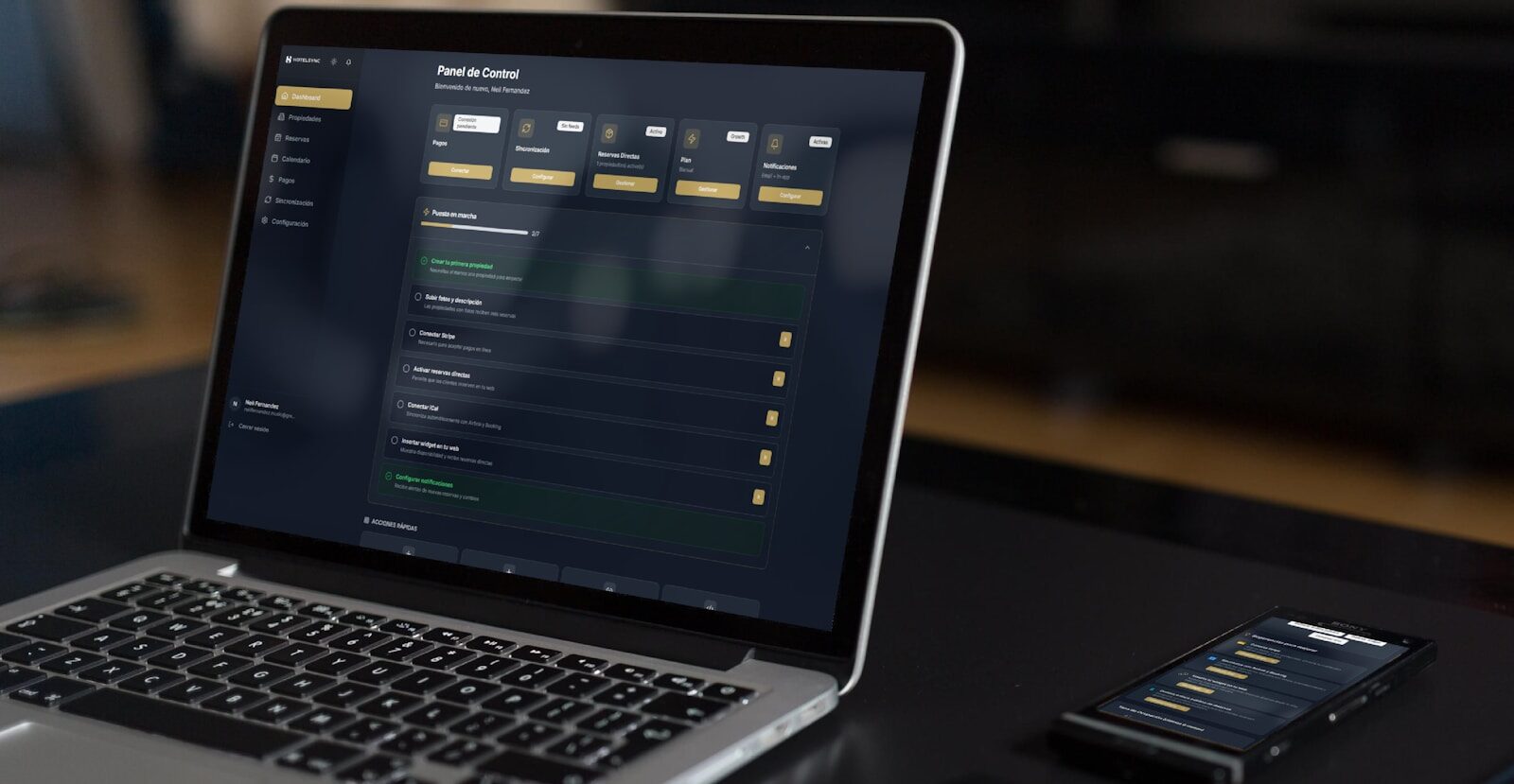
For years, small business owners have faced a familiar challenge: there are never enough hours in the day.
Running a business often means wearing multiple hats simultaneously. One moment you’re handling customer service. The next, you’re managing marketing campaigns, paying invoices, scheduling appointments, updating inventory, responding to emails, and reviewing financial reports.
Large corporations solve these problems by hiring specialized teams.
Small businesses usually cannot.
Now, a new generation of AI agents is poised to change that reality.
Unlike traditional software that simply responds to commands, AI agents are increasingly capable of working independently, coordinating workflows, making decisions, and managing business operations with minimal human involvement. Many experts believe these systems could become the equivalent of digital employees, helping small businesses compete with organizations many times their size.
The emergence of platforms such as OpenClaw and other autonomous agent technologies signals a major shift—from AI as a productivity tool to AI as an operational workforce.
The impact could redefine entrepreneurship, employment, and even what it means to run a company.
What Are AI Agents?
Most people are familiar with AI chatbots.
You ask a question.
The system provides an answer.
AI agents go far beyond that.
An AI agent can:
- Plan tasks
- Execute workflows
- Access software tools
- Monitor objectives
- Communicate with customers
- Analyze data
- Coordinate with other agents
- Adapt based on outcomes
Rather than simply generating information, AI agents are designed to achieve specific goals.
For example, a chatbot might draft a marketing email.
An AI agent could:
- Analyze customer behavior.
- Design a campaign strategy.
- Generate email content.
- Schedule distribution.
- Track engagement metrics.
- Optimize future campaigns automatically.
The difference is significant.
One assists.
The other works.
Why Small Businesses Are Paying Attention
Small businesses often operate with limited budgets and lean teams.
Owners frequently juggle responsibilities such as:
- Marketing
- Accounting
- Customer support
- Scheduling
- Sales
- Inventory management
- Human resources
Hiring specialists for every role can be prohibitively expensive.
AI agents offer the possibility of expanding operational capacity without dramatically increasing payroll expenses.
For many entrepreneurs, this is the biggest attraction.
Instead of hiring multiple entry-level employees, a business could deploy a network of AI systems capable of handling routine tasks 24/7.
The OpenClaw Model and the Rise of Autonomous Workflows
New AI agent frameworks are being built to interact directly with software environments.
Rather than requiring users to manually switch between applications, AI agents can potentially:
- Log into systems
- Retrieve information
- Complete forms
- Update databases
- Send communications
- Generate reports
This opens the door to true end-to-end workflow automation.
Imagine a customer placing an order online.
A coordinated network of AI agents could:
- Confirm the purchase
- Update inventory levels
- Generate invoices
- Schedule shipping
- Notify the customer
- Analyze sales trends
All without direct human involvement.
For small businesses, these capabilities could dramatically improve efficiency and reduce operational bottlenecks.
Why This Is Different From Traditional Automation
Automation itself is not new.
Businesses have relied on software to automate repetitive tasks for decades.
The key difference is adaptability.
Traditional automation follows predefined rules.
AI agents can often handle situations that were previously too complex or unpredictable for conventional software.
Examples include:
- Writing personalized responses
- Understanding customer requests
- Summarizing large amounts of information
- Making recommendations
- Managing multi-step workflows
This flexibility allows automation to move into areas once considered uniquely human.
The Economics of AI Employees
One reason investors are so enthusiastic about AI agents is simple economics.
Human employees require:
- Salaries
- Benefits
- Training
- Office space
- Vacation time
AI agents require:
- Computing resources
- Software subscriptions
- Maintenance
- Oversight
For businesses, the cost difference can be substantial.
This does not necessarily mean AI will replace workers entirely.
However, it could reduce demand for certain administrative and operational roles.
The financial incentives driving adoption are difficult to ignore.

Customer Service Could Be the First Major Transformation
Many small businesses struggle to provide consistent customer support.
AI agents can potentially:
- Answer questions instantly
- Resolve common issues
- Process returns
- Schedule appointments
- Recommend products
Unlike human teams, AI systems can operate around the clock.
This allows even small companies to deliver service levels once reserved for large enterprises.
The challenge will be maintaining quality, accuracy, and customer trust.
Marketing Without Hiring a Marketing Team
Marketing is another area where AI agents are making a significant impact.
Modern systems can already assist with:
- Content creation
- Social media management
- Search engine optimization (SEO)
- Advertising campaigns
- Audience analysis
Future AI agents may manage entire marketing operations independently.
An AI marketing agent could continuously:
- Create content
- Launch campaigns
- Analyze performance
- Adjust strategies
This capability could fundamentally change how small businesses attract and retain customers.
The Risks of Autonomous Business Operations
Despite their promise, AI agents are not perfect.
Several concerns remain.
Errors and Hallucinations
AI systems can sometimes generate inaccurate information.
A mistake in customer communication or financial reporting could have serious consequences.
Security Risks
AI agents often require access to sensitive systems.
If compromised, they could expose:
- Customer data
- Financial records
- Proprietary business information
Accountability Challenges
When an AI agent makes a poor decision, who is responsible?
- The software provider?
- The business owner?
- The developer?
These questions remain largely unresolved.
Over-Automation
Businesses that rely too heavily on AI risk losing the human touch that often sets them apart from competitors.
Why Humans Still Matter
While AI excels at speed, efficiency, and scale, humans continue to possess strengths that machines struggle to replicate.
These include:
- Emotional intelligence
- Relationship building
- Strategic thinking
- Creativity
- Ethical judgment
- Leadership
The most successful businesses may not be those that replace humans entirely.
Instead, they may be the ones that combine human strengths with AI-powered efficiency.
AI Agents and the Future of Work
The rise of autonomous business software naturally raises concerns about employment.
Some roles may face disruption, particularly those involving:
- Routine administration
- Data entry
- Basic customer support
- Scheduling
- Repetitive operational tasks
At the same time, entirely new opportunities are emerging.
Businesses increasingly need:
- AI workflow designers
- Agent supervisors
- AI auditors
- Automation consultants
- AI security specialists
History suggests that technology tends to transform jobs rather than eliminate work altogether.
The transition, however, may not be easy.
A Powerful Competitive Advantage for Small Businesses
Ironically, AI may help level the playing field between small businesses and large corporations.
Traditionally, scale has been a major advantage.
Large companies could hire specialized teams and invest heavily in infrastructure.
AI agents may allow smaller businesses to access similar capabilities at a fraction of the cost.
A five-person company supported by advanced AI systems could potentially operate with the efficiency of a much larger organization.
This could usher in a new era of highly productive, technology-driven entrepreneurship.
The Road Ahead
AI agents are still in the early stages of development.
Many systems require significant supervision.
Reliability challenges remain.
Regulatory frameworks are still evolving.
Yet the direction is becoming increasingly clear.
Businesses are moving beyond using AI merely as an assistant.
They are beginning to explore AI as an active participant in daily operations.
For small businesses, this shift could represent one of the most significant technological opportunities since the rise of the internet.
Those who learn to integrate AI agents effectively may gain substantial advantages in productivity, customer service, and growth.
The company of the future may not simply employ people and software.
It may employ people, software, and autonomous digital workers operating side by side.
Whether that future arrives in five years or fifteen, its foundations are already being built today.
Frequently Asked Questions (FAQ)
1. What is an AI agent?
An AI agent is a software system capable of performing tasks autonomously, making decisions, interacting with digital tools, and executing multi-step workflows to achieve specific goals.
2. How is an AI agent different from a chatbot?
A chatbot primarily answers questions and generates responses. An AI agent can plan, execute, monitor, and complete tasks across multiple systems with limited human supervision.
3. Can AI agents run an entire small business?
Not yet. While AI agents can automate many operational functions, human oversight remains essential for strategy, leadership, compliance, financial decisions, and customer relationships.
4. Which business functions are most likely to be automated first?
Customer service, scheduling, marketing, administrative work, reporting, data entry, inventory management, and routine communications are among the leading candidates for AI automation.
5. Will AI agents replace employees?
Some routine roles may be reduced or transformed, but AI is also creating new jobs related to AI management, governance, security, workflow design, and human-AI collaboration.
6. Are AI agents safe to use?
They can be highly useful, but businesses should implement safeguards, monitoring systems, access controls, and human oversight to reduce risks associated with errors and security vulnerabilities.
7. What industries could benefit most from AI agents?
Retail, e-commerce, professional services, logistics, hospitality, marketing, healthcare administration, and customer support industries are among those likely to see significant benefits.
8. Why are investors excited about AI agents?
Investors view AI agents as a breakthrough productivity technology that could significantly reduce operational costs while enabling businesses to scale more efficiently.
9. What are the biggest risks of AI agents?
Common concerns include inaccurate outputs, cybersecurity threats, compliance challenges, accountability issues, and excessive dependence on automation.
10. What is the long-term future of AI agents?
Many experts believe AI agents will become increasingly capable and integrated into everyday business operations, serving as digital coworkers that collaborate with human employees rather than completely replacing them.
Sources The New York Times

