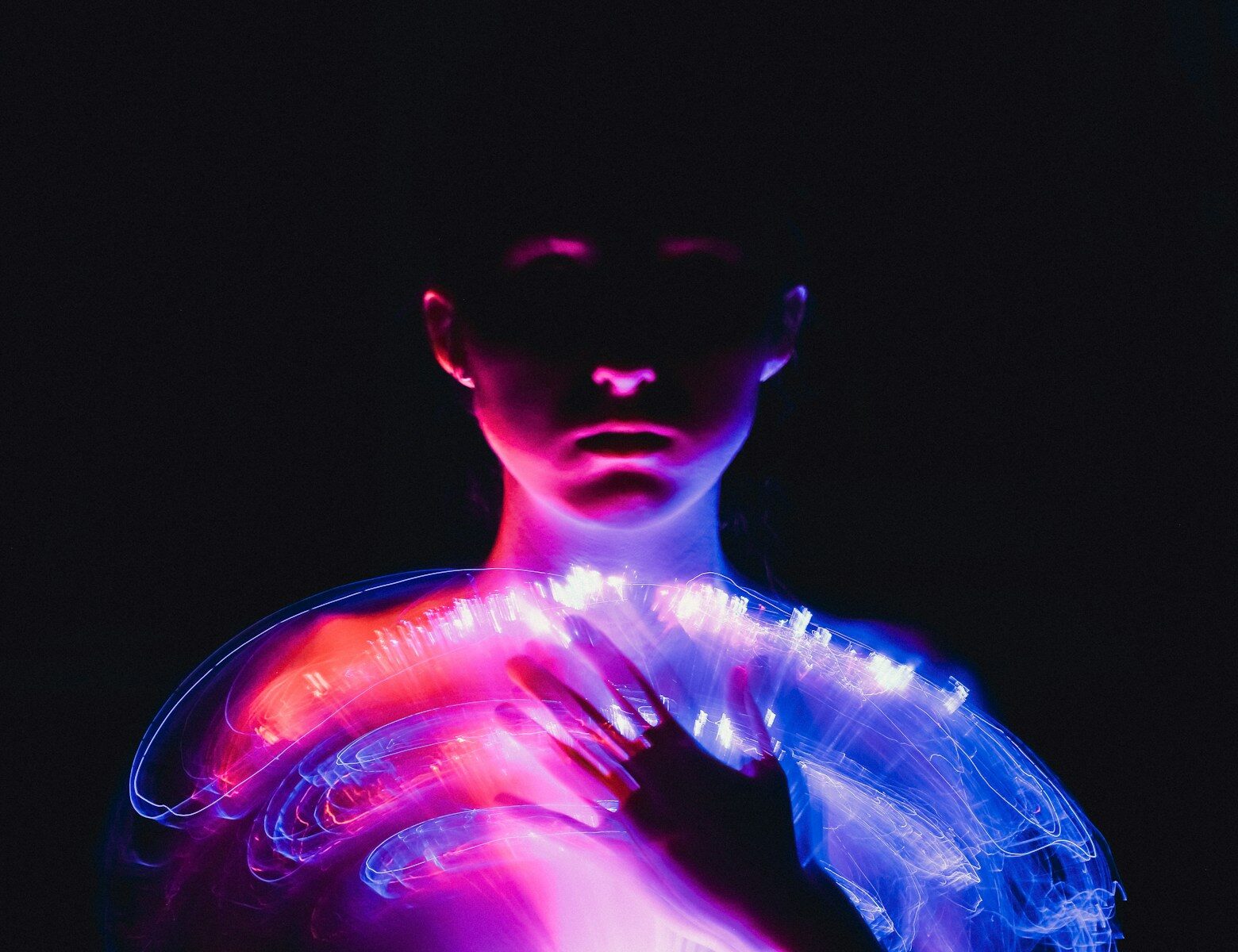
For decades, Silicon Valley promised to change the world.
Now some of its most influential thinkers want to change humanity itself.
Beneath the hype surrounding artificial intelligence lies a deeper ideological movement quietly gaining momentum inside elite tech circles — one built around transhumanism, brain-computer interfaces, cognitive enhancement, digital immortality, and the belief that human biology is becoming obsolete.
To critics, it sounds like science fiction mixed with billionaire messianism.
To believers, it is the inevitable next step of evolution.
And thanks to rapid advances in AI, neuroscience, wearable technology, neural data collection, and brain-machine interfaces, ideas once considered fringe are suddenly entering mainstream technological development.
The result is a growing cultural shift where parts of Silicon Valley increasingly view the human brain not as sacred…
…but as software waiting to be upgraded.
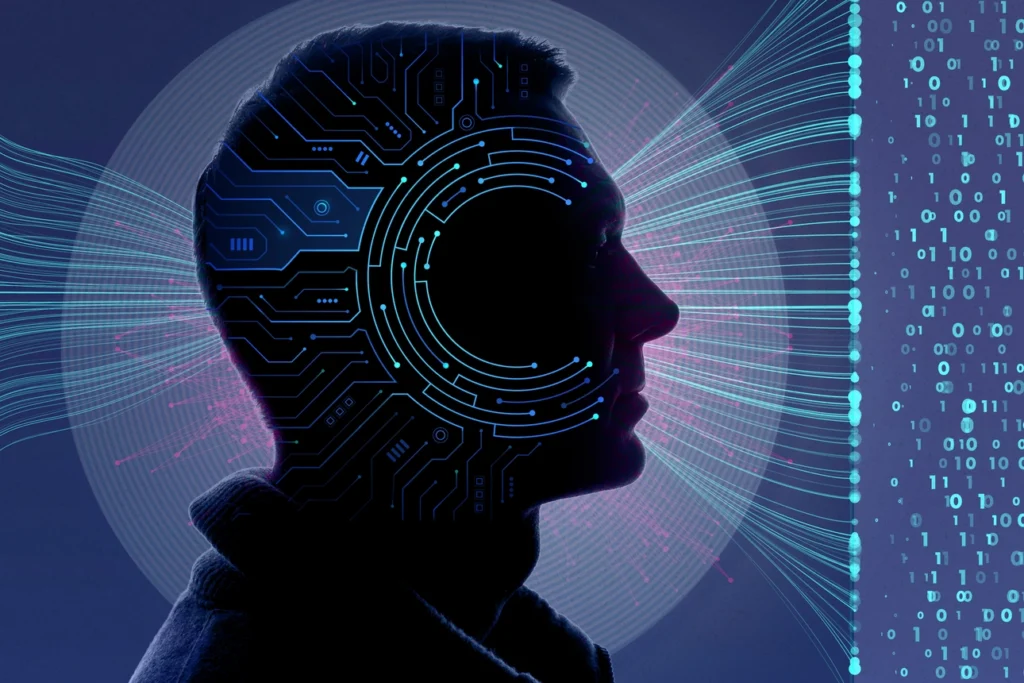
🧠 What Is Transhumanism?
Transhumanism is a philosophical and technological movement centered around one core idea:
Humans should use technology to transcend biological limitations.
That can include:
- extending lifespan
- enhancing intelligence
- merging minds with machines
- augmenting memory
- eliminating disease
- modifying emotions
- eventually digitizing consciousness
For years, transhumanism existed mostly on the fringes of futurist culture.
Now AI acceleration is pulling many of those concepts closer to reality.
Especially because modern AI dramatically increases humanity’s ability to:
- process data
- simulate cognition
- decode biological systems
- analyze brain activity
- automate scientific discovery
The overlap between AI and neuroscience is becoming one of the most important technological intersections of the century.
🤖 Why AI Supercharged the Movement
Artificial intelligence changed the conversation because it introduced a terrifying possibility for Silicon Valley elites:
What if machines become smarter than humans?
That fear drives much of modern transhumanist thinking.
Some technologists increasingly believe humanity faces two choices:
- merge with AI
- become economically and intellectually irrelevant
This belief fuels enormous investment into:
- neural interfaces
- cognitive enhancement
- AI-assisted brain research
- wearable neurotechnology
- memory augmentation systems
The logic is brutally simple:
if AI evolves rapidly, humans may need upgrading just to keep pace.
⚡ Brain Data Is Becoming the Next Gold Rush
One of the most controversial developments involves brain data collection.
Tech companies and startups are increasingly researching systems capable of measuring:
- attention
- emotion
- fatigue
- cognitive load
- neurological activity
- behavioral intention
Devices already exist that can:
- monitor neural signals
- track concentration patterns
- interpret basic motor intentions
- detect emotional states probabilistically
And investors believe future markets could include:
- thought-controlled computing
- AI-assisted memory systems
- neuro-advertising
- cognitive productivity optimization
- emotional analytics
Yes, that last one sounds dystopian.
Because it absolutely could become dystopian.
🧩 The Rise of Brain-Computer Interfaces
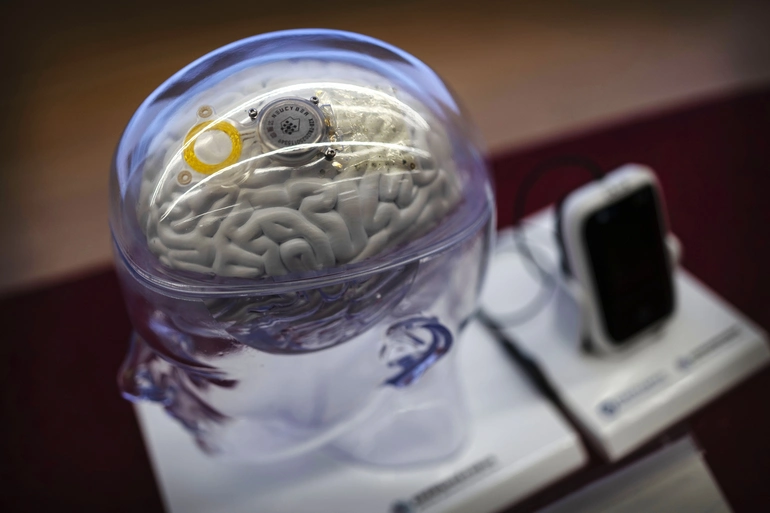
Brain-computer interfaces (BCIs) are among the most aggressively pursued technologies in Silicon Valley.
Companies like Neuralink aim to create direct communication pathways between brains and machines.
The long-term goals include:
- restoring movement for paralyzed patients
- treating neurological disorders
- enabling thought-controlled devices
- eventually integrating AI directly with human cognition
While today’s systems remain limited, progress is accelerating rapidly.
Researchers are already demonstrating:
- thought-to-text systems
- robotic limb control via neural signals
- AI-assisted speech restoration
- experimental memory decoding
Many experts believe BCIs could become one of the defining technologies of the next 20 years.
🏢 Silicon Valley Increasingly Treats Biology Like Engineering
One major philosophical shift separates modern tech culture from earlier generations.
Traditional medicine focused on healing illness.
Modern Silicon Valley increasingly focuses on:
optimization.
That means:
- better sleep
- enhanced focus
- longer lifespan
- emotional regulation
- cognitive efficiency
- productivity enhancement
This mindset treats the body and brain as systems to engineer.
And AI dramatically accelerates that approach by enabling:
- predictive biological modeling
- personalized optimization
- large-scale behavioral analysis
- automated diagnostics
The line between healthcare and performance enhancement is beginning to blur.
⚠️ Critics Fear a New Era of Cognitive Inequality
Not everyone sees this future positively.
Critics warn these technologies could create:
- enhanced elites
- neurological surveillance
- cognitive inequality
- privacy collapse
- behavioral manipulation
Imagine a world where wealthy individuals can afford:
- intelligence augmentation
- memory enhancement
- AI cognitive assistants integrated into daily thought
while others cannot.
That could create entirely new social classes based on cognitive capability itself.
Some ethicists fear:
intelligence enhancement may become the next economic arms race.
🔍 The Privacy Nightmare Few People Are Talking About
Most people already worry about:
- phone tracking
- browsing data
- social media surveillance
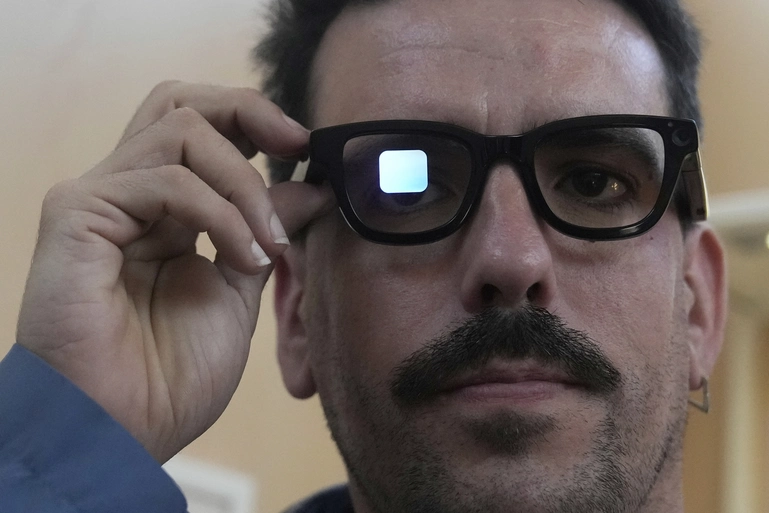
Brain data may become far more sensitive.
Because neural signals could eventually reveal:
- emotional reactions
- subconscious preferences
- stress patterns
- attention states
- cognitive vulnerabilities
Once collected, that data becomes incredibly valuable.
And history suggests:
valuable data rarely stays private forever.
This is why many researchers now argue for “neurorights” — legal protections specifically designed to defend mental privacy.
Countries like Chile have already explored constitutional protections related to neural data rights.
🧬 Longevity Science Is Quietly Merging With AI
Another major component of transhumanist culture is longevity research.
Silicon Valley investors are pouring billions into:
- anti-aging science
- cellular reprogramming
- AI-assisted drug discovery
- biological simulation models
- genomic prediction systems
AI dramatically speeds up:
- protein analysis
- pharmaceutical discovery
- biological modeling
- genetic interpretation
Some technologists openly discuss the possibility of radically extending human lifespan.
Others aim even higher:
defeating biological aging entirely.
Whether that proves possible remains deeply uncertain.
But the money flowing into the field is enormous.
🌍 The Movement Is No Longer Fringe
One reason this topic matters now is scale.
Ideas once limited to futurist conferences now influence:
- venture capital
- AI startups
- biotech funding
- neuroscience research
- policy debates
- military technology planning
And younger founders increasingly grow up immersed in:
- AI maximalism
- optimization culture
- techno-utopian thinking
This creates an ecosystem where radical ideas normalize quickly.
💻 AI Could Become Humanity’s Cognitive Infrastructure
One emerging vision inside Silicon Valley sees AI eventually functioning as:
- external memory
- decision support
- emotional guidance
- educational augmentation
- creativity enhancement
In this model, humans increasingly depend on AI not just for convenience…
but for cognition itself.
That possibility raises profound philosophical questions:
- What remains uniquely human?
- What happens to independent thinking?
- Does outsourcing cognition weaken human capability over time?
- Could AI reshape identity itself?
These are no longer purely philosophical debates.
They are becoming engineering discussions.
⚔️ Governments and Militaries Are Watching Closely
Brain enhancement technologies also carry national security implications.
Military researchers worldwide are exploring:
- cognitive performance enhancement
- fatigue reduction systems
- neural coordination technologies
- brain-machine communication systems
Because future geopolitical competition may increasingly involve:
augmented human performance.
That possibility introduces enormous ethical risks.
Especially if enhancement technologies become tied to:
- economic power
- military dominance
- workforce competitiveness
🔮 What Happens Next?
Three major developments are likely:
1. Neural technologies become consumer products
Wearables may evolve into mainstream cognitive monitoring systems.
2. Brain privacy becomes a major legal battleground
Governments may eventually regulate neural data similarly to medical records.
3. Human-AI integration accelerates
People may increasingly rely on AI systems as cognitive extensions of themselves.
And that may fundamentally reshape human identity.
❓ Frequently Asked Questions (FAQ)
What is transhumanism?
A movement advocating the use of advanced technology to enhance human physical and cognitive abilities.
What are brain-computer interfaces?
Devices that enable direct communication between the brain and computers.
Is mind-reading technology real?
Not in the sci-fi sense. But researchers can already interpret limited neural signals for certain tasks.
Why is AI connected to transhumanism?
AI increases humanity’s ability to analyze cognition, biology, and neurological systems.
What are neurorights?
Legal protections designed to safeguard mental privacy and neural data.
Could AI eventually merge with human cognition?
Some researchers and companies believe future systems may deeply integrate with human thinking and memory processes.
Are these technologies dangerous?
Potential risks include:
- surveillance
- inequality
- manipulation
- privacy erosion
- dependency on AI systems
Is digital immortality possible?
Currently speculative. Some futurists believe future technology could theoretically preserve aspects of human cognition digitally, but no proven method exists today.
🧠 Final Thought
The biggest technology story of the next decade may not simply be artificial intelligence.
It may be the gradual erosion of the boundary between humans and machines.
For centuries, humans used tools externally:
- wheels
- engines
- computers
- smartphones
Now Silicon Valley increasingly imagines a future where the tool moves inward.
Into memory.
Into cognition.
Into identity itself.
And once technology begins reshaping not only what humans can do — but what humans are — civilization enters completely uncharted territory.
Sources POLITICO