

The AI race is no longer just about better models.
It’s about better chips.
With the introduction of its latest specialized inference chip (often referred to as TPUx), Google is signaling a major shift in how artificial intelligence will be deployed at scale—faster, cheaper, and more efficiently than ever before.
This isn’t just a hardware update.
It’s a strategic move that could reshape the economics and accessibility of AI.

What Did Google Announce?
Google introduced a new generation of Tensor Processing Units (TPUs) specifically optimized for AI inference—the phase where trained models are actually used to generate outputs.
Unlike traditional chips designed for general-purpose computing, this new hardware is:
- Purpose-built for AI workloads
- Highly efficient at running large models
- Optimized for real-time applications
Training vs. Inference: Why This Matters
To understand the significance, you need to know the difference:
Training
- Happens once (or occasionally)
- Requires massive compute power
- Teaches the AI model how to perform tasks
Inference
- Happens constantly
- Powers real-world applications (chatbots, search, recommendations)
- Must be fast and cost-efficient
👉 The key insight:
Most of the cost and demand in AI comes from inference—not training.
Why Specialized Inference Chips Are a Big Deal
1. Cost Reduction at Scale
Running AI models is expensive.
Specialized chips:
- Reduce energy consumption
- Lower operational costs
- Make AI more affordable for businesses
2. Faster Response Times
Users expect instant results.
Inference chips enable:
- Lower latency
- Real-time interactions
- Smoother AI experiences
3. Efficiency for Large Models
Modern AI models (like LLMs) are massive.
Optimized chips can:
- Handle larger workloads
- Improve throughput
- Scale more effectively
How Google’s TPUx Stands Out
Google has been building TPUs for years, but this new iteration focuses heavily on serving AI at scale.
Key advantages likely include:
1. Tight Integration With Google Cloud
- Seamless deployment
- Optimized performance within Google’s ecosystem
- Competitive edge against AWS and Microsoft Azure
2. Custom Architecture
Unlike GPUs, which are general-purpose:
TPUs are:
- Designed specifically for tensor operations
- Highly optimized for neural networks
- More efficient for AI workloads
3. Energy Efficiency
Power consumption is becoming a major bottleneck in AI.
Google’s chips aim to:
- Deliver more performance per watt
- Reduce environmental impact
- Improve data center sustainability
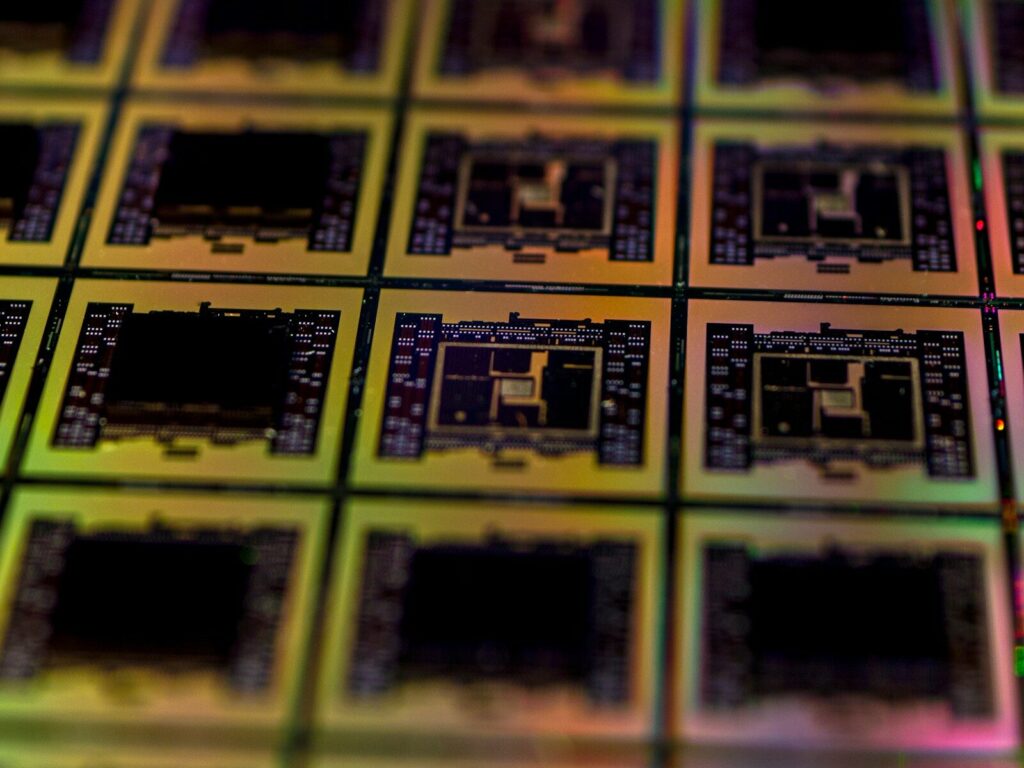
The Bigger Picture: AI Hardware Wars
Google isn’t alone.
This move places it in direct competition with:
NVIDIA
- Dominates AI hardware with GPUs
- Industry standard for training and inference
AMD
- Gaining traction with AI-focused chips
- Competing on performance and cost
Amazon (AWS)
- Developing its own chips (Inferentia, Trainium)
- Focused on reducing cloud costs
Microsoft
- Investing in custom AI hardware
- Partnering closely with OpenAI
👉 The trend is clear:
Every major tech company is building its own AI chips.
What This Means for Businesses
1. Cheaper AI Deployment
Companies can:
- Run AI tools at lower cost
- Scale faster
- Experiment more freely
2. More Accessible AI
Smaller businesses and startups benefit from:
- Reduced barriers to entry
- Cloud-based access to powerful hardware
3. New Applications Become Possible
Lower costs + faster speeds = innovation.
Expect growth in:
- Real-time AI assistants
- Autonomous systems
- AI-powered analytics
Impact on Developers
Developers will need to adapt to:
- New hardware architectures
- Optimization techniques
- Platform-specific tools
But they’ll also gain:
- Better performance
- More powerful capabilities
- Faster deployment cycles
The Hidden Challenge: Software Still Matters
Even the best chip won’t help if:
- Software isn’t optimized
- Models aren’t efficient
- Infrastructure isn’t scalable
The real advantage comes from:
Hardware + software working together
Risks and Concerns
1. Vendor Lock-In
Using specialized chips tied to a cloud provider may:
- Limit flexibility
- Increase dependency
2. Fragmentation
Different chips = different ecosystems.
This can:
- Complicate development
- Slow standardization
3. Environmental Impact
Even with efficiency gains, AI demand is growing rapidly.
Total energy usage may still rise.
What Comes Next?
We’re entering a new phase of AI evolution:
From:
- Model-centric innovation
To:
- Infrastructure-driven competition
Future trends may include:
- Even more specialized chips
- Edge AI hardware (on-device processing)
- AI integrated into everyday devices
Frequently Asked Questions (FAQ)
1. What is an inference chip?
It’s a processor designed to run trained AI models efficiently in real-world applications.
2. How is a TPU different from a GPU?
- GPU: General-purpose, flexible
- TPU: Specialized for AI, more efficient for specific tasks
3. Why is inference more important than training?
Because inference happens continuously and drives most real-world usage and cost.
4. Who will benefit most from this?
- Tech companies
- Startups
- Enterprises using AI at scale
5. Will this replace GPUs?
Not entirely.
GPUs will still be widely used, but specialized chips will:
- Take over specific workloads
- Improve efficiency
6. Can small businesses access this technology?
Yes—through cloud platforms like Google Cloud.
7. What’s the biggest takeaway?
The future of AI isn’t just about smarter models.
It’s about:
Running them faster, cheaper, and at massive scale.
Final Thoughts
Google’s new inference chip isn’t just another product launch.
It’s a signal that the AI race is entering a new phase—one where infrastructure, efficiency, and scalability define the winners.
In the coming years, the companies that control the best AI hardware won’t just power the future—
They’ll shape it.
Sources The Wall Street Journal

