
In the United States, artificial intelligence often triggers anxiety.
People worry about:
- Job loss
- Surveillance
- Deepfakes
- Misinformation
- Human replacement
- Existential risks
In China, the public conversation around AI feels very different.
There are certainly concerns—but far less widespread fear.
Instead, AI is more commonly framed as:
- Progress
- Opportunity
- National strength
- Economic advancement
This contrast reveals something deeper than technology.
It exposes a fundamental difference in how two superpowers view the relationship between society, government, technology, and the future itself.
And understanding that divide may be essential to understanding the global AI race.
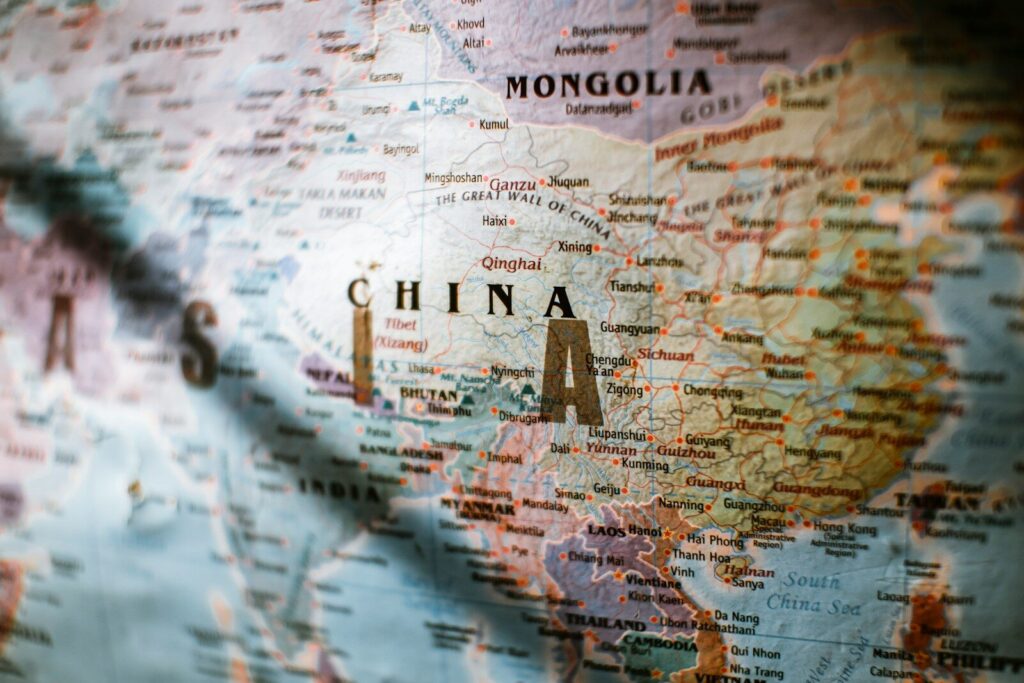
The AI Fear Gap Between America and China
The United States and China are both investing heavily in artificial intelligence.
But culturally and politically, their attitudes toward AI differ dramatically.
In America:
- AI debates are often dominated by warnings and backlash.
In China:
- AI is more frequently presented as a strategic national project tied to modernization and global leadership.
Why Americans Are So Anxious About AI
Several forces shape American fears around AI.
1. Distrust of Big Tech
Many Americans increasingly distrust:
- Silicon Valley companies
- Social media platforms
- Data collection practices
After years of:
- Privacy scandals
- Misinformation concerns
- Algorithmic manipulation
People are skeptical about giving tech companies even more power.
2. Fear of Job Displacement
The U.S. economy is highly sensitive to:
- Automation
- Labor disruption
- Economic inequality
Workers worry AI could:
- Replace white-collar jobs
- Weaken bargaining power
- Increase corporate concentration
3. Cultural Focus on Individualism
American culture strongly emphasizes:
- Personal freedom
- Individual rights
- Independence from centralized authority
This creates more resistance to technologies perceived as:
- Intrusive
- Controlling
- Surveillance-oriented
4. Media and Existential Narratives
Western AI discourse is heavily influenced by:
- Science fiction
- Apocalypse narratives
- Public intellectual warnings
Popular discussions often focus on:
AI becoming dangerous or uncontrollable.
Why China Views AI Differently
China’s approach to AI is shaped by different historical, political, and economic conditions.
1. Technology as National Development
In China, technology is often framed as:
- A path to national advancement
- A source of geopolitical strength
- A tool for economic modernization
AI is seen less as:
- A threat to social order
And more as:
A mechanism for strengthening the nation.
2. Greater Acceptance of Central Coordination
China has a stronger tradition of:
- State-led planning
- Centralized decision-making
- Long-term industrial strategy
This creates:
- More institutional alignment around AI goals
- Less public resistance to coordinated deployment
3. Rapid Economic Transformation
China’s population has experienced:
- Massive technological progress
- Rapid infrastructure growth
- Rising living standards
Technology is often associated with:
Tangible national improvement.
4. Different Privacy Expectations
Chinese consumers generally operate in a digital ecosystem with:
- Greater integration between platforms, services, and state systems
As a result:
- AI surveillance concerns may generate less public resistance than in Western societies.
The Government’s Role in China’s AI Expansion
China treats AI as:
A strategic national priority.
The government actively supports:
- AI research
- Semiconductor development
- AI infrastructure
- Education initiatives
This coordinated strategy gives China:
- Long-term focus
- Policy alignment
- Large-scale deployment capability

Why the U.S. and China Fear Different Things
Interestingly, both countries fear AI—but in different ways.
America fears:
- Loss of control
- Corporate power
- Human replacement
- Cultural disruption
China fears:
- Falling behind technologically
- Losing geopolitical competitiveness
- Dependence on foreign technology
The AI Race Is About More Than Technology
The U.S.-China AI competition is increasingly about:
- Economic dominance
- Military capability
- Political influence
- Global standards
AI is becoming:
A foundational layer of geopolitical power.
Why China’s Speed Worries the West
China’s centralized system may allow:
- Faster infrastructure deployment
- Quicker policy execution
- Larger-scale experimentation
Western critics worry:
- Democratic systems move too slowly to compete effectively.
But China’s Model Has Risks Too
China’s AI strategy also faces challenges.
1. Government Control Risks
Heavy state involvement may:
- Limit open experimentation
- Restrict dissent
- Reduce transparency
2. Surveillance Concerns
AI-powered monitoring systems raise:
- Human rights concerns
- Civil liberties debates
3. Innovation Trade-Offs
Some analysts argue:
- Highly controlled environments may limit long-term creativity.
The Different Narratives Around AI
In America:
AI is often framed as dangerous.
In China:
AI is often framed as necessary.
This difference shapes:
- Public policy
- Investment priorities
- Social attitudes
Why Public Trust Matters
One of the biggest factors in AI adoption is:
Trust.
If people trust:
- Institutions
- Governments
- National direction
They are more likely to embrace technological change.
Societies with:
- Higher polarization
- Institutional distrust
Often experience:
- Stronger backlash movements.
The Global Consequences
The differing attitudes toward AI may influence:
- Global technology standards
- Regulatory systems
- Economic leadership
- Military balance
Countries around the world may eventually choose between:
- Different AI governance models
- Different visions of digital society
The Bigger Philosophical Divide
At its core, the AI divide reflects a deeper philosophical difference:
In the U.S.:
Technology is often judged by:
- Its effect on individual freedom.
In China:
Technology is more often judged by:
- Its contribution to collective progress and national strength.
Could These Two Models Coexist?
Possibly—but tensions will likely grow.
The world may increasingly split into:
- Competing AI ecosystems
- Different governance philosophies
- Separate technological spheres
Frequently Asked Questions (FAQ)
1. Why is China less afraid of AI?
Because AI is more commonly viewed as a tool for national progress and modernization.
2. Why are Americans more skeptical of AI?
Due to concerns about privacy, job loss, corporate power, and loss of control.
3. Is China investing heavily in AI?
Yes. China considers AI a strategic national priority.
4. Does China have fewer concerns about surveillance?
Public attitudes toward surveillance and data use differ significantly from Western countries.
5. Is the AI race mainly about economics?
No. It also involves geopolitics, military power, and global influence.
6. Which country is leading in AI?
Both the U.S. and China are major AI powers, each with different strengths.
7. What’s the biggest takeaway?
The AI race is not just technological—
It reflects two fundamentally different visions of society, power, and the future.

Final Thoughts
Artificial intelligence is becoming one of the defining forces of the 21st century.
But the global AI debate is not simply about machines.
It’s about:
- Values
- Governance
- Trust
- Power
- National identity
China’s relative comfort with AI and America’s growing anxiety reveal something profound:
Technology is never interpreted in isolation.
It is filtered through culture, politics, history, and collective experience.
And as the AI race accelerates, the biggest competition may not be over who builds the smartest systems—
But over which vision of the future the world ultimately chooses to follow.
Sources The New York Times