
For years, the global conversation about artificial intelligence has focused on Silicon Valley breakthroughs, flashy consumer tools, and headline-grabbing startups. Yet while attention gravitates toward U.S. tech giants, a quieter, more methodical story is unfolding elsewhere.
China may not be winning the AI race loudly — but it may be winning it strategically.
The question is not who has the most viral chatbots, but who is embedding AI most deeply into industry, infrastructure, and state capacity.
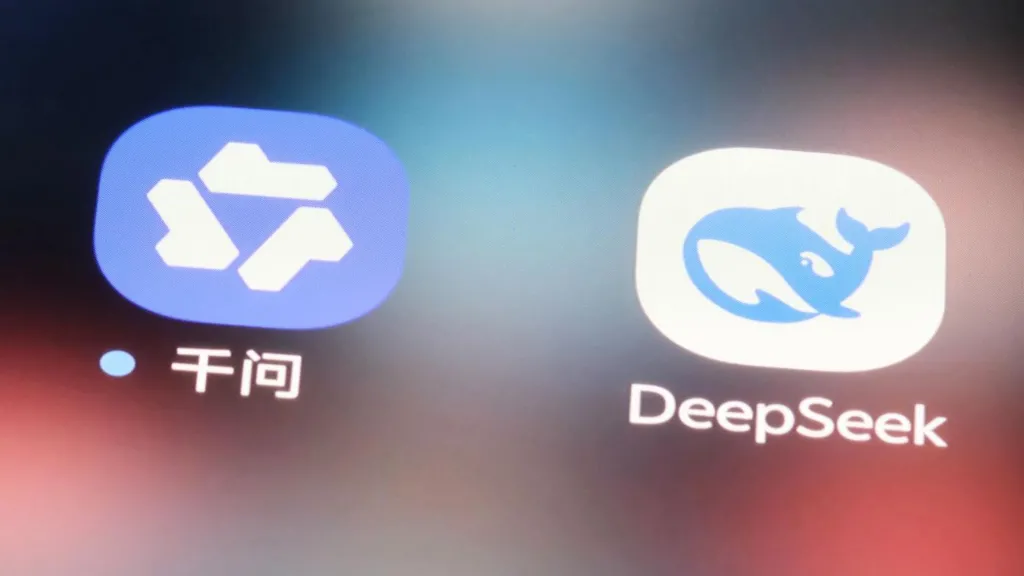
Why “Winning the AI Race” Is Harder to Define Than It Sounds
The AI race isn’t a single competition. It’s several races happening at once:
- Research breakthroughs
- Commercial applications
- Hardware and chips
- Data access
- Talent development
- Industrial deployment
- National coordination
Judging success by consumer apps alone misses where long-term power is built.
China’s AI Strategy: Quiet, Coordinated, and Applied
Unlike the U.S., where AI development is largely driven by private companies competing with one another, China’s approach is state-coordinated and application-focused.
Key features include:
- National AI strategies tied to economic planning
- Heavy investment in applied AI, not just research
- Integration of AI into manufacturing, logistics, healthcare, and governance
- Long-term infrastructure development
This creates momentum that is less visible — but potentially more durable.
Why China Focuses Less on Chatbots and More on Systems
China’s AI strength lies in:
- Computer vision
- Robotics
- Surveillance and sensor networks
- Industrial automation
- Smart cities and transportation
These systems:
- Don’t need public-facing interfaces
- Generate continuous real-world data
- Improve through deployment
- Become embedded in physical infrastructure
Once embedded, they are difficult to displace.
The Hardware Advantage: Chips, Manufacturing, and Scale
Despite U.S. restrictions on advanced chips, China continues to:
- Develop domestic semiconductor capacity
- Optimize AI models for lower-end hardware
- Scale deployment across massive internal markets
While China may trail in cutting-edge chips, it often compensates with:
- Scale
- Engineering optimization
- Cost efficiency
Winning the AI race doesn’t require the fastest chip — it requires enough chips, deployed everywhere.
Data: China’s Underestimated Asset
AI thrives on data, and China has:
- Large populations
- Dense urban environments
- Integrated digital platforms
- Fewer legal barriers to data aggregation
This creates vast training and feedback loops, especially for physical-world AI like transportation, logistics, and manufacturing.

Talent and Education Pipelines
China produces:
- Large numbers of STEM graduates
- Engineers trained for applied problem-solving
- Researchers increasingly staying within domestic institutions
While the U.S. still leads in elite AI research, China’s talent pipeline emphasizes deployment at scale, not just novelty.
Why the U.S. Still Leads — For Now
The United States retains major advantages:
- Frontier AI models
- Top-tier research institutions
- Entrepreneurial ecosystems
- Global AI platforms
However, these strengths are often:
- Fragmented
- Market-driven rather than coordinated
- Focused on software over infrastructure
Leadership in innovation does not automatically translate into leadership in implementation.
What the Original Conversation Often Misses
AI Power Is Infrastructural
Once AI is embedded into factories, cities, and supply chains, it shapes long-term advantage.
Visibility Is Misleading
The most impactful AI systems are often invisible to consumers.
Regulation Cuts Both Ways
Stronger privacy and labor protections slow deployment — but protect legitimacy.
The Race Is Asymmetric
China and the U.S. are optimizing for different outcomes.
Is This an AI Arms Race or an Economic Race?
For China, AI is primarily:
- An economic productivity tool
- A governance enhancer
- An industrial upgrade mechanism
For the U.S., AI is often:
- A commercial product
- A platform competition
- A venture-driven innovation cycle
Both approaches create strengths — and blind spots.
What This Means for the Rest of the World
Countries outside the U.S. and China face a choice:
- Adopt U.S.-style AI platforms
- Integrate Chinese AI infrastructure
- Or build smaller, sovereign systems
AI standards set today will shape global dependencies for decades.
Frequently Asked Questions
Is China ahead of the U.S. in AI overall?
Not across all areas. The U.S. leads in frontier models; China leads in applied deployment.
Why doesn’t China dominate AI headlines?
Because much of its AI work is infrastructural, not consumer-facing.
Do U.S. chip restrictions slow China down?
They slow access to top-end hardware but have pushed China toward optimization and self-sufficiency.
Is China’s AI growth dangerous?
It raises concerns around surveillance, governance, and global power balance.
Can the U.S. catch up in deployment?
Yes — but it requires coordination, infrastructure investment, and long-term planning.
Is there a single “winner” in the AI race?
Unlikely. Different countries will lead in different dimensions.

The Bottom Line
China may not be winning the AI race in the way Silicon Valley defines winning — through flashy apps and viral tools.
But by embedding AI deeply into industry, infrastructure, and governance, it may be securing long-term strategic advantage that doesn’t depend on hype.
The AI race isn’t decided by who builds the smartest chatbot.
It’s decided by who turns intelligence into power — quietly, efficiently, and at scale.
Sources BBC