
For years, investors watching the artificial intelligence boom focused on familiar metrics: chip sales, cloud revenue, software adoption, and the soaring valuations of technology giants. But in 2026, another market has become increasingly important to understanding the future of AI—the bond market.
The race to build AI infrastructure is reaching unprecedented scale. Technology companies are spending hundreds of billions of dollars on data centers, specialized AI chips, networking equipment, power generation, and cooling systems. As these costs continue to rise, investors are beginning to realize that stock performance may depend as much on borrowing conditions as on technological breakthroughs.
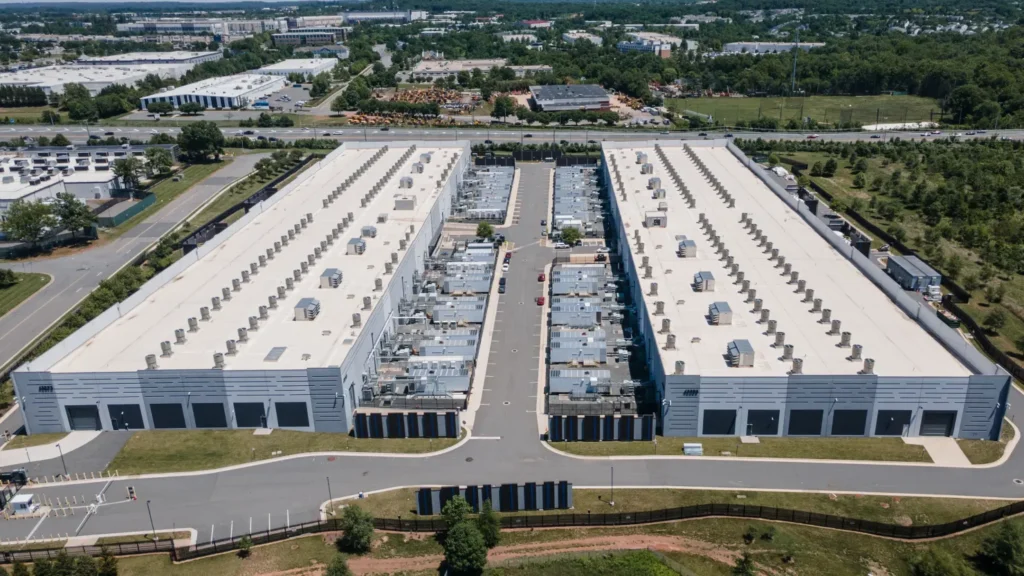
Why the Bond Market Suddenly Matters
Artificial intelligence is no longer just a software story. It has become one of the largest capital expenditure cycles in modern business history.
Major technology firms, cloud providers, and AI infrastructure companies are collectively expected to invest hundreds of billions of dollars annually into AI-related projects. Analysts estimate hyperscaler spending could approach $770 billion in 2026 alone, with a growing portion financed through debt markets rather than operating cash flow.
Historically, companies such as Microsoft, Amazon, Alphabet, Meta, and Nvidia generated enough cash to fund most expansion internally. However, AI infrastructure demands are so large that even highly profitable firms are increasingly turning to bonds and other financing vehicles. Recent debt issuances by major technology companies highlight how the AI boom is reshaping capital markets.
As a result, bond yields, credit spreads, and financing costs are becoming critical indicators for investors evaluating AI-related stocks.
The AI Infrastructure Spending Explosion
Building AI systems requires far more than software development.
The modern AI ecosystem depends on:
- Massive data centers
- High-performance GPUs
- Advanced networking hardware
- Energy infrastructure
- Cooling systems
- Semiconductor manufacturing capacity
- Memory and storage technologies
Industry estimates suggest AI-related capital spending could eventually reach several trillion dollars globally over the next decade. Some forecasts place AI infrastructure investment requirements above $5 trillion by 2030.
This spending wave has created enormous opportunities for semiconductor manufacturers, cloud providers, equipment suppliers, utilities, and construction firms.
However, it has also created a new challenge: financing.
Higher Interest Rates Could Slow the AI Boom
The relationship between AI spending and interest rates is straightforward.
When borrowing costs are low:
- Companies can issue bonds cheaply.
- Investors are more willing to fund long-term projects.
- Large infrastructure investments become easier to justify.
When rates rise:
- Debt becomes more expensive.
- Future profits are discounted more heavily.
- Riskier projects become harder to finance.
Because many AI projects may take years to generate meaningful returns, they are especially sensitive to interest-rate movements.
A sustained rise in Treasury yields could increase financing costs across the technology sector and reduce investor enthusiasm for expensive AI expansion plans.
For this reason, many technology investors now watch the U.S. Treasury market almost as closely as they watch AI product announcements.
Why Debt Issuance Is Surging
One of the clearest signs of the AI financing boom is the surge in corporate bond issuance.
Technology companies increasingly view debt markets as a strategic funding source for AI infrastructure. Nvidia’s recent multibillion-dollar bond offering exemplifies this trend, while other technology leaders have also raised substantial amounts through debt and equity markets to support aggressive AI investment plans.
Convertible bonds have also become popular because they allow companies to borrow at lower interest rates while giving investors the option to convert debt into shares later. Issuance volume has risen sharply as firms seek flexible financing structures for AI-related spending.
This growing dependence on debt means credit markets are becoming increasingly interconnected with AI valuations.

The New Investor Question: Who Will Actually Make Money?
During the early phase of the AI boom, investors largely rewarded companies that appeared connected to artificial intelligence.
Today, markets are becoming more selective.
Analysts increasingly distinguish between:
AI Builders
Companies spending heavily on infrastructure:
- Cloud providers
- Data-center operators
- Semiconductor manufacturers
- Hardware suppliers
AI Monetizers
Companies successfully generating revenue from AI:
- Enterprise software providers
- Productivity platforms
- AI-powered service companies
- Industry-specific AI solution providers
Investors are asking whether infrastructure spending will ultimately produce profits sufficient to justify the enormous capital outlays. Some market observers argue that future winners may be companies that monetize AI effectively rather than those spending the most money building it.
Risks Investors Should Not Ignore
1. Overbuilding Risk
History is filled with examples of infrastructure booms that eventually produced excess capacity.
If AI demand grows more slowly than expected, some data centers and hardware investments could become underutilized. Concerns about overbuilding and stranded assets have become increasingly common among analysts studying the AI sector.
2. Technology Obsolescence
AI hardware evolves rapidly.
A data center filled with cutting-edge GPUs today may require significant upgrades within a few years. This short asset life cycle creates unique financing risks because debt obligations can outlast the economic usefulness of underlying equipment.
3. Energy Constraints
AI infrastructure consumes enormous amounts of electricity.
Power shortages, transmission bottlenecks, and rising energy costs could become significant constraints on future expansion. Grid operators and energy experts have already warned about the pressure that AI data centers may place on electricity networks.
4. Revenue Uncertainty
While AI adoption continues to accelerate, questions remain regarding the pace at which spending translates into sustainable profits.
Some economists note that AI-related investment has expanded faster than measurable productivity gains, raising concerns about whether current expectations fully align with future cash flows.
Is This Another Dot-Com Bubble?
Comparisons to the late-1990s dot-com era have become increasingly common.
There are certainly similarities:
- Massive investor enthusiasm
- Huge infrastructure spending
- Elevated valuations
- Aggressive fundraising
However, there are also major differences.
Unlike many dot-com companies, today’s AI leaders generate substantial revenue, possess strong balance sheets, and operate profitable businesses. Several major financial institutions argue that current AI valuations are supported by real earnings growth rather than pure speculation.
The most balanced view may be that AI represents a genuine technological revolution while still exhibiting localized bubble-like behavior in certain segments of the market.
What Investors Should Watch Next
The next phase of the AI story may depend less on technological breakthroughs and more on financial conditions.
Key indicators include:
- U.S. Treasury yields
- Corporate bond issuance volumes
- Credit spreads
- Data-center utilization rates
- AI-generated revenue growth
- Energy infrastructure development
- Capital expenditure trends among major technology companies
If borrowing costs remain manageable, the AI buildout could continue at its current pace. If financing conditions tighten significantly, investors may begin reassessing the economics of massive AI infrastructure spending.
The AI revolution is no longer just about algorithms and chips. It is increasingly about capital allocation, financing structures, and the ability of companies to turn unprecedented investment into sustainable profits.
Frequently Asked Questions (FAQ)
1. Why are bond markets important for AI investors?
AI projects require enormous capital investments. Companies often finance these investments through bonds, making interest rates and credit conditions important factors that can influence profitability and stock valuations.
2. Which companies are spending the most on AI infrastructure?
The largest AI infrastructure investors include major cloud and technology firms such as Microsoft Corporation, Amazon, Alphabet, Meta Platforms, and Nvidia. Together, they are projected to spend hundreds of billions of dollars annually on AI infrastructure.
3. Could rising interest rates hurt AI stocks?
Yes. Higher rates increase borrowing costs, reduce the present value of future earnings, and can make large AI infrastructure projects less attractive financially.
4. Is the AI boom a bubble?
Experts remain divided. Many believe AI is a transformative technology supported by real business demand, while others warn that certain valuations and spending patterns resemble previous market bubbles.

5. What is the biggest long-term risk to the AI buildout?
The biggest risk is that infrastructure spending grows faster than actual AI monetization. If revenue fails to justify investment levels, companies may face pressure from investors, lenders, and credit markets.
Sources CNBC